Bell Canada IA Souveraine Saskatchewan Investissement
Data-driven analysis of Bell Canada IA souveraine Saskatchewan investissement and its impact on Canada's AI sovereignty.
 Par
Par 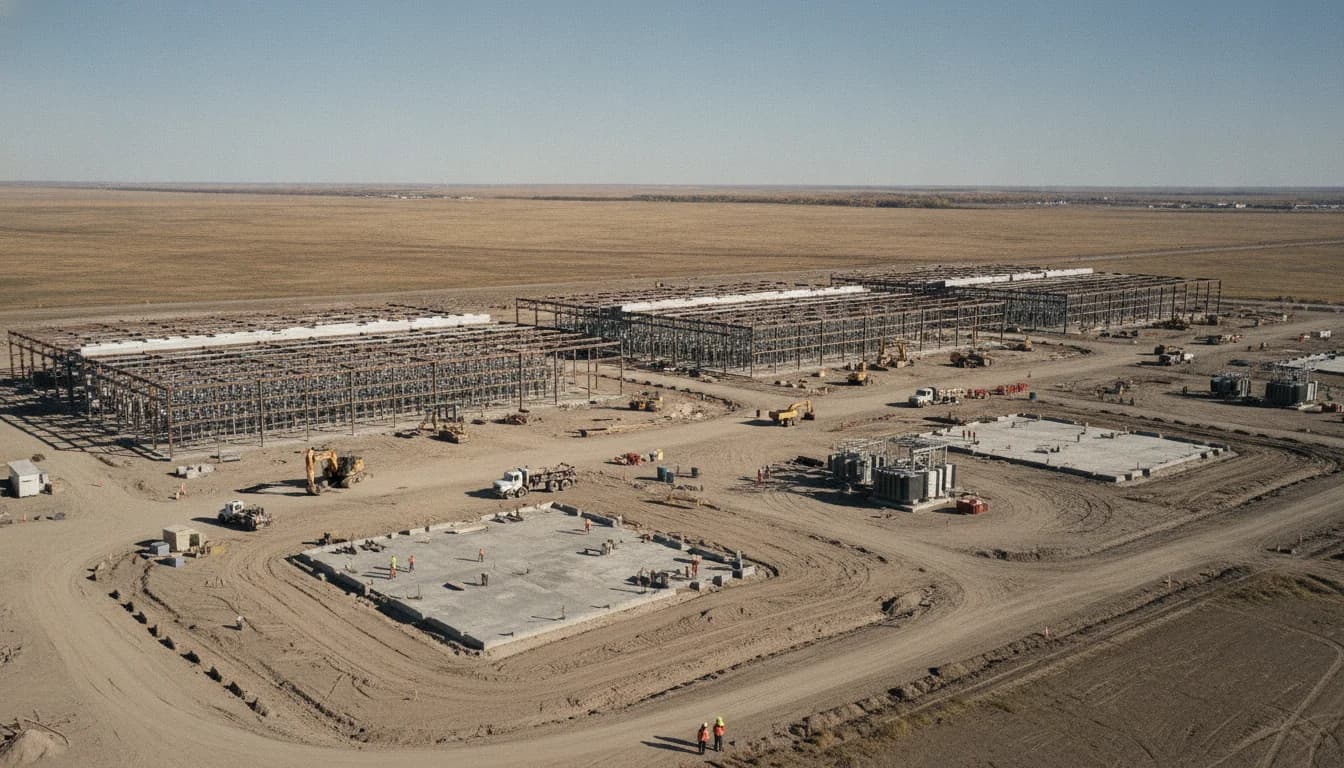
On September 14, 2026, Bell Canada and the Government of Saskatchewan announced a non-binding memorandum of understanding to expand Bell AI Fabric in Saskatchewan, creating a pathway to up to 1.2 gigawatts of sovereign AI capacity and signaling a historic leap in Canada’s AI infrastructure. The announcement positions Saskatchewan as a central hub in Canada’s data sovereignty strategy, with Bell promising to establish a regional headquarters in the Regina area as part of the expanded project. The plan, described by officials as a nation-building initiative, would scale Bell’s AI compute capacity for public sector use, researchers, and local industries while reinforcing Canadian control over critical digital infrastructure. This development matters for technology policy, regional economic trends, and how Canada pivots to a sovereign AI backbone. The information below integrates the official disclosures from Bell Canada and Saskatchewan authorities issued on September 14, 2026. (newswire.ca)
Opening note: the central fact in this coverage is that Bell AI Fabric’s Saskatchewan expansion could reach 1.2 GW of AI capacity with total capital investment that could exceed $50 billion, according to the government and Bell’s disclosures dated September 14, 2026. This figure is echoed across primary sources and frames subsequent analysis of economic impact, sovereignty considerations, and project timelines. CNW Newswire and the Saskatchewan government release anchor the scope and pace of the project, while Bell’s own materials provide operational detail on construction phases and governance. (newswire.ca)
What Happened
The Announcement and the Scale of the Plan
On September 14, 2026, Bell Canada (through its Bell AI Fabric division) and the Government of Saskatchewan jointly announced a non-binding memorandum of understanding to expand Bell AI Fabric within Saskatchewan, advancing phased capacity additions of up to 900 MW and aiming for a total of 1.2 GW of Canadian AI infrastructure capacity in the province. The expansion would establish Saskatchewan as a national hub for sovereign AI compute, with a new regional head office to anchor Bell’s national ecosystem. This milestone was described as a “largest capital investment in Saskatchewan’s history” by provincial officials, reflecting a dual aim: strengthen data sovereignty and accelerate regional economic growth. The formal release notes that this expansion could exceed $50 billion in total capital investment and would be implemented in phases as customer commitments are secured, subject to regulatory and environmental approvals. The announcement also signals a commitment to non-grid power and closed-loop cooling to minimize municipal water use. (newswire.ca)
Original liftable fact and context: in the official CNW/Bell release dated September 14, 2026, the full buildout could exceed $50 billion in capital investment and would support 800 to 1,200 construction, engineering, and technical jobs, with roughly 600 permanent operations roles once online. The same release notes a pathway to 1.2 GW of AI capacity and a headquarters location in Saskatchewan. This framing places the project at the intersection of national AI strategy and provincial economic plans. (Source: Bell Canada CNW press release, Sept. 14, 2026; Government of Saskatchewan release, Sept. 14, 2026.) (newswire.ca)
Timeline and Key Milestones
Bell’s March 2026 release already outlined a 300 MW data centre in the Rural Municipality of Sherwood (near Regina) as the initial phase, with construction beginning in spring 2026 and the first data hall expected online in early 2027. May 2026 coverage highlights that Bell engaged local Saskatchewan contractors for early works and that the project’s early phases would create hundreds of local jobs, reinforcing a strategy to keep capacity, skills, and procurement within the province. The September 2026 expansion builds on this by signaling a step-change in scale, with a staged development model designed to secure customer commitments while expanding workforce and supplier opportunities across the Saskatchewan ecosystem. (bce.ca)
Described in Bell’s original 300 MW release, the initial build would anchor a broader AI fabric network and leverage a provincial power integrator model designed to enable “Bring Your Own Power” arrangements as capacity grows. The Bell materials emphasize sovereignty, Canadian control, and a local supply chain as core design principles. In the September expansion, these principles are connected to a formal Data Centre Framework adopted by Saskatchewan, underscoring governance alignment with provincial policy on data residency and security. (bce.ca)
The Players and Primary Partners
- Bell Canada and Bell AI Fabric as the primary project proponent, with a path to establish a Saskatchewan-based headquarters and broaden the national ecosystem.
- The Government of Saskatchewan, which frames the expansion as a landmark, sovereignty-focused investment and provides regulatory alignment through the Data Centre Framework.
- Industry partners and regional contractors engaged in early works (as announced in May 2026) to bring local capacity, jobs, and supplier relationships into the project’s first phase.
The public disclosures also name participating tenants and partners for the initial facility, including collaborations with Cerebras and CoreWeave for tenant compute, plus intent to partner with SaskTel for network integration. These components underpin the broader strategic claim that the Saskatchewan expansion will anchor a sovereign AI compute ecosystem with both Canadian control and global reach. The official materials underscore a demand-driven approach, with timelines tied to customer commitments and regulatory clearances. (bce.ca)
Why It Matters: Sovereign AI and Economic Ripples
The expansion sits squarely at the heart of Canada’s data sovereignty and AI competitiveness agenda. By aiming to host a significant portion of sovereign AI compute within Canadian borders, Bell’s plan aligns with government objectives to keep critical data processing within national boundaries and under Canadian governance. The Saskatchewan Data Centre Framework, cited in the announcements, adds a formal policy backbone to the investment, guiding project approvals, environmental considerations, and Indigenous procurement commitments. The scale—potentially exceeding $50 billion in total capital investment and a 1.2 GW capacity target—transforms the province’s technology footprint and could recalibrate regional economic dynamics, including construction activity, job creation, and local supplier networks. It also signals a broader national ambition: to attract large-scale AI infrastructure while preserving data sovereignty and discipline in power use and land stewardship. (newswire.ca)
Impact on Saskatchewan and Beyond
- Jobs and Local Economy: The early phases already projected hundreds of local construction and trades roles, with thousands of ancillary positions anticipated across procurement, logistics, and services as the project scales. The CNW release projects 800–1,200 construction/engineering/technical jobs during build and up to 600 permanent roles in operations, with an even broader community impact when counting indirect and offsite opportunities. The Saskatchewan government materials quantify “thousands of jobs” and long-term economic value from the project. The combined disclosures illustrate a multi-year, multi-stage economic lift for Regina-area suppliers and broader provincial supply chains. (bce.ca)
- Data Sovereignty and National AI Capability: By focusing on sovereign AI compute and a Canadian-controlled data backbone, the expansion reinforces policy goals around secure, domestically hosted AI capabilities that can support research institutions, government agencies, and private enterprises. The Bell and government releases highlight the sovereign design as a central feature, not an afterthought, with the Data Centre Framework explicitly guiding the project. (newswire.ca)
- Regional Leadership in AI and Tech Ecosystems: Saskatchewan’s data-centre framework and the Bell AI Fabric expansion collectively position the province as a national hub for AI infrastructure, attracting developers, researchers, and technology partners seeking scale in a supportive regulatory and energy environment. The government’s release frames this as a national leadership move, while Bell emphasizes the integration of a sovereign compute ecosystem with local partnerships and Indigenous procurement programs. (saskatchewan.ca)
What Bell AI Fabric Brings to Saskatchewan and Canada
Bell AI Fabric’s stated objectives center on building a secure, sovereign AI compute platform designed to serve government, enterprise, and research needs. The March 16, 2026 Bell release makes clear that the 300 MW data centre will be the largest such project in Saskatchewan and will be connected to Bell’s national fiber backbone with SaskTel as a partner. The program emphasizes closed-loop cooling and non-grid power to minimize municipal water use, along with a framework for Indigenous procurement and workforce development. As the project scales, the plan envisions a national ecosystem with a Saskatchewan hub that anchors both capital formation and knowledge transfer for Canada’s AI economy. (bce.ca)
How This Compares With Other Provincial Initiatives
Canada’s approach to data infrastructure has increasingly tied investment, sovereignty, and energy considerations together. The Saskatchewan release explicitly ties Bell AI Fabric to the province’s Data Centre Framework, reflecting a targeted, policy-aligned method for approving large projects. By contrast, other provinces have pursued similar data-centre or advanced compute strategies with different policy emphasis (e.g., energy commitments, Indigenous partnerships, or privacy regimes). The Saskatchewan model—combining a large, private-sector capital project with a government-backed sovereignty framework and a Bring Your Own Power approach—illustrates a distinctive blueprint for balancing scale, sovereignty, and regional development. This report draws on official releases that outline the framework and commitments driving the Saskatchewan expansion. (saskatchewan.ca)
What’s Next
Timeline to Full Buildout
Industry observers should watch for the following milestones, as outlined in the official disclosures:
- Phased capacity expansion: Up to 900 MW of additional capacity beyond the existing 300 MW, with a path to 1.2 GW total, subject to regulatory approvals and customer commitments. The timing hinges on signing and securing power generation capacity, land use permits, and environmental reviews, with initial data halls expected to come online as early as the first half of 2027 for the initial 300 MW. The expansion’s phased nature implies a multi-year buildout strategy, with iterative announcements as milestones are achieved. (newswire.ca)
- Headquarters establishment: The project includes a plan to establish Bell AI Fabric’s Saskatchewan head office, signaling a long-term commitment to the region’s technology economy and governance of the national ecosystem from a Saskatchewan base. (newswire.ca)
- Indigenous procurement and workforce development: Ongoing collaboration with Indigenous communities (notably George Gordon First Nation) is highlighted as a central component of the workforce and supplier strategy, with joint committees already meeting in 2026 to advance these workstreams. Expect additional updates on procurement opportunities and training partnerships in subsequent phases. (bce.ca)
Regulatory and Environmental Approvals
As with any large-scale data-centre development, the expansion will require municipal and provincial permitting, environmental assessments, and alignment with Data Centre Framework principles. Affected municipalities will need to complete associated development processes, with ongoing monitoring and reporting as projects progress through each phase. The official releases indicate that governance and environmental considerations are embedded in the rollout rather than tacked on after construction begins. (saskatchewan.ca)
Power and Infrastructure Considerations
The plan contemplates using partner-developed power generation, including potential natural gas-backed capacity, and the use of closed-loop cooling systems to limit freshwater demands. As the project scales from 300 MW to up to 1.2 GW, power strategy becomes a central risk and opportunity for efficiency, reliability, and cost management. Stakeholders should watch for updates on power agreements, thermal management innovations, and any district-energy partnerships tied to universities and nearby developments. (newswire.ca)
What This Means for Competitors, Partners, and the Market
- For partners and vendors in Saskatchewan: The expansion signals a sustained, multi-year inflow of project work, with the potential for thousands of associated jobs and long-term contracts in construction, engineering, security, procurement, and operations. The government releases specifically highlight local-supply chain opportunities and Indigenous procurement commitments. (saskatchewan.ca)
- For global AI players and cloud customers: The sovereign AI compute framework in Canada may attract tenant compute and R&D arrangements seeking to stay within Canadian rules and data-residency requirements. Cerebras and CoreWeave are named tenants in Bell’s data-centre project, illustrating early ecosystem engagement with AI hardware and software providers. This could influence future data-centre location decisions by other firms considering sovereignty and security credentials. (bce.ca)
- For policy-makers: Saskatchewan’s Data Centre Framework and the scale of investment highlight a governance model that other provinces could study as they balance investment incentives with sovereignty, local workforce development, and environmental stewardship. The emphasis on keeping data “at home” under Canadian rules is central to the broader national AI strategy. (saskatchewan.ca)
What’s Next: Next Steps and Watchpoints
- Confirmed milestones: as customer commitments and regulatory approvals roll in, expect formal project approvals and updated capacity plans from Bell AI Fabric and provincial authorities. The next wave of announcements will likely detail site-specific milestones, procurement opportunities, and Indigenous partnership updates. The initial 300 MW phase already demonstrates a concrete progression from announcement to construction, with a clear path to additional capacity. (bce.ca)
- Financial disclosures and investor communications: With Bell’s and BCE’s financial communications tied to this expansion, markets will be watching for updated guidance and capital allocation details that reflect the Saskatchewan project’s impact on Bell’s AI revenue trajectory and capital intensity. The Sept. 14, 2026 CNW release explicitly ties expansion to significant capital deployment and job creation. (newswire.ca)
- International and domestic policy signals: As Canada positions itself as a global AI hub with sovereign compute capabilities, other provinces and national bodies may adjust procurement, data governance, and energy policy to align with similar ambitious projects. Observers should track whether Saskatchewan’s model becomes a template for future national-scale AI infrastructure investments. (saskatchewan.ca)
Closing: Staying Informed
The Bell AI Fabric Saskatchewan expansion marks a watershed moment for Canada’s AI infrastructure strategy, data governance, and regional economic development. As construction proceeds and capacity scales toward 1.2 GW, readers should follow official briefings from Bell, Saskatchewan’s government, and national agencies for the latest milestones, procurement opportunities, and regulatory clearances. For ongoing updates, monitor Bell’s news releases and Saskatchewan’s government communications, which provide the authoritative primary sources for the project’s trajectory. This coverage synthesizes those primary disclosures to offer a clear, data-driven view of what the expansion means for Bell Canada, for Saskatchewan, and for Canada’s sovereign AI ambitions. (bce.ca)