CAAIN Investissement Canada 2026: Nouvelles Et Enjeux
CAAIN Investissement Canada 2026: impartial and data-driven insights on network funding and its significant impact on the tech market landscape.
 Par
Par 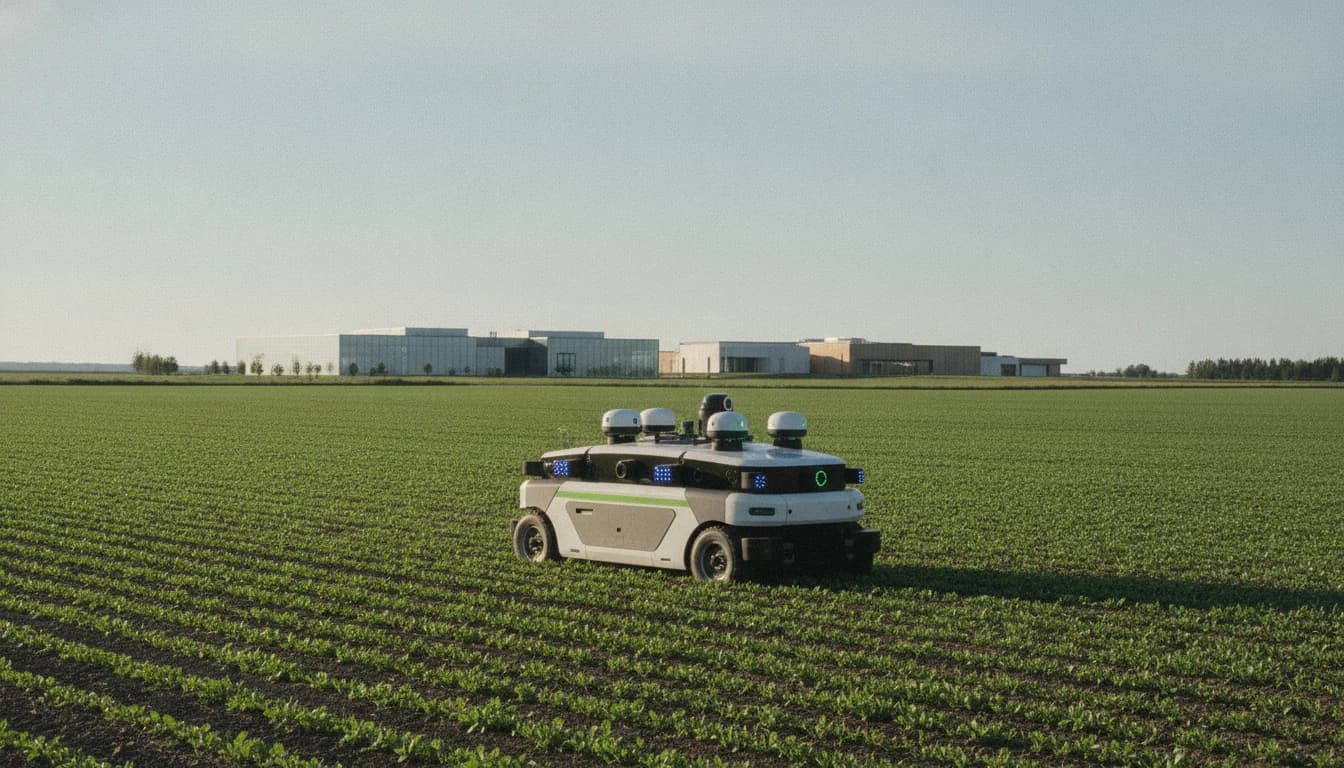
Canada Government Announces $50M CAAIN Investment
On August 26, 2026, the Government of Canada announced a $50 million investment in the Canadian Agri-Food Automation and Intelligence Network (CAAIN) through the Strategic Response Fund. According to Innovation, Science and Economic Development Canada, this funding will enable CAAIN to launch new programming in the fall and deepen the network’s capacity to test, validate, and scale agri-food technologies. The announcement situates itself within a broader effort to strengthen Canada’s food system and domestic innovation capacity. This central fact — the $50 million investment in CAAIN on August 26, 2026 — is drawn from the government’s news release and is the anchor for today’s coverage of CAAIN investissement Canada 2026. The government release’s timing and framing underscore the immediacy of actions aimed at improving productivity and resilience in Canada’s agri-food sector. For readers who want to review the primary source, the press release is published by Innovation, Science and Economic Development Canada. Canada government press release on CAAIN investment.
The same release notes that CAAIN, a national network dedicated to agri-food automation and data-driven decision-making, will expand its activities across Canada, including more demonstration sites and a broader project portfolio. The government’s quick facts emphasize that CAAIN’s network has already grown to more than 1,100 members and that past ISED-funded projects have driven notable capital leverage and employment gains. The explicit funding goal is to fund at least 40 new technology projects, mobilize $80 million in private sector co-investment, and create or sustain 800 jobs, with the network projected to exceed 3,000 members as a result of this investment. These figures illustrate the scale and ambition associated with CAAIN investissement Canada 2026. Quick facts from the press release also highlight the strategic role of this initiative in building resilient supply chains and advancing on-farm adoption of innovative technologies. (canada.ca)
Funding for CAAIN’s expansion and activity is part of a broader government initiative to accelerate AI and agtech collaboration in Canada. The same government release notes that the Strategic Response Fund is designed to support large, business-led networks that connect universities, researchers, and industry partners to accelerate commercialization. The announcement follows years of activity by CAAIN and marks a notable expansion in the network’s scale and capacity. The press release’s framing ties the investment to national objectives like food security and competitive domestic production, laying the groundwork for Canadians to benefit from faster adoption of transformative technologies. (canada.ca)
Section 1: What Happened
Announcement specifics and funding scope
In its August 26, 2026 news release, Innovation, Science and Economic Development Canada (ISED) publicly disclosed a $50 million investment in CAAIN through the Strategic Response Fund. The release situates the funding as a means to accelerate development, demonstration, adoption, and commercialization of Canadian agri-food technologies, with a national rollout that will include expanded smart-farm demonstrations and collaborative projects. The government expects the funding to catalyze at least 40 new technology projects, mobilize roughly $80 million in private co-investment, and create or sustain about 800 jobs, while growing CAAIN’s membership beyond 3,000. The release namechecks the national food-security agenda and the strategic aim to strengthen domestic supply chains. For the exact wording and context, refer to the government press release. (canada.ca)
Timeline and key milestones
The government’s press release identifies August 26, 2026 as the official announcement date and Calgary, Alberta as the event location. It also frames this investment as part of an ongoing, multi-year effort to boost agri-food innovation capacity and to scale CAAIN’s impact across Canada. The CAIN network’s own communications corroborate the timing and the broad scope of government support, confirming that ISED is renewing and expanding funding for the network. This is consistent with CAAIN’s public statements about past performance and future plans under the same program family. For background on these developments and the official dates, see the CAIN site’s news items and press releases. (caain.ca)
What the funding enables on the ground
The August 2026 funding round is designed to scale practical, market-ready agri-tech solutions. The government notes that CAAIN will broaden its national network of smart farms and demonstration sites and will provide cost-shared support for Canadian businesses developing and adopting new technologies. In the announcement, CAAIN’s leadership emphasizes the program’s returns for farmers and food processors and the broader economy, including the potential to improve productivity, profitability, and sustainability. This emphasis on on-farm validation and market deployment reflects the network’s core mandate to translate research into scalable, real-world outcomes. The quotes from officials and CAAIN leadership reinforce the public-facing message about growth, collaboration, and tangible economic benefits. (canada.ca)
Related funding activity and ecosystem context
Beyond the August 2026 ISED funding, CAAIN’s public communications and funding calls illustrate a continuous, multi-year investment pattern in Canadian agtech. For example, CAAIN’s news page highlights prior funding rounds, engagement with Agriculture and Agri-Food Canada, and active calls for proposals in 2026, including a $9M open competition and a separate award of up to $6.25M from AAFC. These pieces provide a broader view of the ecosystem’s funding cadence and show how the 2026 augmentation fits into an ongoing program of coordinated support for agri-food technology. Interested readers can review the CAIN funding calls and project pages for the latest program details. (caain.ca)
Section 2: Why It Matters
Strengthening Canada’s agri-food innovation ecosystem
The August 26, 2026 investment in CAAIN is positioned as a strategic move to accelerate the adoption of automation, robotics, and data-driven decision-making across Canada’s agri-food value chain. The government’s framing emphasizes that stronger innovation networks can reduce costs, improve supply chain resilience, and help Canadian farmers and processors remain competitive in a global context marked by supply-chain disruptions and volatile food prices. The CAAIN leadership and government officials underscore that the initiative is designed to translate research into real-world improvements in productivity and efficiency, while creating high-value jobs and encouraging private investment. The official messaging and the network’s own activity demonstrate a coordinated approach to turning innovation into measurable economic and social outcomes. (canada.ca)
"Canada’s agri-food sector has a long history of innovation, and CAAIN reflects that strength. This investment will help farmers and food processors across Canada test and adopt new technologies that improve productivity and reduce costs." — The Honourable Mélanie Joly, Minister of Industry and Minister responsible for Canada Economic Development for Quebec Regions. (canada.ca)
Economic impact: jobs, investment, and private leverage
The August 2026 press release highlights a notable economic footprint associated with CAAIN, including the creation and maintenance of hundreds of jobs and the mobilization of private capital. Specifically, the government’s forecast for the new funding includes at least 40 new technology projects and $80 million in private sector co-investment, paired with a broader network expansion to more than 3,000 members. The CAIN network’s public updates reiterate that past ISED funding has already catalyzed hundreds of millions in private follow-on investment and generated tangible research-to-market outcomes across multiple projects. These numbers, while contingent on ongoing project performance, indicate a significant growth trajectory for Canada’s agri-food tech ecosystem. (canada.ca)
Alignment with national AI and compute strategies
CAAIN’s expansion and the government’s funding approach intersect with Canada’s broader technology strategy, including sovereign AI compute initiatives designed to build domestic compute capacity, reduce reliance on external supply chains, and support homegrown innovation ecosystems. The federal strategy emphasizes developing large-scale, domestic compute capabilities as a backbone for AI-driven productivity and economic growth. This alignment suggests that CAAIN’s activities could benefit from and contribute to domestic compute infrastructure, data-centre development, and related policy and funding programs. For context on these strategic priorities, see Invest in Canada’s technology pages and related federal program profiles. (investcanada.ca)
Regional and national implications
CAAIN’s network structure, with a strong base and activities anchored in Edmonton and expanded demonstrations across Canada, signals a distributed approach to agri-food innovation. The network’s presence in multiple provinces and its collaboration with federal departments underscore the importance of cross-jurisdictional cooperation in achieving scale. This distributed model can help reduce geographic innovation gaps and provide more Canadian producers with access to advanced technologies, data-driven tools, and demonstration opportunities. The CAIN launch materials and the government press release both emphasize the network’s national reach and the potential for broader regional impact. (caain.ca)
Section 3: What’s Next
Timelines, funding cycles, and next milestones
As part of the August 2026 investment, CAAIN will begin rolling out new programming in the fall, with project approvals and demonstrations aligned to the wake of the funding. The CAAIN Open Competition for 2026, for example, indicates a rolling intake with deadlines in 2026 (April 3, June 5, August 7, and October 9). The program aims to fund up to $9 million CAD for collaborative projects that advance automation, data-driven decision tools, and smart-farm networks. Stakeholders should expect ongoing announcements about project selections, partner organizations, and additional funding opportunities on the CAAIN funding calls page and related news releases. For program specifics and application instructions, see the 2026 Open Competition page and Program Guide. (caain.ca)
Next steps for participants and observers
Canadian companies, universities, and research institutions should monitor CAAIN’s funding calls, apply for opportunities that align with their capabilities, and prepare for the program’s reporting and impact assessment requirements. The government and CAAIN communications emphasize that projects funded under these programs are expected to share results and data to advance the broader Canadian agri-food tech ecosystem. Observers and journalists should look for quarterly updates on project outcomes, IP creation, and private investment leverage. The CAAIN site provides ongoing news items, funding call updates, and partner announcements to track progress in real time. (caain.ca)
What to watch in the broader tech-ecosystem context
The broader Canadian technology landscape is also advancing in parallel with CAAIN’s initiatives. Government investments in sovereign compute, AI governance, and related infrastructure are intended to create a favorable enabling environment for domestic AI and robotics companies, data-centre capacity, and cross-sector collaboration. Observers should watch for intersection points where agri-tech innovations intersect with compute capability expansion, data-sharing frameworks, and cross-sector partnerships. Industry analyses and policy updates from Invest in Canada, the Bank of Canada, and major Canadian research institutions will provide helpful context for how CAAIN’s investments might influence or be influenced by overarching technology trends in 2026 and beyond. (investcanada.ca)
Closing
The August 26, 2026 CAAIN investment marks a pivotal moment for Canada’s agri-food technology ecosystem. By coupling a substantial federal funding commitment with a national network designed to validate and scale innovations, the government aims to improve productivity, reduce costs, and strengthen food security. The partnership between ISED and CAAIN, reinforced by AAFC funding and ongoing open competitions, signals a multi-year strategy to mobilize public and private capital, expand demonstration sites, and accelerate market adoption of Canadian-made technologies. Readers can follow CAAN’s official news and funding calls to stay informed about project selections, outcomes, and opportunities to participate. For ongoing coverage, consult both the Government of Canada releases and CAAIN’s own communications channels, which together provide a data-driven, transparent view of how this investment unfolds across the Canadian tech and agri-food landscape.
As the year progresses, keep an eye on quarterly updates from ISED and CAIN, plus the rolling deadlines for the 2026 Open Competition, to understand the concrete results, partnerships, and market-ready solutions that emerge from CAAIN investissement Canada 2026. This alignment of public funding, private leverage, and real-world demonstration sites will be a telling indicator of how Canada translates research into resilient economic growth for farmers, processors, and ultimately consumers.