Teck Expands Trail Operations with CCMA Investment
Teck Resources, the Canada Growth Fund, and NRCan have signed a Strategic Investment Agreement to enhance production capacity at Teck’s Trail…
 Par
Par 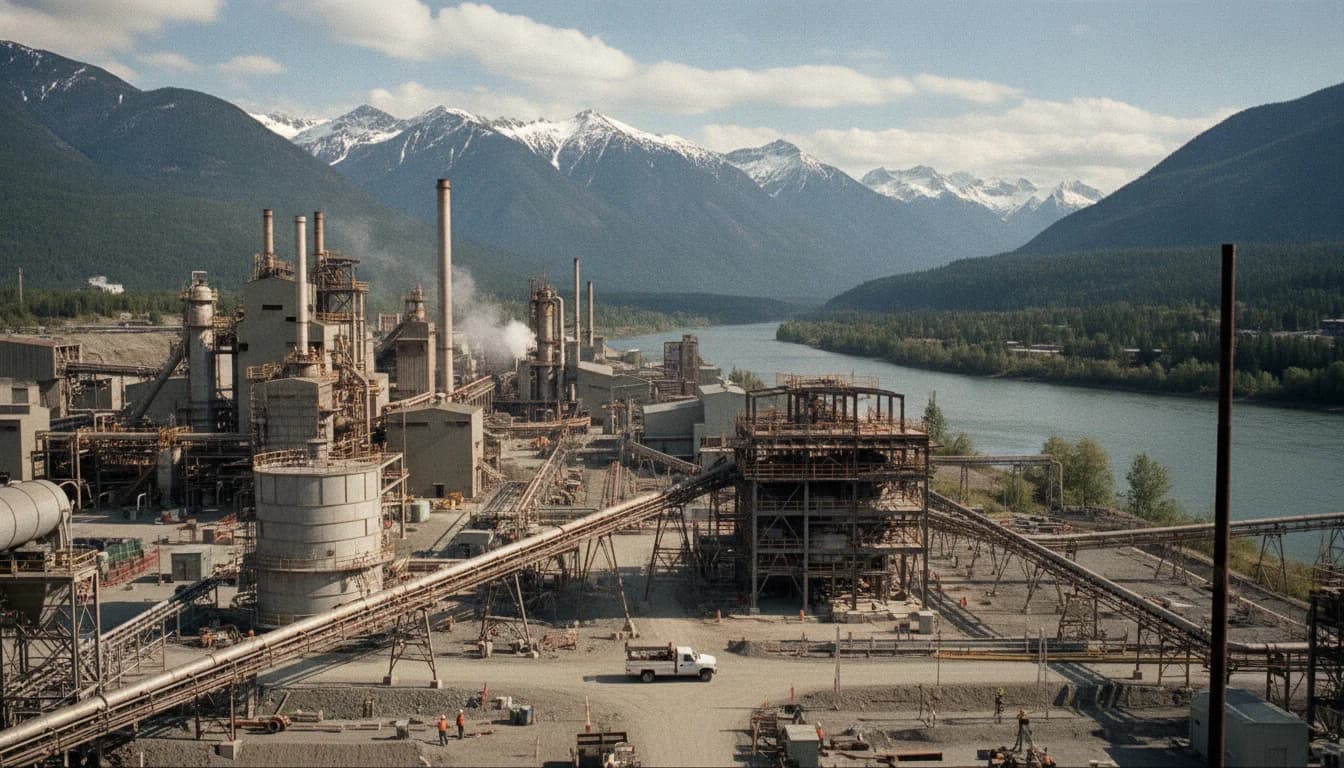
The Canada Critical Minerals Accelerator (CCMA) has taken a concrete step toward accelerating Canada’s critical minerals supply chains, with Teck Resources Limited (Teck), the Canada Growth Fund (CGF), and Natural Resources Canada (NRCan) announcing a Strategic Investment Agreement to expand production capacity at Teck’s Trail Operations in British Columbia. Dated July 7, 2026, the announcement marks the first major agreement under the CCMA framework and underscores the government’s strategy to mobilize private capital alongside federal support to advance critical minerals processing in Canada. The expansion targets germanium, antimony, and potentially gallium, all key inputs for advanced technologies and national security applications. The news places the CCMA, Teck Trail, and Canada’s broader critical minerals strategy at the center of Canada’s technology and market-trend discourse, with implications for supply chain resilience, regional development, and investors tracking Canada’s role in the energy transition. The federal government describes CCMA as a novel tool designed to accelerate projects along the value chain from extraction to processing, with the aim of reinvesting returns into further projects that benefit Canadians. This first agreement signals a practical path from policy design to tangible asset expansion at Trail, a centerpiece of Canada’s critical minerals ecosystem. According to NRCan, the CCMA is delivered by Export Development Canada (EDC) and is aligned with Budget 2025’s framework for strategic investments in critical minerals. (canada.ca)
Section 1: What Happened
The partnership and the deal structure
On July 7, 2026, Teck Resources Limited, the CGF, and NRCan’s Canada Critical Minerals Accelerator announced a Strategic Investment Agreement to support expanding production capacity at Teck’s Trail Operations in Trail, British Columbia. This agreement represents the CCMA’s inaugural investment transaction and is designed to catalyze private capital while delivering a framework for a potential offtake arrangement for future germanium, antimony, and gallium produced at Trail. The commercial framework includes CGF’s equity-like investment of up to $400 million directly into Trail, complemented by Teck’s broader contribution that could bring the total potential investment to up to $850 million as the project progresses. The CCMA arrangement is intended to leverage Trail’s existing infrastructure, expertise, and product portfolio while preserving rigorous governance and transparency. For context, NRCan notes that the CCMA will be managed through EDC, with final decisions made by a Ministerial Investment Board, providing a disciplined approach to government investment that can be reinvested in additional projects. The Trail expansion is positioned within Canada’s Look West strategy at the provincial level and is expected to benefit from potential streamlined regulatory processes and provincial support. (canada.ca)
Trail’s scale and existing footprint
Trail Operations stands as one of the world’s largest fully integrated polymetallic smelting and refining complexes. Before the expansion, Trail produced nineteen products and supported more than 1,400 direct jobs in southern British Columbia. The scale and sophistication of Trail’s operations make it a focal point for Canada’s critical minerals processing capability, particularly for metals that feed into the clean technology and defense sectors. Teck’s release confirms Trail’s established role in Germany’s and Canada’s critical minerals supply chain and frames the expansion as a strategic upgrade to an already mature facility. The project leverages Trail’s long-standing capability to process feed sources from a diversified mix, aligning with Canada’s strategy to optimize domestic value addition in critical minerals. (teck.com)
The financial architecture and milestones
The financial architecture of the CCMA-Trail agreement is designed to blend private and public capital in a manner that supports scale and risk management. The CGF will enter through an equity-like investment of up to $400 million directly into Trail, with Teck contributing to an up-to-$850-million total investment envelope for capacity expansion and related processing enhancements. This structure is part of a broader government strategy to catalyze further private investment by providing a credible investment structure for complex, capital-intensive mineral processing projects. The agreement explicitly contemplates an offtake framework to formalize future Germanium, Antimony, and Gallium production, building on Canada’s aim to secure strategic minerals for national and international markets. The commercial arrangements remain subject to definitive documentation, regulatory approvals, and other customary conditions. The first-of-its-kind CCMA transaction at Trail demonstrates how the government intends to deploy investment tools that generate returns to fund additional critical mineral initiatives. (teck.com)
The broader policy context and rationale
Budget 2025 introduced the $2-billion Canada Critical Minerals Accelerator to attract private capital for critical mineral projects through equity, debt, and offtake contracts. NRCan notes that CCMA is a national strategic instrument designed to mobilize capital, accelerate project timelines, and ensure a reliable supply of critical minerals for Canada and its partners. The program’s governance integrates NRCan leadership, EDC execution, and a Ministerial Investment Board for decision-making, aiming to deliver transparent and disciplined investments. The Trail agreement is framed as a priority project within British Columbia’s Look West strategy, highlighting how federal and provincial measures can converge to accelerate strategic minerals processing at key sites. The initiative’s scope includes strengthening supply chain resilience and ensuring Canada remains a reliable supplier of critical minerals in global markets. (canada.ca)
Immediate implications for Teck and Trail
For Teck, the agreement formalizes a pathway to expand Trail’s processing capacity, enabling potential increases in output for germanium and antimony, and possibly gallium, within an integrated smelting and refining complex. The Trail project leverages existing infrastructure to minimize capital risk while providing a mechanism to secure long-term feedstock supply, which is essential for expanding production without concurrently building new facilities from scratch. For Trail’s workforce and local communities, the expansion portends job stability and the potential for new training opportunities as processing lines scale and new product streams enter production. Locally and regionally, the project aligns with British Columbia’s emphasis on resource-led growth and the Look West strategy, which seeks to bolster collaboration between the federal government, the province, and industry to accelerate large-scale resource projects. (teck.com)
Section 2: Why It Matters
Strengthening national supply chains and strategic security
Canada’s critical minerals strategy, as articulated by NRCan and reflected in the CCMA framework, centers on securing supply chains for metals that underpin high-tech manufacturing, national security, and the clean-energy transition. The Trail expansion would increase Canadian capacity for germanium and antimony, with potential gallium production, thereby reducing reliance on foreign supply lines for these strategic inputs. Germanium and gallium are essential in fiber optics, infrared optics, high-performance semiconductors, and radar technologies, among other applications. The CCMA’s design—investing alongside industry and enabling offtake arrangements—seeks to balance market signals with national security considerations, providing a model for scaling critical minerals processing through public-private collaboration. Analysts and policymakers view CCMA as a tool to move promising projects to execution while maintaining fiscal discipline and the ability to reinvest returns into further initiatives. (canada.ca)
Economic impact and regional development
Trail Operations represents a significant economic asset in southern British Columbia. The expansion is framed as a catalyst for regional employment, supply chain development, and knowledge transfer—particularly in critical minerals processing and related materials science. By locking in a portion of Trail’s future production for strategic metals, the agreement could stimulate downstream activities, including supplier ecosystems, research partnerships, and Indigenous engagement programs tied to post-secondary institutions and skills training. While the specifics of job creation numbers have not been disclosed in the public announcements, the combination of Trail’s existing workforce and the scale of the expansion suggests meaningful local economic effects, consistent with Canada’s broader goals of domestic value addition and regional opportunity. (canada.ca)
Innovation, research, and the knowledge economy
The CCMA framework includes the ability to establish and fund up to $400 million in direct CGF investment and the broader $2 billion CCMA envelope to catalyze investments in critical mineral projects and related technologies. The Trail agreement highlights the importance of marrying capital with knowledge—funding not only the expansion of facilities but also potential downstream R&D collaborations with universities, research institutes, and Indigenous training programs. This aspect aligns with Canada’s emphasis on building a robust, homegrown capabilities ecosystem for critical minerals research, advanced manufacturing, and skills development. The long-term objective is to translate mineral endowments into high-value, technology-enabled industries that can compete globally while strengthening economic sovereignty. (canada.ca)
Market implications for global supply chains
Canada’s approach to critical minerals, including the CCMA, has implications beyond national borders. As global demand for critical minerals intensifies with the energy transition and new semiconductor technologies, Canada positions itself as a reliable partner for international manufacturers seeking stable, high-integrity supply chains. The Trail project, by expanding domestic production capacity for germanium, antimony, and potentially gallium, adds a tangible piece to the global puzzle of mineral security. It also signals a broader willingness among Canadian institutions to blend public capital with private sector expertise to unlock large-scale processing capabilities—an approach some analysts compare to sovereign investment models used in other resource-rich economies. (canada.ca)
Governance, accountability, and risk management
A critical dimension of the CCMA model is governance. The NRCan-led CCMA is designed to operate with clarity on risk, return, and accountability, including a pathway to offtake agreements and a transparent decision-making process for subsequent investments. The involvement of the CGF and EDC ensures that the investment is structured to deliver measurable outcomes while maintaining the flexibility needed to adapt to market conditions. While the Trail agreement is the first under CCMA, the governance framework is designed to be scalable to additional investments in other provinces or mineral streams, with performance metrics and governance oversight central to ongoing program integrity. The public disclosures accompanying the Trail initiative emphasize the conditions under which the deal will be implemented, including definitive documentation and regulatory approvals. (canada.ca)
Section 3: What’s Next
Short-term milestones and ongoing negotiations
The realization of Trail’s expansion under CCMA remains contingent on several key milestones. First, definitive documentation must be negotiated and executed, and all applicable regulatory approvals must be secured. The public materials emphasize that realization depends on the successful completion of these steps, as well as alignment with provincial incentives and potential Streamlined regulatory processes under BC’s Look West framework. In practical terms, stakeholders can expect updates on financing approvals, offtake structuring details, and the sequencing of capital contributions from CGF and Teck as the project transitions from agreement to implementation. The government’s posture indicates a deliberate tempo aimed at moving projects toward construction and operation while preserving investor confidence and strategic governance. (canada.ca)
Market watch: what investors should monitor
Investors monitoring the CCMA and Trail expansion should keep an eye on several critical indicators. First, the negotiation timeline for definitive agreements and offtake contracts will be a proxy for the pace of project development. Second, regulatory approvals—particularly environmental, indigenous engagement parameters, and provincial permitting—will influence the project’s timing and capital cadence. Third, any additional details about Trail’s production mix, feedstock diversification, and potential gallium production could affect the project’s risk-adjusted return profile. Finally, the overall trajectory of Canada’s critical minerals policy, including potential additional CCMA investments or similar partnerships, will shape the investment thesis for Trail-related assets and related processing facilities across Canada. (teck.com)
What to watch for in the coming quarters
In the near term, market observers should anticipate updates on definitive documentation, strategic procurement and feed source arrangements, and any BC-provincial support that may materialize under Look West or the province’s Strategic Investment Fund. Additionally, the CCMA’s performance metrics—how returns will be realized and reinvested—will be crucial for measuring the program’s effectiveness as a national industrial policy instrument. The government’s public statements position CCMA as a long-term mechanism to unlock capital for critical minerals, but the timeline for broader deployment will depend on the success of the Trail project and its ability to meet milestones on budget, schedule, and regulatory compliance. (canada.ca)
What’s Next (Continued): Potential Scenarios and Alternatives
As with any large-scale industrial project, several scenarios could shape Trail’s outcome. If the Trail expansion meets milestones on schedule, there is potential for accelerated capacity growth of germanium and antimony, with gallium added down the road if supply chains justify it. Conversely, if definitive documentation takes longer than anticipated or if regulatory obstacles emerge, the project could experience schedule slippages that affect the scale and timing of capacity increases. In either case, the CCMA framework provides a structure to adapt via investment tools and governance oversight, ensuring ongoing alignment with national priorities and market realities. The government’s emphasis on a Team Canada approach and Look West alignment suggests a continued push for coordinated actions among NRCan, EDC, and provincial partners to streamline approvals and facilitate project execution. (canada.ca)
Closing
Canada’s critical minerals strategy has moved from policy design to tangible capital projects with the CCMA’s Trail expansion. The July 7, 2026, Strategic Investment Agreement between Teck, CGF, and NRCan demonstrates a concrete pathway to increase Canada’s processing capacity for strategic metals while aligning with national security, energy transition, and economic resilience goals. For readers following technology and market trends, this development highlights how public-private partnerships can accelerate the maturation of complex mineral processing capabilities at scale, leveraging existing assets like Trail to deliver faster, more secure supply chains. As the CCMA’s first investment unfolds, observers will watch how the offtake framework, governance measures, and cross-government coordination translate into real-world benefits for Canadian industries, regional economies, and the global market for critical minerals. Canada Critical Minerals Accelerator Teck Trail investissement remains a touchstone example of Canada’s evolving approach to securing strategic minerals for decades to come.
In the weeks ahead, L’Entreprise will continue to monitor definitive documentation, regulatory approvals, and the broader CCMA program as it unfolds across the industry landscape and the economy’s technology-forward sectors. Stay tuned for updates on Trail’s progress, Canada’s critical minerals policy developments, and the evolving role of public-private partnerships in building resilient supply chains for the global market.