Canada Unveils Defence Drone Initiative to Boost Sovereignty
The Government of Canada launched the Defence Drone Initiative to enhance sovereignty in uncrewed systems, aiming to accelerate development and…
 Par
Par 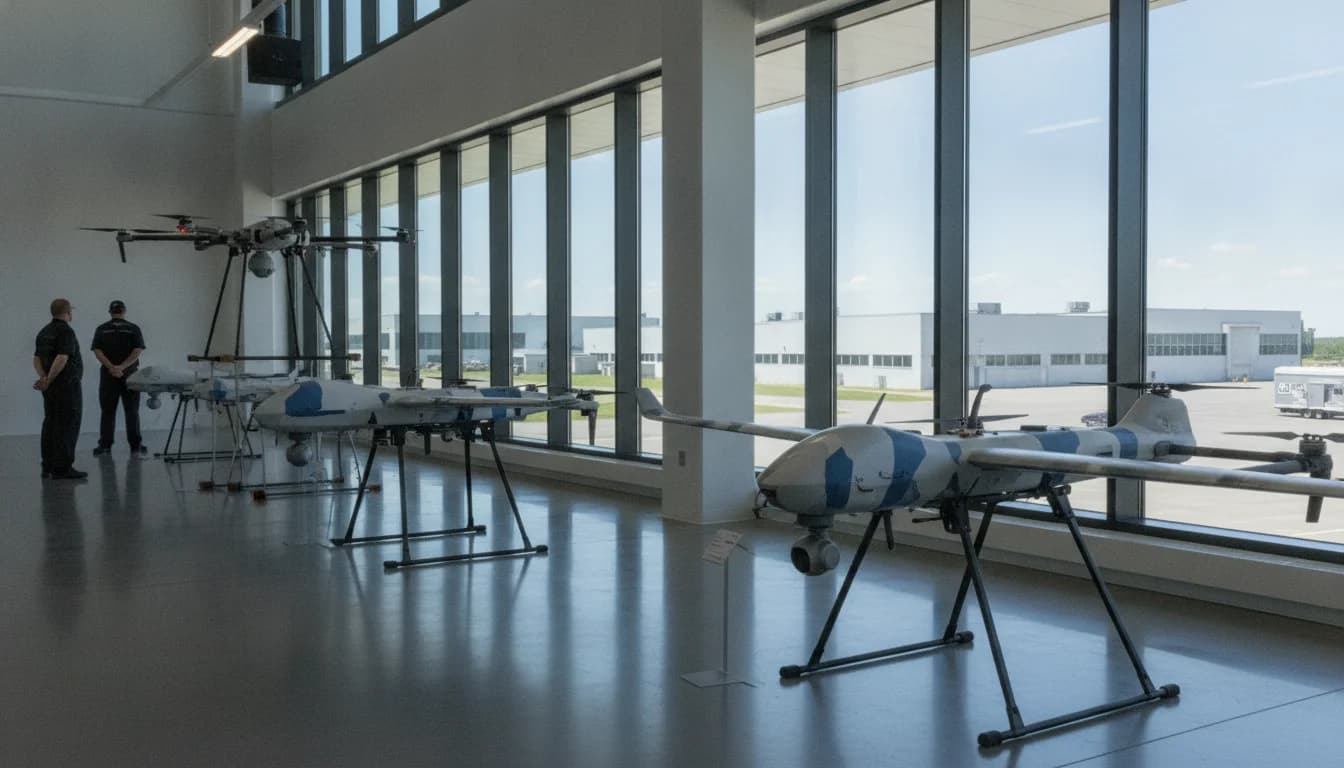
The Government of Canada rolled out a bold new program to accelerate sovereignty in uncrewed systems, introducing the Defence Drone Initiative, known in French as l’Initiative Drone de Défense Canada. On July 23, 2026, officials announced the launch in Ottawa, signaling a coordinated effort by National Defence and the Defence Investment Agency to speed development, testing, adaptation, and production of uncrewed and autonomous systems for the Canadian Armed Forces and the Canadian Coast Guard. The announcement framed the initiative as a response to rapidly evolving drone technology and the need to align Canada’s innovation assets—across aerospace, robotics, AI, sensors, secure communications, and advanced manufacturing—with operational requirements. This news matters because it sets a national pathway for domestic capability, supplier diversity, and faster fielding of capable drones and counter-drone technologies for Canada’s most critical frontline missions. The French-language equivalent, Initiative liée aux drones de la Défense (IDD), mirrors the same objectives and timeline for proponents and stakeholders, underscoring the bilingual, federally coordinated approach to national defense procurement and innovation. (canada.ca)
In the immediate weeks that followed, the government underscored a shift from concept to concrete deployments. By early September 2026, Prime Minister Mark Carney and Ukrainian President Volodymyr Zelenskyy highlighted a new Defence Drone Initiative Marketplace (DDIM) Supply Arrangement, a national digital marketplace intended to connect end-users with Canadian suppliers and accelerate the discovery, acquisition, and fielding of uncrewed capabilities. The DDIM initiative is designed to broaden access to a trusted supplier ecosystem—nearly 400 Canadian suppliers—and to anchor the drone capability pipeline in a Build-Partner-Buy framework that emphasizes domestic production, allied collaboration, and supply chain resilience. This latest development demonstrates Canada’s intent to scale sovereign drone capacity rapidly, while maintaining a broad industrial base across provinces and territories. (pm.gc.ca)
What Happened
Launch and Strategic Intent
The Defence Drone Initiative (DDI) was publicly launched on July 23, 2026, in Ottawa, Ontario, as a joint effort by National Defence and the Defence Investment Agency (DIA). The backgrounder describes the DDI as a program to accelerate development, testing, adaptation, and production of uncrewed and autonomous systems for the CAF and CCG, with strategic emphasis on sovereign capability, security, and industrial growth. The six initial use-case areas provided a structured path for industry engagement and capability development. This launch marks a deliberate shift toward a more integrated, Canadian-owned drone ecosystem, designed to reduce reliance on foreign supply chains while expanding domestic innovation and job creation. (canada.ca)
The six initial use-case areas identified by the DDI are: 1) low-cost tactical intelligence, surveillance, and reconnaissance drones; 2) uncrewed ground vehicles for logistics and challenging terrain; 3) uncrewed maritime surface and underwater systems; 4) standardized drone munitions and explosive payloads; 5) low-cost counter-drone interceptors; and 6) deep precision strike systems. While the latter is described as a longer-term objective that will require extensive work, the initial three to five areas are anchored in practical, near-term needs for fielded capabilities. The aim is to connect operational requirements with Canadian innovation and create a streamlined path from research to field demonstrations and, where appropriate, production. (canada.ca)
Procurement Framework and Supplier Engagement
The DDI is being led by National Defence in partnership with the DIA to establish a competitive supply arrangement. The RFSA (Request for Supply Arrangement) process is designed to assemble a pool of qualified Canadian suppliers across uncrewed and autonomous systems, counter-UAS capabilities, data and communications systems, engineering and integration services, and testing and training. Importantly, the RFSA emphasizes that previous defence experience is not strictly required, and that a broad spectrum of organizations—including startups, SMEs, established manufacturers, universities, research institutes, and Indigenous businesses—can participate. The RFSA is open, with a key deadline noted for August 14, 2026, and a virtual information session planned for July 30, 2026, to answer questions from potential bidders. This framework is intended to accelerate the pace at which ideas move from concept to validated capability. (canada.ca)
Canada’s procurement community and industry observers have been watching closely as the IDD/DDI creates a formal, national pathway for engagement. The RFSA and related information are hosted on CanadaBuys, ensuring standardized, transparent processes while allowing for broad participation across sectors and regions. The openness of the process signals a deliberate effort to diversify the supplier base, reduce entry barriers for smaller firms, and foster collaboration across academia, industry, and government. (canada.ca)
Early Contracts and Market Activity
In conjunction with the July 2026 launch, the government signaled an intent to move quickly from concept to contracts. The DDIM, introduced during the September 10, 2026 press event, is described as a national digital drone marketplace designed to connect operators and end-users with Canadian suppliers, enabling rapid fielding, sustainment, and modernization of drone capabilities at scale. The DDIM announcement also highlighted the Build-Partner-Buy approach—leveraging Canadian capabilities, partnering with trusted allies, and ensuring that defence investments benefit Canadians. The initial contract activity under the DDIM approach was reported to be up to $50 million, with contracts awarded to a handful of Canadian firms, representing the early phase of the program’s execution. The marketplace is expected to provide privileged access to hundreds of trusted suppliers, reinforcing Canada’s bid to grow a robust, domestically anchored drone industry. (pm.gc.ca)
A concrete example of early procurement under the IDD/DDI framework appeared in August 2026: a contract award dated August 24, 2026, associated with the IDD marketplace. The award, listed on AchatsCanada, shows a contract (W8703-270055) awarded to MMSENSE Technologies Inc. and tallies the broader ecosystem of suppliers engaged under the initiative. The listing confirms the existence of a formal, government-led process to build a prequalified pool of suppliers and to enable rapid procurement for drones, counter-UAS capabilities, and related services. The contract also demonstrates the kinds of capabilities Canada is prioritizing, including drone platforms and related mission systems manufactured or assembled in Canada. The record further lists multiple other participating firms and the ongoing nature of supplier qualification and contract awards within the IDD framework. (achatscanada.canada.ca)
In the months since the launch, the government publicly disclosed additional supplier affiliations tied to the initial IDD procurement wave. Named suppliers include Beonyx (Québec), AVSS (New Brunswick and Ontario), Volatus Aerospace (Québec with UK partners), Twenty20 Insight Inc. (Ontario), Draganfly (Saskatchewan), and Objexis AI (Ontario). Each firm brings a distinct capability—ranging from Canadian-designed UAV platforms to mission-system software and integration services—reflecting a deliberate strategy to cultivate homegrown expertise and support domestic manufacturing. The public procurement listings emphasize Canadian ownership, local assembly or integration, and supplier presence across multiple provinces, underscoring the program’s regional industrial benefits and capability diversification. (pm.gc.ca)
The July 23, 2026 Canada.ca backgrounder also notes that the RFSA will connect a broad network of Canadian suppliers to end-users and operators, allow for limited-scope acquisitions and demonstrations, and support ongoing innovation and experimentation. The emphasis on a competitive yet agile process—paired with the goal of reducing duplication and increasing interoperability—speaks to a pragmatic approach: move fast where possible, but maintain rigorous standards for security, supply-chain integrity, and IP protection. The backgrounder makes clear that formal procurement processes and deadlines will be published through CanadaBuys, reinforcing transparency and consistency across the program. (canada.ca)
Why It Matters
Sovereign Capability and National Security
The initiative is designed to strengthen Canada’s ability to access, operate, sustain, adapt, and scale critical uncrewed and autonomous systems. By prioritizing sovereign capability, the program seeks to reduce dependence on foreign supply chains for essential drone technology, sensors, and related components, while enabling Canada to control critical security aspects such as cybersecurity and data sovereignty. This strategic emphasis aligns with broader national security objectives in a security landscape where drone technology is rapidly evolving and diversifying across multiple domains. The DDI’s focus on secure supply chains, ownership and control, and the sourcing of sensitive technologies reflects a deliberate attempt to safeguard national interests amidst an increasingly complex security environment. (canada.ca)
The DDIM/IDD and the broader DDI framework are framed as instruments to support both the CAF and the CCG in modernizing their capabilities. The dual-pillar rationale—operational readiness and sovereign industrial capacity—positions Canada to respond to evolving threats and to participate in international defense partnerships from a position of greater self-reliance. The government’s emphasis on domestic manufacturing, in-field sustainment, and the ability to scale production domestically is intended to deliver long-term strategic resilience, as highlighted in the official materials and subsequent disclosures. (pm.gc.ca)
Industrial Growth and Economic Impact
The DDI’s emphasis on a diversified, Canadian supplier base has meaningful economic implications. The initial supplier pool aims to engage a wide range of firms—startups, SMEs, universities, and Indigenous businesses—creating opportunities across multiple provinces and sectors. The stated objective is not only to provide capabilities to the CAF and CCG but also to cultivate a robust ecosystem that can drive skilled jobs, advanced manufacturing, AI, sensors, secure communications, and related advanced technologies. The Canada.ca materials emphasize the economic and industrial benefits of sovereign drone innovation, including potential spillovers into regional supply chains and collaboration with research institutions, which could yield broader benefits for Canada’s technology economy. (canada.ca)
The DDIM marketplace, announced in September 2026, is described as a national digital platform connecting end-users with a broad supplier base, accelerating procurement cycles and enabling Canadian firms to participate in both domestic and allied drone programs. By offering privileged access to hundreds of suppliers and focusing on training, maintenance, and sustainment within Canada, the DDIM is positioned to create a durable, homegrown drone industry that can serve defense and civilian applications alike. The emphasis on training and lifecycle services also suggests opportunities for specialized workforce development and long-term industrial capability. (pm.gc.ca)
International Collaboration and Strategic Partnerships
The public materials emphasize cooperation with allies and partners as part of a broader strategy to strengthen defense innovation. The September 10, 2026 PM news release highlights a new partnership with Ukraine to co-develop and co-produce drones and drone-related technologies, building on existing collaboration patterns between Canadian and Ukrainian aerospace and defense ecosystems. This collaboration includes a broader set of initiatives designed to bolster Canada’s sovereign drone capabilities, expand co-production with Ukraine, and establish long-term defense cooperation. The strategic takeaway is that Canada envisions a defense industrial base connected to international collaboration to accelerate capability development, while maintaining strong domestic leadership and control. (pm.gc.ca)
The partnership with Ukraine and the broader emphasis on international collaboration reflect a recognition that sovereign drone capabilities can benefit from shared knowledge and joint ventures. The PM release notes a joint pathway for defence innovation, co-development, and co-production, signaling an approach that balances national autonomy with strategic, allied cooperation. This is particularly relevant for suppliers and researchers who may be aligned with international programs and who can bring complementary capabilities to Canada’s national drone effort. (pm.gc.ca)
What’s Next
Short-Term Milestones and Deadlines
The RFSA process remains a critical near-term milestone. The backgrounder indicates the RFSA open window and an information session in late July 2026, with the formal procurement process continuing through late summer. Prospective suppliers should monitor CanadaBuys for updates on qualification requirements, security-readiness assessments, and the criteria used for evaluating capability proposals. The continuous, transparent posting of opportunities and awards will be essential for ensuring broad participation and for maintaining public trust in the procurement process. (canada.ca)
The DDIM DDIM Supply Arrangement, announced on September 10, 2026, represents a major program mechanism for rapid fielding and sustainment of drone capabilities. The marketplace is designed to connect operators with a Canadian supplier ecosystem and to facilitate the accelerated discovery, acquisition, and fielding of uncrewed capabilities. In the near term, contract awards and pilot demonstrations are expected to define the first wave of capabilities, with ongoing expansion of the supplier base and the introduction of new use-case deployments as the program matures. The initial contracts, announced as part of this rollout, demonstrate Canada’s willingness to move quickly to implement sovereign drone capabilities. (pm.gc.ca)
Long-Term Roadmap and Market Dynamics
The government’s longer-term objectives include the potential to produce millions of drones in Canada over the coming years, supported by a strengthened domestic supply chain and a robust ecosystem of researchers, manufacturers, and service providers. The DDIM/DDI framework explicitly aims to link Canadian innovation to fielded capabilities for the CAF and CCG, and the Build-Partner-Buy approach is intended to harness both domestic expertise and strategic alliances to scale production and deliver sustained operational readiness. The public materials emphasize a deliberate plan to reduce dependence on foreign sources while maintaining access to trusted international partners when appropriate, ensuring Canada remains resilient in the face of evolving geopolitical challenges. (pm.gc.ca)
In the broader macro context, the Defense Drone Initiative aligns with ongoing national dialogues about how best to leverage advanced manufacturing, AI, robotics, and aerospace competencies to strengthen Canada’s strategic autonomy. While the precise mix of capabilities—ranging from low-cost ISR platforms to more advanced counter-drone and potential long-range systems—will evolve with user feedback, the program’s emphasis on interoperability, standardized payloads, and safe, secure integration will shape the Canadian drone industry’s competitive landscape for years to come. The early procurement activity and supplier engagement illustrate a deliberate, phased approach to market development rather than a one-off pilot. (canada.ca)
Closing
Canada’s Defence Drone Initiative marks a pivotal moment in the country’s defense innovation arc. By tying a national procurement framework to a unified, sovereign drone ecosystem, the government is signaling a commitment to faster fielding, broader supplier participation, and closer alignment between research, manufacturing, and military needs. The initial steps—launch in July 2026, the RFSA process, and the September 2026 DDIM rollout—lay the groundwork for a durable, domestically grounded drone capability that could reshape Canada’s security posture and industrial landscape for years to come. As the program unfolds, readers should expect more detailed milestones, new supplier announcements, and ongoing updates from national authorities as the first wave of demonstrations and contracts moves from concept to fielded operations. For continued coverage, stay tuned to official Canada.ca news pages, CanadaBuys procurement notices, and trusted industry reporting that tracks the program’s progress and its implications for Canada’s technology sectors. (canada.ca)