Churchill Falls 2026: Historic $70B Canadian Deal
Investissement Churchill Falls Canada 2026 restructures clean energy with a $70B package to upgrade Churchill Falls and Gull Island for a North…
 Par
Par 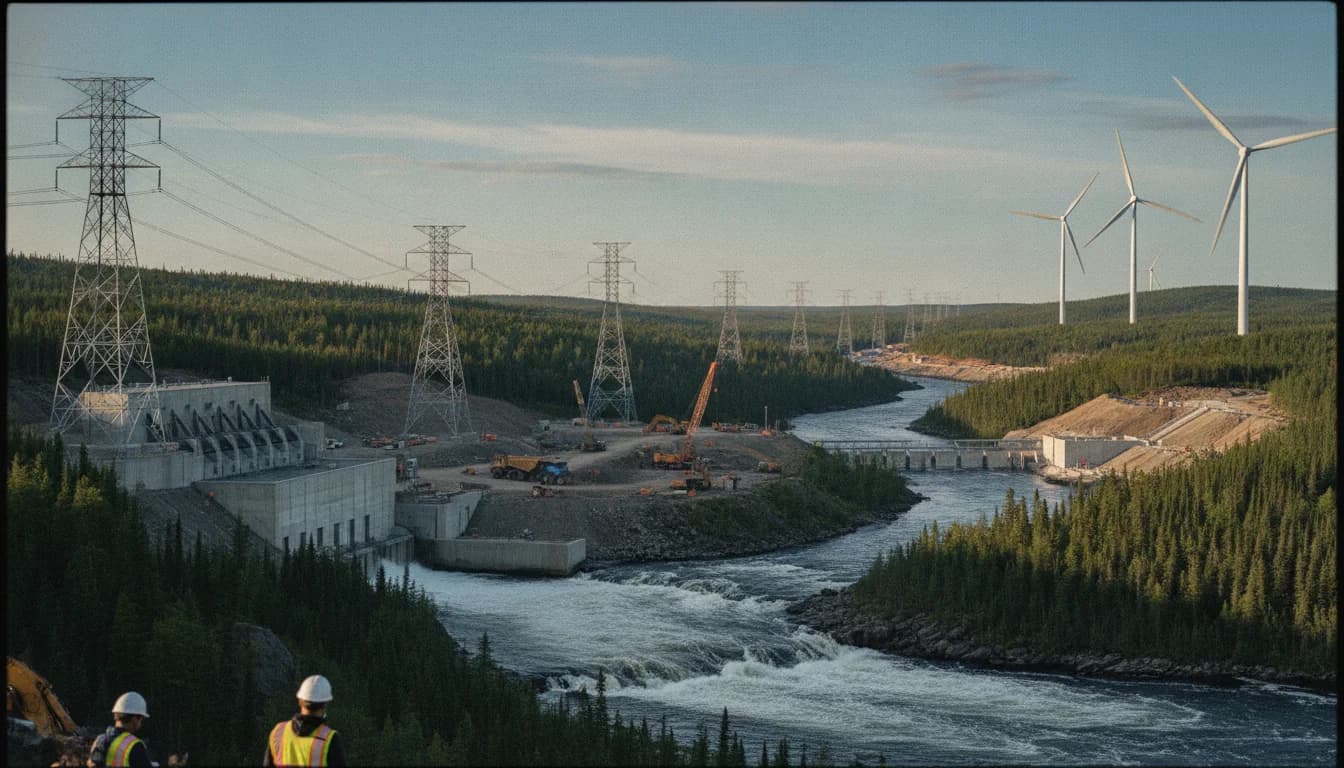
The Investissement Churchill Falls Canada 2026 is unfolding as a watershed moment for Canada’s clean-energy ambitions. On August 17, 2026, federal and provincial leaders announced a sweeping framework to upgrade the Churchill Falls generating station, advance the Gull Island project, and build a coordinated transmission corridor linking Labrador to Quebec and beyond. The package, described by officials as the largest clean-energy investment in North American history, is valued at nearly CAD 70 billion and includes federal financing to accelerate construction and modernization across the corridor. This development matters for energy reliability, regional economies, and Canada’s broader climate and industrial strategy. Per government communications, the coordinated effort seeks to triple Churchill Falls’ current output and integrate new wind and transmission projects into a single, long-term plan. The immediate impact will be felt in construction activity, employment, and the renegotiation of power agreements that could reshape provincial budgets and regional development. The announcements emphasize a forward-looking, tech-enabled approach to power generation and export, with a focus on reducing emissions, creating jobs, and strengthening North American grid resilience. This opening phase of Investissement Churchill Falls Canada 2026 sets the tone for what policymakers describe as a transformative, cross-jurisdictional initiative. The following sections provide a data-driven look at what happened, why it matters, and what comes next. According to the August 17, 2026 announcements from the Prime Minister’s Office and provincial governments, the Churchill Falls and Gull Island package is valued at nearly CAD 70 billion. Source: Prime Minister’s Office and Government of Newfoundland and Labrador communications. (pm.gc.ca)
What Happened
Timeline of events
- August 17, 2026: A formal agreement framework was announced by the Prime Minister, the Premiers of Quebec and Newfoundland and Labrador, and the CEOs of Hydro-Québec and Newfoundland and Labrador Hydro. The DCIA (Definitive Cooperation and Implementation Agreement) outlines the development of Churchill Falls, Gull Island, and related transmission, marking a major shift in Atlantic Canada’s energy strategy. This event was presented as the culmination of months of talks and a shift away from earlier MOUs toward a unified execution plan. The financing package and project scope were described as the largest clean-energy investment in North America at that time. (pm.gc.ca)
- Mid–late August 2026: National and regional outlets reported the plan’s scale, including the claimed tripling of Churchill Falls’ generating capacity and the integration of a wind component to accompany hydropower investments. The Newfoundland and Labrador government released additional detail on the deal’s economic value and the role of transmission upgrades in delivering power to eastern markets. (newswire.ca)
- Subsequent days: The government briefings and industry analyses emphasized the broader strategy, including alignment with Canada’s Eastern Energy Corridor and emphasis on clean, large-scale electrification across Labrador, Quebec, and neighboring provinces. Confidence in project timelines and governance structures was highlighted by official sources and independent observers. (canada.ca)
Key terms and figures
- Valuation and scale: The package is described as nearly CAD 70 billion, representing the most significant investment in Canada’s energy sector in recent memory. This figure is frequently cited by federal and provincial communications as the basis for planning, financing, and project governance. (pm.gc.ca)
- Generation capacity: Officials indicated Churchill Falls would be upgraded to a total capacity around 14,000 megawatts (MW), a major expansion from the current baseline. This renovation is positioned to substantially increase clean electricity output for export and domestic use. (pm.gc.ca)
- Federal financing: The federal government reportedly committed up to CAD 10 billion in support to upgrade Churchill Falls, Gull Island, and the associated transmission network, underscoring a rare level of direct public funding for a single energy mega-project. (canada.ca)
- Transmission and regional integration: The plan envisions a high-capacity transmission corridor spanning Labrador to Quebec and onward to eastern markets, aligning with broader Canada-wide clean-energy goals. (pm.gc.ca)
- Stakeholders: The announcements involved Prime Minister Mark Carney, the Premiers of Quebec and Newfoundland and Labrador, and the CEOs of Hydro-Québec and Newfoundland and Labrador Hydro, signaling a cross-jurisdictional, government-led implementation path. (pm.gc.ca)
Stakeholders and governance
- The deal features three levels of governance: federal leadership, provincial partners (Quebec and Newfoundland and Labrador), and the energy utilities (Hydro-Québec and Newfoundland and Labrador Hydro). In many communications, the partnership was framed as a national strategic priority, with oversight by independent panels to ensure value creation and adherence to environmental and community commitments. Additional commentary from industry and government sources highlighted the importance of enabling transmission capacity and ensuring long-term fiscal returns for involved provinces. (pm.gc.ca)
- A notable element of the discourse centers on Indigenous participation and consent in Labrador, with official remarks underscoring inclusive consultations and community benefits as integral to the program’s design. The August announcements referenced the involvement and perspectives of Indigenous communities as part of the broader social license for this expansive energy project. (pm.gc.ca)
Quote (mid-body): “This is the largest clean energy investment in North American history, tripling the current generating capacity of Churchill Falls to 14,000 MW,” according to the Prime Minister’s August 17, 2026 remarks. This characterization underscores the scale and ambition of the collaboration across federal and provincial lines. (pm.gc.ca)
Participants and anticipated milestones
- The key players include federal ministries, the Newfoundland and Labrador government, the Quebec government, Hydro-Québec, and Newfoundland and Labrador Hydro. Their collaboration is expected to deliver a suite of milestones, including environmental assessments, definitive project plans, and binding implementation agreements for construction sequencing, financing disbursement, and interconnection upgrades. The exact sequencing will depend on regulatory processes and market readiness, but officials suggested that early feasibility and design work would proceed in parallel with procurement and permitting activities. (canada.ca)
Why It Matters
Economic impact and regional benefits
- The Investissement Churchill Falls Canada 2026 framework is positioned as a transformative economic catalyst for Labrador, Quebec, and related regions. Analysts and government briefings emphasize job creation during construction, long-term operations and maintenance opportunities, and enhanced regional supply chains spanning engineering, materials, and services. The scale of the investment is expected to ripple through provincial budgets and industrial plans, with downstream effects on regional growth, skilled-labor demand, and local business ecosystems. (pm.gc.ca)
- Beyond construction, the program aligns with Canada’s industrial strategy for critical minerals and clean-energy infrastructure, potentially accelerating downstream manufacturing, electrification of transport and industry, and domestic value creation around power sales. The government communications consistently frame the project as a vector for broader economic diversification in Atlantic Canada and northern Quebec. (canada.ca)
Energy security, reliability, and export potential
- By expanding and decarbonizing a core hydroelectric asset and integrating a new wind component, the package seeks to strengthen grid reliability and energy security for Eastern Canada and export markets. The accompanying transmission upgrades are designed to reduce bottlenecks and improve cross-border exchange with Quebec and other provinces, reinforcing Canada’s ability to meet rising demand for low-emission power as industries electrify. The government communications explicitly connect this to broader national and regional energy-security objectives. (pm.gc.ca)
- The plan also situates Churchill Falls within a broader strategic framework—an integrated corridor that links hydropower with potential wind generation and other renewables, enabling more predictable, low-cost electricity supply for industries and households. Analysts and policy briefs note that the combination of hydropower capacity, grid interconnections, and long-duration reliability can support industrial competitiveness and energy exports for decades. (waterpowercanada.ca)
Environmental, Indigenous, and community considerations
- Environmental assessments and social impact analyses are expected to accompany the project’s next phases. Given Churchill Falls’ history and the proximity to Indigenous communities in Labrador, the process will likely involve extensive engagement and benefit-sharing considerations. Official sources emphasize inclusive consultations and ensuring local economic participation as part of project governance. While details will unfold through regulatory steps, the emphasis on community involvement remains a signal of intent. (pm.gc.ca)
- The Gull Island component, as described in the announcements, is positioned not merely as a generation addition but as a driver of transmission and regional development. The environmental and cultural dimensions will be central to maintaining social license and ensuring that the scale of investment translates into sustainable outcomes for local communities. (gov.nl.ca)
Competitive and policy context
- The Churchill Falls package is framed as part of a broader North American clean-energy trajectory, with Canada presenting a concerted national strategy to decarbonize heavy industry, accelerate electrification, and expand international energy trade. Analysts point to the policy alignment with Canada’s energy and climate priorities, including investment in clean generation and grid modernization. The scale of the package also raises questions about project risk management, financing structure, and the role of public capital in large infrastructure initiatives. (canada.ca)
What's Next
Implementation timeline and near-term steps
- In the near term, planners will advance the finalization of the DCIA framework and begin detailed design work for Churchill Falls upgrades and Gull Island development. Procurement planning, environmental assessments, and interconnection studies will run in parallel to secure regulatory approvals and align financing disbursements with construction milestones. The decision to move from MOUs to a definitive implementation framework marks a shift toward binding commitments and enforceable timelines. (prod.mccarthy.ca)
- The Newfoundland and Labrador government has signaled that independent oversight and value-for-money considerations will be central to governance. An independent panel and ongoing fiscal evaluation are expected as part of ongoing oversight, ensuring transparency and accountability for the large public investment. (gov.nl.ca)
Financing, governance, and risk management
- The federal contribution of up to CAD 10 billion represents a substantial portion of the project’s public funding, with the balance expected to come from provincial sources, private investment, and potentially public-private partnership mechanisms. Analysts emphasize that the financing structure will need to balance risk, return, and timing to deliver the project on schedule while maintaining fiscal credibility for participating jurisdictions. The governance model will likely incorporate shared decision-making across federal and provincial authorities, with clear accountability provisions. (canada.ca)
- Given the magnitude of the investment and its long-term horizon, risk management will be critical. Analysts highlight potential challenges such as cost overruns, regulatory changes, commodity price fluctuations, and supply-chain disruptions. The official communications stress risk mitigation through phased implementation, robust procurement, and ongoing stakeholder engagement. (newswire.ca)
What observers should watch for
- Timelines for construction and commissioning: While the announcements set a broad, ambitious vision, concrete construction schedules, permitting, and interconnection readiness will determine when the first new generation or transmission lines come online.
- Environmental and community agreements: The milestones for environmental approvals, Indigenous consultation outcomes, and regional benefit-sharing arrangements will shape public acceptance and long-term project viability.
- Market integration and policy alignment: The degree to which the new generation capacity interacts with provincial and regional electricity markets, export contracts, and long-term power-purchase agreements will influence economic outcomes and price stability for consumers and industries. (pm.gc.ca)
Closing
The Investissement Churchill Falls Canada 2026 package marks a turning point for Canada’s energy architecture. By upgrading a historic hydro asset, advancing Gull Island, and building a modern transmission backbone, the plan positions Atlantic Canada and the broader region to meet growing demand for clean, reliable electricity while strengthening cross-border energy integration. As the project moves from framework to execution, readers should monitor official briefings from the Prime Minister’s Office, the Newfoundland and Labrador government, and Hydro-Québec for the latest milestones and governance updates. This is a long-term, data-driven effort with the potential to redefine regional growth, energy security, and Canada’s climate leadership for decades to come. For ongoing updates, policy papers, and project documentation, primary sources and neutral industry analyses will provide the most reliable guidance. (pm.gc.ca)