Critical Minerals Innovation Fund (CMIF) Ontario 2026

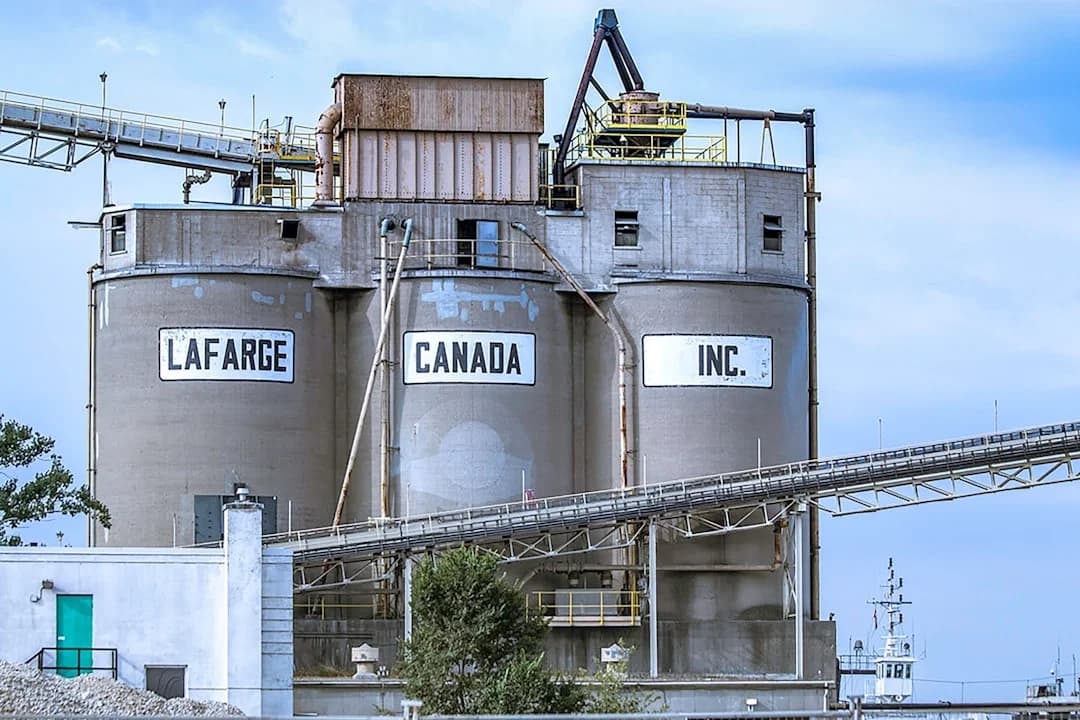
Photo by Tracey Parish on Unsplash
Ontario is moving decisively to bolster its critical minerals supply chain, with a focused investment in the Critical Minerals Innovation Fund (CMIF) that signals a calibrated push to de-risk, accelerate, and commercialize Ontario-based innovations. In June 2026, the provincial government disclosed a new intake of CMIF funding totaling nearly $8 million for 18 projects across the province, underscoring a data-driven approach to strengthen exploration, processing, and battery supply chain technologies. This expansion follows an early-2026 policy push to align Ontario’s mining and manufacturing ecosystems with global demand for critical minerals, a policy arc that has included new strategy documents, funding instruments, and targeted announcements from government ministries. The funding round aligns with private-sector levers, with public dollars intended to catalyze private investments and reduce early-stage risks for high-pidelity innovations in mineral processing, recovery, and related technologies. The CMIF is a long-running tool in Ontario’s toolkit for growing a domestic, resilient critical minerals sector, and the 2026 update reinforces the province’s commitment to attract investment while advancing research, development, and commercialization in this space. For context, CMIF has historically funded projects across the mineral value chain and is part of broader provincial drives to strengthen processing capacity and ensure Ontario retains more value locally, rather than exporting raw materials alone. This latest move matters because it sharpens incentives for rapid scale-up of new technologies and creates a clearer pathway from lab concept to industrial deployment. Sources: Ontario Newsroom and CMIF backgrounders
Ontario’s CMIF program, first launched in 2022, is administered to stimulate research, development, and commercialization of innovative technologies for critical minerals—ranging from exploration and mining to processing, recovery, and recycling. The program has evolved through multiple intake rounds, with the 2025-2026 intake delivering 18 projects and attracting private-sector leverage in addition to the public funding. The funding envelope and recipient mix reflect a structured effort to de-risk technology development while accelerating go-to-market timelines for Ontario-based solutions. The program’s design emphasizes partnership with industry, academia, and Indigenous communities, with public dashboards and annual reporting intended to improve transparency around outcomes and return on investment. Ontario CMIF overview and 2025-2026 intake details
What Happened
Announcement Details
-
The Ontario government announced a CMIF replenishment that funds 18 projects across the province, totaling nearly $8 million in public support. The announcement reflects a continuation of Ontario’s strategy to build a robust critical minerals supply chain by funding a mix of early-stage and applied R&D activities designed to unlock new processing capabilities and enhance material recovery. The initiative is positioned to accelerate Ontario-based innovations from concept to commercialization, reducing time-to-market for technologies that could improve ore processing, refine inputs for batteries, and support end-to-end supply chain resilience. Public messaging frames CMIF as a cornerstone of Ontario’s broader plan to attract investment and foster domestic capabilities in key mineral value chains. This funding round is part of a multi-year effort to scale results from provincial research and industry collaboration, and it comes as part of a wider government push to modernize and diversify the province’s critical minerals sector. Ontario Newsroom reporting on CMIF funding expansion
-
A parallel development in early 2026 underscored the government’s ongoing emphasis on critical minerals strategy. A March 3, 2026 release highlighted Ontario’s commitment to a job-creating critical minerals strategy and noted the expanded CMIF as a core element of that strategy. The remarks framed CMIF not merely as a funding line but as a mechanism to de-risk large-scale investments, support the development of Ontario’s supply chain, and ensure that processing and value-added activities occur within the province. The policy context emphasizes Ontario’s aim to position itself as a reliable partner in North American and global supply chains, particularly for technologies dependent on critical minerals used in batteries, electronics, and advanced manufacturing. Ontario March 3, 2026 critical minerals strategy release
-
In an example of program activity, Volta Metals Ltd. announced in June 2026 that it had received funding of up to $500,000 under CMIF to advance work on its Springer Rare Earth Element and Gallium Project near Sudbury, Ontario. This award illustrates CMIF’s role in supporting project-level de-risking and accelerating the development of Ontario-based mineral projects with potential downstream value in processing and manufacturing. The Volta Metals grant is part of a broader CMIF ecosystem that includes multiple recipients across exploration, processing, and technology development. Nasdaq press release on Volta Metals CMIF funding
Timeline and Key Facts
- 2022: CMIF was launched to stimulate R&D and commercialization of innovative technologies for critical minerals in Ontario. This baseline timeline establishes the program’s origin and purpose as a sustained policy instrument rather than a one-off grant program. CMIF overview
- 2025-2026 Intake: Ontario disclosed that 18 projects were selected for CMIF funding, totaling approximately $7.8 million in public support, with roughly $12.3 million in private-sector investment leveraged. The funding scope encompassed mineral exploration, processing technologies, recovery methods, and related innovations along the critical minerals value chain. The intake demonstrates how CMIF operates as a catalyst for private capital and collaboration with research institutions. Critical Minerals Innovation 2025-2026 Intake Recipients
- June 2026: Ontario publicly reported an almost eight-million-dollar CMIF round supporting 18 projects, reinforcing the program’s expanded footprint and signaling a continued cadence of funding rounds aimed at driving near-term commercial outcomes. This latest update aligns with the government’s stated plan to accelerate the province’s critical minerals supply chain and its broader industrial strategy. Ontario funding expansion report
“Ontario is serious about unlocking the billions of tonnes of critical metals held in Ontario’s junior mining companies,” a sentiment echoed in the government’s broader critical minerals strategy narrative. This emphasis on practical outcomes—jobs, regional development, and domestic processing capacity—frames CMIF as a tool for both innovation and economic resilience. Ontario critical minerals strategy press materials
Key Facts and Figures
- CMIF 2025-2026 intake: 18 projects, $7.8 million in public funding, $12.3 million private-sector leverage. This figure demonstrates a broader capital-formation effect beyond the direct public grant. Ontario CMIF intake backgrounder
- CMIF 2026 expansion: nearly $8 million in support for 18 projects, continuing the program’s objective of de-risking and accelerating critical minerals innovations. Ontario Newsroom CMIF funding update
- Notable recipient activity: Volta Metals Ltd. received up to $500,000 for work on rare earth and gallium project developments. This anecdote illustrates CMIF’s role in supporting specific, real-world projects with provincial significance. Volta Metals CMIF grant announcement
Why It Matters
Supply Chain Resilience and National Strategy
Ontario’s CMIF expansion aligns with broader North American and global efforts to secure reliable sources of critical minerals. As demand for battery materials, electrified mobility components, and advanced electronics continues to grow, provincial programs like CMIF are designed to accelerate the commercialization of technologies that improve ore processing efficiency, material recovery, and end-to-end supply chain integration. The move sits within a larger policy arc that includes federal initiatives and provincial programs aimed at reducing dependence on external suppliers and reinforcing domestic processing capabilities. The CMIF framework is positioned as a bridge between early-stage R&D and large-scale industrial deployment, helping to translate academic and private-sector ideas into practical, job-creating projects. Canada-wide critical minerals policy context
- The emphasis on value addition in Ontario’s strategy echoes a broader shift toward processing and manufacturing within the province. This is consistent with provincial plans to deploy funding across the value chain—from exploration to refining—so that Ontario captures more of the economic value generated by its mineral resources. The policy impetus is to ensure that critical minerals do not exit Ontario as raw ore but are refined and manufactured locally wherever feasible. Ontario CMIF overview and plans
Economic and Job Implications
- The CMIF program is explicitly designed to catalyze private investment, with public funds intentionally structured to de-risk projects and accelerate commercialization timelines. This approach can shorten development cycles for new processing technologies, enabling faster scaling and potential job creation across Northern Ontario and other regions with mineral resources. A stronger domestic processing base can support high-value manufacturing clusters, attract supply-chain collaborators, and improve the province’s standing in global mineral markets. The combination of public funding and private leverage is a recurring pattern in Ontario’s strategy to maximize the multiplier effect of government dollars. CMIF backgrounders and Invest Ontario materials
Indigenous Participation and Community Partnerships
- Ontario’s CMIF framework has been informed by broader policy discussions about Indigenous participation in critical minerals development. Federal and provincial materials emphasize inclusive stakeholder engagement and capacity-building in Indigenous communities, aligning with Canada’s broader resource development agenda. This dimension matters because it shapes project design, benefit-sharing models, and local governance considerations. While CMIF is a provincial program, collaboration with Indigenous communities remains a key element of project planning and implementation in Ontario. Indigenous participation background
Market Context and Competitiveness
- Ontario’s CMIF funding sits within a crowded landscape of public-private initiatives aimed at fostering innovation in the critical minerals sector. Nationally, Canada has pursued partnerships and funding to strengthen minerals supply chains, and CMIF contributes to this ecosystem by funding Ontario-based projects that can scale with private capital and federal programs. In addition to CMIF, other funding streams and policy instruments—such as processing funds and strategic investments—are intended to create a cohesive, transportable set of incentives for mineral development and processing. This context matters for readers who follow how provincial efforts interact with federal programs to shape Canada’s competitive position in critical minerals. National and provincial policy context
What’s Next
Upcoming Intake and Eligible Projects
- Ontario’s CMIF program is expected to continue its cadence of intake rounds in the coming months, with projects spanning exploration technology, mineral processing innovations, and downstream processing capabilities. The program’s design anticipates ongoing collaboration with industry partners, research institutions, and communities to identify high-impact opportunities that can translate into scalable demonstrations and eventual commercialization. Stakeholders should monitor CMIF announcements for eligibility criteria, timelines, and application guidance in upcoming intake rounds. Ontario CMIF intake structure
Monitoring, Accountability, and Public Reporting
- The CMIF program includes reporting mechanisms and public disclosures designed to provide transparency on project progress, outcomes, and economic impact. Readers and potential applicants can expect periodic updates on funded projects, milestones achieved, and private-sector leverage results. These updates are typically published by Ontario’s ministries and associated agencies and will be important for companies evaluating CMIF eligibility and for researchers tracking technology adoption in Ontario’s mineral sector. Ontario CMIF reporting framework
What to Watch for in 2026–2027
- Broader policy alignment: Look for continued integration between CMIF rounds and the province’s Critical Minerals Processing Fund and other related initiatives designed to expand Ontario’s processing capacity. The policy push toward domestically processed minerals and value-added manufacturing suggests a sustained funding environment that favors projects with clear pathways to scale and local value capture. Invest Ontario and ministry plans
- Private-sector partnerships: The CMIF model relies on private-sector participation to maximize leverage. Expect more partnerships that pair university-led research with industry deployment, focusing on improved extraction technologies, environmental performance, and cost-effective processing routes. These collaborations will influence the composition of future intake selections and the overall performance metrics of CMIF-funded activities. CMIF intake case studies
Closing
Ontario’s CMIF strategy for 2026 reinforces a data-driven, outcomes-oriented approach to building a resilient critical minerals ecosystem. By funding a diverse set of 18 projects across the province, with substantial private-sector participation, the program aims to accelerate breakthroughs from the lab to real-world deployment. The immediate effect is a clearer signal to investors, researchers, and regional communities that Ontario intends to maintain momentum on critical minerals innovation, while ensuring that value is created and captured within Ontario’s borders. As CMIF continues to evolve, readers should stay tuned to Ontario’s official channels—Ontario Newsroom, Invest Ontario, and ministry updates—for the latest intake details, funding decisions, and project milestones. The province’s ongoing collaboration with industry and academic partners will shape outcomes that have implications beyond Ontario, contributing to broader market dynamics in the global critical minerals landscape.