Canada Critical Minerals Accelerator Teck Trail BC 2026
Explore a detailed, data-driven update on the Canada Critical Minerals Accelerator in Teck Trail, BC, 2026, and understand its far-reaching implications.
 Par
Par 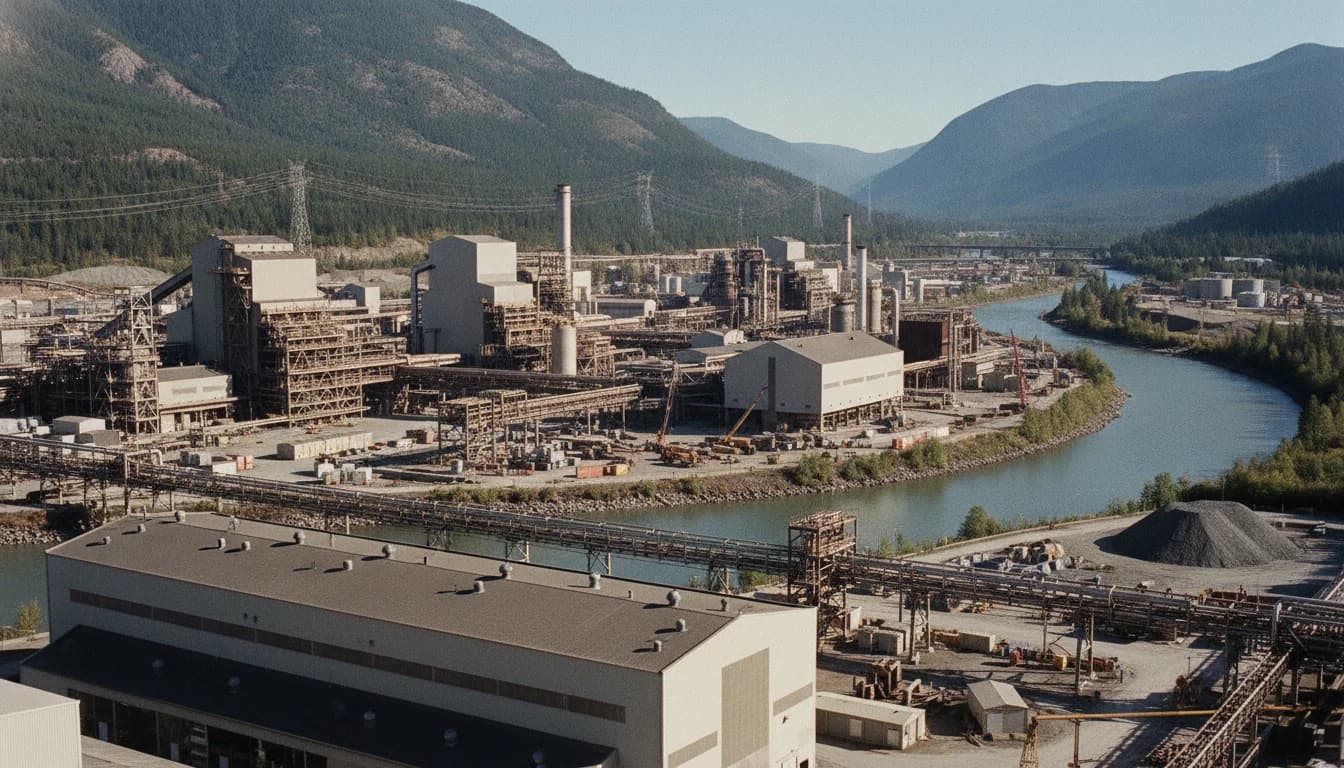
Canada Announces First CCMA Deal With Teck Trail
On July 7, 2026, Teck Resources Limited joined with the Canada Growth Fund and Natural Resources Canada to sign a Strategic Investment Agreement under the Canada Critical Minerals Accelerator to expand production at Teck's Trail Operations in Trail, British Columbia, backed by the CCMA's $2 billion fund. This landmark arrangement was disclosed in a joint news release from NRCan and Coast-to-Coast outlets reporting the Trail, BC event, and the lenders and partners involved. The announcement immediately placed Canada at a new inflection point in its critical minerals strategy, signaling a tangible, investable path from mineral extraction to processing within a single, integrated supply chain in Trail. According to the official government release, the CCMA, introduced in Budget 2025, is designed to catalyze private sector investment and accelerate projects along the value chain from extraction to processing, with the aim of securing critical minerals for economic sovereignty, national security, and the energy transition. This opening moment anchors the broader, ongoing push to diversify Canada’s critical minerals footprint while using Trail as a high-profile proof point of that strategy. This news also marks the first public milestone under the CCMA framework and directly links federal policy with a major industrial complex in British Columbia, underscoring the role of public-private collaboration in accelerating critical minerals capacity. The facts presented here rely on the government and industry releases dated July 7, 2026, and on subsequent corroborating statements from Teck and the Canada Growth Fund. The Canada Critical Minerals Accelerator Teck Trail BC 2026 narrative is now unfolding as a template for future CCMA investments and for how Canada intends to pair policy with capital to drive near-term capacity expansion in key minerals.
What Happened
Announcement Details
- On July 7, 2026, Teck Resources Limited, the Canada Growth Fund (CGF), and Natural Resources Canada (NRCan) publicly announced a Strategic Investment Agreement under the newly launched Canada Critical Minerals Accelerator (CCMA). The agreement targets expanding production capacity at Teck’s Trail Operations in southern British Columbia, one of the world’s largest fully integrated polymetallic smelting and refining complexes. The NRCan release confirms that this event took place in Trail, British Columbia, on July 7, 2026, and emphasizes the CCMA as a tool designed to accelerate critical mineral projects along the value chain from extraction to processing. See NRCan’s official release for the date, location, and programmatic rationale. (canada.ca)
- The underlying program, introduced in Budget 2025, is described as a first-of-its-kind investment tool designed to accelerate Canadian critical mineral projects by enabling investments alongside industry, and potentially generating returns that can be reinvested into new projects. NRCan’s release highlights that the CCMA operates through Export Development Canada (EDC) and involves a ministerial investment decision framework. (canada.ca)
- The formal agreement creates a commercial framework for an equity-like investment by the CGF of up to $400 million directly into the Trail facility, with Teck contributing at a level that could bring total project investment to as much as $850 million to sustain and enhance critical minerals processing capacity at Trail. The release explicitly frames the investment in terms of capacity expansion and the potential to double existing production for germanium and antimony, as well as the possibility of adding gallium production. These production dynamics are central to Trail’s role in Canada’s critical minerals ecosystem. (canada.ca)
Participants and Roles
- Teck Resources Limited is the operator of the Trail smelting and refining complex and is positioned as the driver of expanded production capacity for Germanium, Gallium, and Antimony. NRCan notes Trail’s multifaceted product slate and its strategic role within Canada’s critical minerals strategy. CGF serves as the private-sector investment partner providing the equity-like funding, with EDC providing support and structuring expertise to de-risk and accelerate the project. The NRCan release underscores that the CCMA is delivered through EDC and governed by a dedicated Ministerial Investment Board to ensure disciplined, transparent oversight. (canada.ca)
- The broader context for the CGF-Teck-NRCan collaboration is the Canadian government’s effort to mobilize private capital for strategic mineral projects via the CCMA, an instrument that combines public investment with industry capabilities to unlock faster project realization. The CGF’s involvement is described in its own release as the mechanism to structure investments and offtake arrangements that secure long-term supply for national and international partners. (cgf-fcc.ca)
Investment Structure and Production Scope
- The CCMA agreement represents a structured investment framework in which CGF could invest up to $400 million into Trail, with Teck’s investment totaling up to $850 million as part of a broader $2 billion CCMA program. NRCan explicitly frames these numbers within the context of accelerating critical minerals and strengthening Canada’s capacity to supply minerals central to national security and the energy transition. The Trail project is described as a cornerstone of Canada’s Look West strategy and as a potential catalyst for expanding and diversifying processing capacity at Trail. (canada.ca)
- The agreement also allows for the establishment of a guaranteed offtake structure, including rights to a portion of future germanium, antimony, and gallium production from Trail, further anchoring Canada’s position as a reliable supplier in global markets. The government’s plan emphasizes that the CCMA will be used to invest alongside industry, creating returns that can be reinvested to support additional projects. (canada.ca)
Timeline and Conditions
- The realization of the commercial arrangements contemplated by the Strategic Investment Agreement is subject to standard conditions, including the negotiation and signing of definitive documents and the satisfaction of applicable approvals. NRCan’s quick facts lay out these conditions as prerequisites to closing and project implementation, signaling that while the agreement is in place, execution will hinge on due diligence, regulatory approvals, and final documentation. (canada.ca)
Immediate Impacts on Trail and the Region
- Trail Operations is a major employer and a long-standing producer of multiple critical minerals; NRCan notes that the complex currently produces nineteen products and employs over 1,400 people. The expansion under CCMA is framed as a way to sustain and enhance this capability, potentially expanding the plant’s output and diversifying its mineral mix, with germanium and antimony poised for capacity doubling and gallium potentially entering the mix. This positions Trail as a strategic asset in Canada’s critical minerals value chain and a possible anchor for regional economic resilience. (canada.ca)
Quick Facts and Context
- The CCMA is described as a bold instrument for strategic investment in critical minerals, designed to catalyze private investment, speed project development, and build resilient supply chains. The government notes that the CCMA is a first-of-its-kind tool that uses investment tools to generate returns that can be reinvested in other projects, thereby expanding Canada’s capacity to meet domestic and international demand for critical minerals. The Trail agreement is positioned as the first milestone under this new program. (canada.ca)
- The broader policy backdrop includes Budget 2025’s emphasis on a $2 billion Critical Minerals Accelerator fund, a capstone for Canada’s approach to mobilize capital across the critical minerals value chain, including processing and refining. The program is also aligned with Canada’s Critical Minerals Strategy and the Look West strategy that seeks to strengthen Western Canada’s role in mining innovation and infrastructure. (canada.ca)
Timeline: What Happens Next
- The government indicates that several steps remain before full realization, including definitive documentation and approvals. Observers will be watching for the drafting of offtake agreements, the sequencing of equity investments, and any regulatory clearances required to advance Trail’s capacity expansion. NRCan’s release and CGF communications emphasize that the agreement is a framework for accelerated investment, not a closed, finalized purchase order. The next several quarters are likely to bring more details on governance, reporting, and milestone-based reviews. (canada.ca)
Why It Matters
Strategic Alignment with Canada’s Critical Minerals Vision
- The CCMA’s launch, and the subsequent Trail agreement, sit at the center of Canada’s strategic effort to accelerate building a domestic critical minerals ecosystem. Budget 2025 established the fund, and NRCan’s announcements reiterate the intent to catalyze private capital and hasten project development for minerals that matter to both national security and energy transition technologies. The Trail deal demonstrates how policy-scale ambitions translate into real projects with measurable capacity expansions and job implications. This alignment is not just about one facility but about signaling to investors and partners that Canada can move quickly when private capital is coupled with strategic public support. (canada.ca)
- The government’s framing emphasizes that the CCMA’s approach—investing alongside industry, leveraging EDC’s financing capabilities, and using structured instruments—seeks to unlock capital that otherwise might remain idle in early-stage or capital-intensive mineral projects. This approach is intended to diversify Canada’s mineral sources and value chains, reducing single-point dependencies and strengthening resilience in supply chains critical to the energy transition. NRCan outlines these objectives in its July 7, 2026 release and related materials. (canada.ca)
Implications for Trail and the British Columbia Economy
- Trail is described as one of the world’s largest fully integrated polymetallic smelting and refining complexes, with a long history of critical minerals production. The expansion enabled by CCMA is expected to enhance capacity for germanium and antimony, and potentially add gallium production. trail’s continued operation supports both local employment and broader regional supply chains that feed electronics, defense, and clean-energy sectors. The Trail project’s scale and its alignment with BC’s Look West strategy underscore the province’s prominence in Canada’s minerals landscape. (canada.ca)
- The collaboration also highlights the Canadian government’s willingness to leverage a mix of equity-like investments, offtake rights, and credit facilities to attract private sector capital. The practical effect is a more predictable and potentially faster path to capital-intensive milestones—an outcome that industry observers welcome as a model for future CCMA engagements. The Canada Growth Fund’s involvement is explicitly framed as adding financial structure and risk-sharing capabilities to these high-capital projects. (cgf-fcc.ca)
National Security and Geopolitical Considerations
- Germanium, antimony, and gallium are frequently cited for applications in fiber optics, infrared optics, semiconductors, and defense technologies. The Canada government has repeatedly argued that secure access to these minerals supports national security and strategic autonomy in high-tech supply chains. The CCMA’s design—where government takes an equity-like stake alongside private actors and may secure offtake rights—emphasizes long-term resilience rather than short-term project funding. The NRCan and CGF materials frame this as a deliberate shift toward a more secure, domestically anchored critical minerals ecosystem. (canada.ca)
Expert and Industry Perspectives
- Industry voices have acknowledged the Trail investment as a milestone on Canada’s path to stronger critical minerals capabilities. The Mining Association of British Columbia (MABC) welcomed the agreement as a signal of Canada’s commitment to expanding production capacity for strategic metals in a responsible, well-governed manner. The MABC note positions Trail as central to North American critical minerals dynamics and a potential model for collaboration among federal, provincial, and industry players. (mining.bc.ca)
- A mid-article expert reflection reinforces the view that the CCMA signals a new normal for how Canada will mobilize capital and governance to scale critical minerals. As one analyst noted, the Trail deal demonstrates how structured investments can unlock capital for capital-intensive processing and refining, while also embedding offtake commitments that align public and private incentives. This perspective aligns with the government’s stated aim of catalyzing broader private-sector engagement in Canada’s critical minerals value chain. (canada.ca)
“The CCMA will help unlock long-term prosperity by ensuring Canadians benefit from the responsible development of our natural resources — supporting stronger communities, a more competitive economy and lasting opportunities for generations to come.”
The NRCan statement emphasizes the program’s long-term aspirations for economic resilience and the security of strategic supply chains.
What It Means for Industry Competitors and Partners
- The CCMA’s first agreement with Teck at Trail sets a precedent for how Canada intends to structure future investments in critical minerals. While the specifics of each deal will vary, the combination of government-backed investment tools, a private-sector anchor, and offtake commitments could become a common template for expanding processing capacity in Canada’s mineral clusters. Observers will watch how other mineral complexes, such as those in western Canada or in Ontario and Quebec, respond to this model and whether additional CCMA opportunities will emerge in the near term. The NRCan and CGF materials signal an ongoing programmatic intent to pursue a portfolio of projects, not just a one-off investment at Trail. (canada.ca)
What's Next
Next Steps for the Trail Expansion
- The realization of the Strategic Investment Agreement’s commercial arrangements is contingent on the negotiation and signing of definitive documentation and the fulfillment of all applicable approvals. This is a standard but essential step in moving from a framework agreement to actual capital deployment and production ramp-up. Stakeholders will be watching for formal documentation, governance structures, and the precise milestones tied to capacity expansion, scheduling, and offtake arrangements. NRCan’s release explicitly notes these conditions, signaling that the Trail project’s next phase will be defined through formal documentation and approvals. (canada.ca)
Timeline for Additional CCMA Activity
- The CCMA’s design as a capital-raising, project-funding instrument suggests that more agreements could follow as private capital is mobilized to meet critical mineral supply chain needs. Budget 2025’s framework and NRCan’s ongoing program management indicate a multi-project approach rather than a single-transaction event. Observers should anticipate announcements of additional CCMA-backed deals in the coming quarters as the federal strategy scales across provinces and mineral sectors. The program’s structure emphasizes that returns from initial investments can be reinvested into further projects, potentially accelerating Canada’s overall mineral capacity. (canada.ca)
Monitoring and Accountability
- Government and CGF communications stress a governance model anchored by NRCan guidance, EDC execution, and a Ministerial Investment Board. This structure is intended to ensure disciplined decision-making, transparent reporting, and alignment with national security and economic objectives. As more CCMA investments are contemplated, market watchers will look for standardized reporting, milestone-based performance updates, and independent assessments of alignment with strategic mineral priorities. NRCan’s materials outline this governance approach, which will shape how future CCMA deals are evaluated and communicated. (canada.ca)
Implications for Stakeholders
- For Teck, the Trail expansion represents a strategic opportunity to grow a core processing footprint in Canada, while reinforcing Trail’s role as a hub in the North American critical minerals ecosystem. The CGF’s role introduces a formal investment mechanism that can reduce financing risk and help scale complex processing capacity. For NRCan and the federal government, the Trail deal demonstrates a concrete instance of policy-to-capital alignment with measurable outputs (capacity expansion, job retention, and mineral supply resilience). For industry and regional stakeholders, the Trail case provides a blueprint for how to structure public-private collaborations around high-capital, long-duration projects in minerals critical to national security and the energy transition. (canada.ca)
Closing
The July 7, 2026 Trail agreement marks a milestone in Canada’s critical minerals strategy, linking federal policy with a major industrial asset in British Columbia. By leveraging the Canada Critical Minerals Accelerator framework, the government, CGF, and Teck have created a framework that seeks to accelerate private investments, expand domestic refining capacity, and build more resilient supply chains for minerals essential to the energy transition and national security. As the parties move from framework to definitive documentation, stakeholders in Trail, across British Columbia, and throughout the Canadian mineral sector will be watching closely to see how this model translates into concrete results, broader investment, and a more secure critical minerals future for Canada and its trading partners.
Readers who want to stay updated on CCMA developments and Trail-specific milestones should monitor NRCan’s official updates, the Canada Growth Fund’s communications, and Teck’s project disclosures for any new offtake announcements, capacity milestones, and regulatory clearances. The Trail expansion is not only a regional upgrade—it is a signal of how Canada intends to align policy, capital, and industry know-how to move critical minerals from resource to refinery, and from vision to impact.
As Canada continues to roll out the CCMA program, more announcements are expected across mining districts and processing hubs. Analysts and industry observers will be tracking not only the pace of capacity additions but also how offtake arrangements, governance standards, and return-on-capital metrics influence future CCMA deals. In the near term, Trail’s progress will serve as a proving ground for Canada’s model of co-investment and value-chain development, shaping how the country navigates global mineral markets in an era defined by rapid technological change and geopolitical complexity.
- For ongoing coverage, NRCan’s official CCMA page and the CGF’s project updates provide primary, verifiable information for readers and industry partners. The Trail project’s trajectory will likely be a focal point for policy analysts, industry executives, and regional stakeholders as Canada tests a new capital-formation approach to critical minerals at scale. (canada.ca)