Defence Drone Initiative Canada: Sovereign UAS Push
Canada launched a defence drone initiative to develop and test domestic uncrewed systems.
 Par
Par 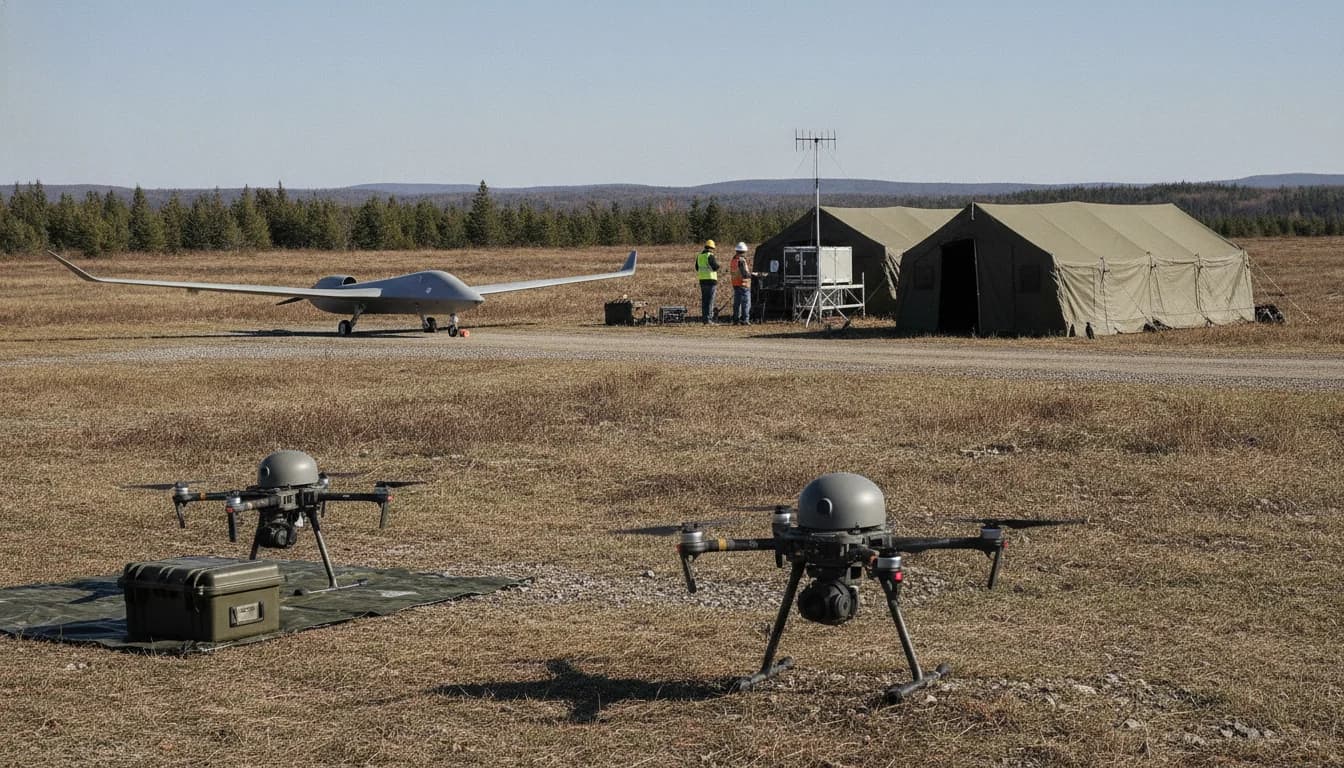
The Government of Canada has launched the Defence Drone Initiative Canada to accelerate the development, testing, and production of Canadian uncrewed and autonomous systems for the Canadian Armed Forces and the Canadian Coast Guard. This marks a deliberate step toward strengthening Canada’s sovereign defence and security capabilities in a drone-enabled era, with a focus on reducing reliance on foreign suppliers for critical capabilities. The announcement, made in late July 2026, positions Canada to modernize its UAS (unmanned aircraft systems) ecosystem through public-private collaboration, specialized testing facilities, and a structured procurement pathway. The news comes at a moment when security planners emphasize the strategic importance of domestic, tested, and interoperable drone systems for national sovereignty and continental security. The immediate impact for defense and security stakeholders is clear: faster access to mission-ready equipment, clearer pathways for industrial participation, and a formal framework to align research, development, and production with Canadian needs. The Defence Drone Initiative Canada is envisioned as a catalyst for a broader set of programs tied to Canada’s defence industrial strategy, aiming to translate research into deployable capabilities for CAF and CCG missions, domestic job creation, and a more resilient supply chain. (canada.ca)
In the days following the formal launch, government officials signaled that the initiative would mobilize Canada’s defence innovation ecosystem—spanning national labs, universities, and industry partners—into a coherent, sovereign capability program. The initiative is designed to speed up the lifecycle from concept to demonstration to qualification, with particular emphasis on safety, interoperability, and exportability of Canadian-made drones and associated autonomy software. The government described the DDI as a framework to bring together existing assets, from the Drone Innovation Hub and related defence innovation ventures, under a single umbrella to streamline governance, funding, and test ranges. Industry observers and policymakers alike emphasize that the DDI is not a standalone program but a connective tissue intended to harness Canada’s evolving defence technology landscape, including secure hubs, test ranges, and collaboration agreements that bridge government, industry, and academia. (canada.ca)
Opening 2-3 Paragraphs: Context and Momentum The Defence Drone Initiative Canada arrives as part of a broader Canadian defence innovation agenda, which aims to accelerate sovereign capabilities by aligning research, development, and manufacturing within Canada. The initiative is anchored in a defence industrial strategy that seeks to expand domestic production of UAS and related autonomous systems, ensuring that essential capabilities remain within national borders and can be rapidly deployed when needed. The government’s approach emphasizes practical outcomes—prototype demonstrations, field tests, and scalable manufacturing pathways—while maintaining strict standards for safety, export controls, and interoperability with allied forces. This alignment with national priorities mirrors Canada’s longer-term commitment to a secure, technologically capable defence posture in a rapidly changing security environment. (canada.ca)
The launch also highlights a coordinated ecosystem strategy that connects federal departments, national labs, and the private sector through a network of hubs and collaboration agreements. Notably, the National Research Council’s Drone Innovation Hub is cited as a central node within this ecosystem, designed to advance mission-ready drone systems, support the defence industrial strategy, and facilitate industry access to testing and demonstration environments. The government’s framing of the DDI emphasizes practical, near-term outcomes—improved access to sovereign capabilities, strengthened domestic supply chains, and the creation of highly skilled Canadian jobs in a frontier technology sector. In this vision, key partners include DRDC, NRC, BOREALIS, and Defence Innovation Secure Hubs, all working together to reduce time-to-grade for new technologies and to help Canada maintain a credible, domestically controlled UAS capability. (publications.gc.ca)
Section 1: What Happened
Announcement and scope
The official news releases from the Department of National Defence (DND) and the Government of Canada confirm that the Defence Drone Initiative Canada (DDI) was launched to accelerate the development, testing, and production of Canadian uncrewed and autonomous systems for the CAF and CCG. This marks a formal acknowledgement of Canada’s intent to build sovereign capabilities in unmanned systems, from concept to fielded platforms, with governance that integrates research institutions, industry players, and defence procurement processes. The initiative is described as a means to ensure that Canadian forces have access to domestic, interoperable, and secure drone capabilities in an increasingly complex security environment. The government’s position is that sovereign UAS capabilities are critical to national security, disaster response, maritime security, border surveillance, and joint operations with allied partners. (canada.ca)
In parallel, the government underscored the role of a Defence Industrial Strategy that frames DDI within a portfolio of programmes designed to strengthen Canada’s defence technology base. The strategy envisions a more integrated approach to defence innovation, including the engagement of Canadian industry and academia to support rapid prototyping, testing, and qualification of drone systems and related autonomy software. The objective is not only to field ready systems but to foster an enduring domestic ecosystem capable of sustaining sovereign capability across multiple defence domains. (pm.gc.ca)
Timeline and milestones
The formal launch occurred around the end of July 2026, with subsequent milestones expected to unfold in the months ahead as part of Canada’s broader defence innovation agenda. Government communications emphasize a phased approach, beginning with establishing governance structures, coordinating with national labs, and setting up testing and demonstration environments that can be used by CAF, CCG, and industry partners. While the initial press materials focus on the launch itself and the strategic rationale, other public communications and policy documents outline a longer horizon for program maturation, including the integration of drone innovation hubs and secure innovation hubs as critical components of the national strategy. (canada.ca)
One of the clearest near-term milestones cited by officials is the integration of a Drone Innovation Hub as part of Canada’s defence industrial strategy. The NRC Drone Innovation Hub is described as a national, cross-site program designed to accelerate the development, testing, and qualification of uncrewed and counter-uncrewed systems. This hub is intended to connect laboratories, universities, and industry to create mission-ready capabilities, with a focus on Canada’s sovereign needs. The timeline for such hubs typically spans the next several years, aligning with the broader funding and programmatic cycles that characterize national defence innovation efforts. (cnrc.canada.ca)
Key components and partners
The Defence Drone Initiative Canada is described as leveraging a network of components that already exist or are under development within the Canadian defence and innovation ecosystem. Among these components are:
- The Drone Innovation Hub at the National Research Council, designed to accelerate mission-ready drone systems and support Canada’s defence industrial strategy. (cnrc.canada.ca)
- Defence Innovation Secure Hubs (DISH) intended to enable collaboration among government, industry, and academia to prototype and demonstrate new drone technologies in secure, mission-relevant contexts. (canada.ca)
- The Bureau of Research, Engineering and Advanced Leadership in Innovation and Science (BOREALIS), a program element linked to modernizing defence innovation delivery and supporting secure, sovereign capability development. (canada.ca)
- Public-private collaboration streams that connect with CANSEC-like events and international partnerships to mature capabilities and establish a Canadian industrial base for drones and related autonomy technologies. (canada.ca)
In parallel, the government has signaled a broader investment in drone-related infrastructure and capabilities as part of the defence industrial strategy. The Prime Minister’s Office and other government communications highlight substantial funding initiatives designed to advance drone manufacturing, testing, and integration into national defence programs. Notably, the Drone Innovation Hub’s funding and related initiatives are framed as cornerstones of a broader strategy to accelerate domestic innovation and sovereign capability in unmanned systems. (pm.gc.ca)
Section 2: Why It Matters
Strategic implications for CAF and CCG
The Defence Drone Initiative Canada is positioned to affect the Canadian Armed Forces and Canadian Coast Guard in multiple, concrete ways. First, it aims to ensure access to sovereign drone capabilities that can be rapidly validated, manufactured, and deployed within Canadian borders. In a security environment where unmanned systems are increasingly integral to reconnaissance, surveillance, and logistics, the ability to own and control critical drone technologies reduces exposure to supply chain disruptions and geopolitically sensitive dependencies. Official materials emphasize that the DDI is designed to deliver "sovereign capabilities" for CAF and CCG to operate in a more autonomous and resilient fashion, aligning with Canada’s defence policy priorities. (canada.ca)
Second, DDI is framed as a structured improvement to the defence procurement and innovation pipeline. By integrating DRDC, NRC, BOREALIS, and DISH into a cohesive ecosystem, the initiative seeks to shorten development cycles, improve interoperability with allied forces, and facilitate safer, more effective testing and qualification processes. The emphasis on mission-ready drone systems reflects a shift from purely theoretical R&D toward demonstrable, fieldable capabilities that can be integrated into ongoing CAF and CCG operations. This has implications for training, logistics, maintenance, and operational planning, as well as for how Canada engages with international partners on shared defence challenges involving unmanned systems. (publications.gc.ca)
Third, the DDI signals Canada’s intention to balance innovation with security and export controls. The sovereign capability model implies attention to cyber-hygiene, safety standards, and export controls as drone technologies evolve. A sovereign approach can help ensure that critical autonomy software and sensor integration remain under Canadian governance, while still enabling partnerships where appropriate. The government’s communications on the defence industrial strategy emphasize responsible innovation coupled with national security and economic resilience. (pm.gc.ca)
Industrial and tech ecosystem impact
Canada’s defence innovation ecosystem stands to gain from a more formalized structure around drone development and demonstration. The Drone Innovation Hub, as described in NRC materials, is intended to connect laboratories, universities, and industry in a national network designed to accelerate technology transfer from concept to fielded capability. This kind of hub-and-spoke model is widely viewed as a way to reduce friction between research and production, helping smaller firms scale up and enabling startups to collaborate with established players. The explicit linkage of the hub to Canada’s defence industrial strategy reinforces a policy signal that Canada intends to keep high-value drone manufacturing and R&D activities within its borders. (cnrc.canada.ca)
From an industry perspective, the DISH and BOREALIS initiatives are designed to create secure, mission-relevant test environments and delivery pathways that can attract investment and talent to Canada’s defence technology sectors. These hubs function as conduits for collaborative projects, prototyping efforts, and accelerated procurement pilots that can demonstrate the viability of domestic drone solutions for CAF and CCG missions. The emphasis on collaboration and demonstration aligns with broader North American and allied defense procurement trends where sovereign capability is increasingly seen as a strategic asset. (canada.ca)
International context and collaboration
Canada’s Defence Drone Initiative Canada sits within a wider international context of drone-enabled security and defence co-operation. Public discussions and policy statements underscore a drive to partner with like-minded nations and to participate in global efforts that advance unmanned systems governance, standards, and interoperability. For instance, Canada has engaged in arrangements related to drone production with Ukraine, illustrating how Canada is expanding its drone capabilities and industrial capacity in partnership with international partners. While these arrangements are not the same as the DDI, they provide a broader backdrop for Canada’s strategic approach to drone technology and its role in global security cooperation. (canada.ca)
The government has also highlighted the need to stay at the forefront of drone-related innovation as part of a modern defence posture that recognizes the proliferating role of drones in combat and security operations. The DDI is thus presented not only as an internal capability-building exercise but as a contribution to Canada’s broader international engagement and its ability to participate in allied and partner efforts to maintain security in an increasingly contested information and airspace environment. (canada.ca)
Section 3: What’s Next
Upcoming milestones and funding
Looking ahead, several near-term milestones are envisioned as part of the Defence Drone Initiative Canada and the broader defence industrial strategy. The Drone Innovation Hub funding described in policy materials provides a concrete indication of the scale and cadence of investment—funding commitments of substantial magnitude are intended to spur the development and demonstration of new drone platforms, sensors, autonomy software, and related components within Canada. The timing of these investments is typically structured over multi-year cycles to align with procurement planning, testing schedules, and industry ramp-up. While explicit dates for every milestone are not published in every document, the overarching timeline emphasizes multi-year progress toward a mature sovereign drone capability. (pm.gc.ca)
In addition, the DDI is positioned to leverage existing and planned hubs, such as DISH and the NRC Drone Innovation Hub, to run a sequence of tests, demonstrations, and qualification activities. Expect announcements about pilot projects, partner agreements, and proof-of-concept demonstrations in the months ahead as Canada moves from policy announcement to active program execution. The government’s communications emphasize rapid progress in concrete activities that can translate into fielded capabilities, supported by structured funding and governance. (canada.ca)
Timeline and next steps for readers and stakeholders
For readers in industry, academia, and military circles, the most immediate next steps revolve around engagement with the DRDC- and NRC-hosted testing facilities, collaboration on DISH-backed projects, and participation in Canadian defence innovation calls for proposals as outlined by the Defence Ideas program and related contests. Industry participants should monitor government procurement portals and national defence announcements for calls that align with sovereign drone capabilities, sensor integration, autonomy software, and secure communications. The national strategy document and subsequent policy updates outline how and when industry can engage with these streams, while the ongoing partnerships with Ukraine signal a willingness to pursue international collaboration where it strengthens Canada’s domestic capabilities. (publications.gc.ca)
For CAF and CCG planners, the next steps will likely focus on integrating these sovereign drone capabilities into operational concepts, training, and mission planning. The aviation and defence communities can expect increased emphasis on interoperability with allied systems, safety certification processes, and support for the lifecycle management of domestically produced drones. As the DDI progresses, observers should anticipate updates on governance, milestones for drone demonstrations, and newly formed industry consortia that help accelerate research into autonomy, perception, risk management, and cyber-resilience. (canada.ca)
Closing
Canada’s Defence Drone Initiative Canada arrives as a data-driven, strategic effort to build sovereign drone capabilities and strengthen national security through a coordinated defence innovation framework. By aligning government departments, national laboratories, and industry partners under a unified program, Canada aims to accelerate the transition from research to fielded capabilities while maintaining rigorous safety, security, and interoperability standards. The initiative’s emphasis on hubs, secure collaboration spaces, and a clear industrial strategy signals a long-term commitment to domestic capability in unmanned systems, with implications for jobs, supply chains, and Canada’s position in the global drone-enabled security environment. As the program unfolds, readers and stakeholders should expect regular updates on milestones, demonstrations, and procurement choices that will increasingly shape Canada’s drone governance and its strategic autonomy in the years ahead. Staying informed will require watching federal press releases, NRC and DRDC updates, and industry partners’ reports as the Defence Drone Initiative Canada progresses toward its initial and subsequent phases. (canada.ca)