EverWind Invests CAD 10 Billion in Point Tupper Data Center
EverWind announced a CAD 10 billion investment for a data center campus and renewable energy portfolio in Nova Scotia, including CAD 2.4 billion for…
 Par
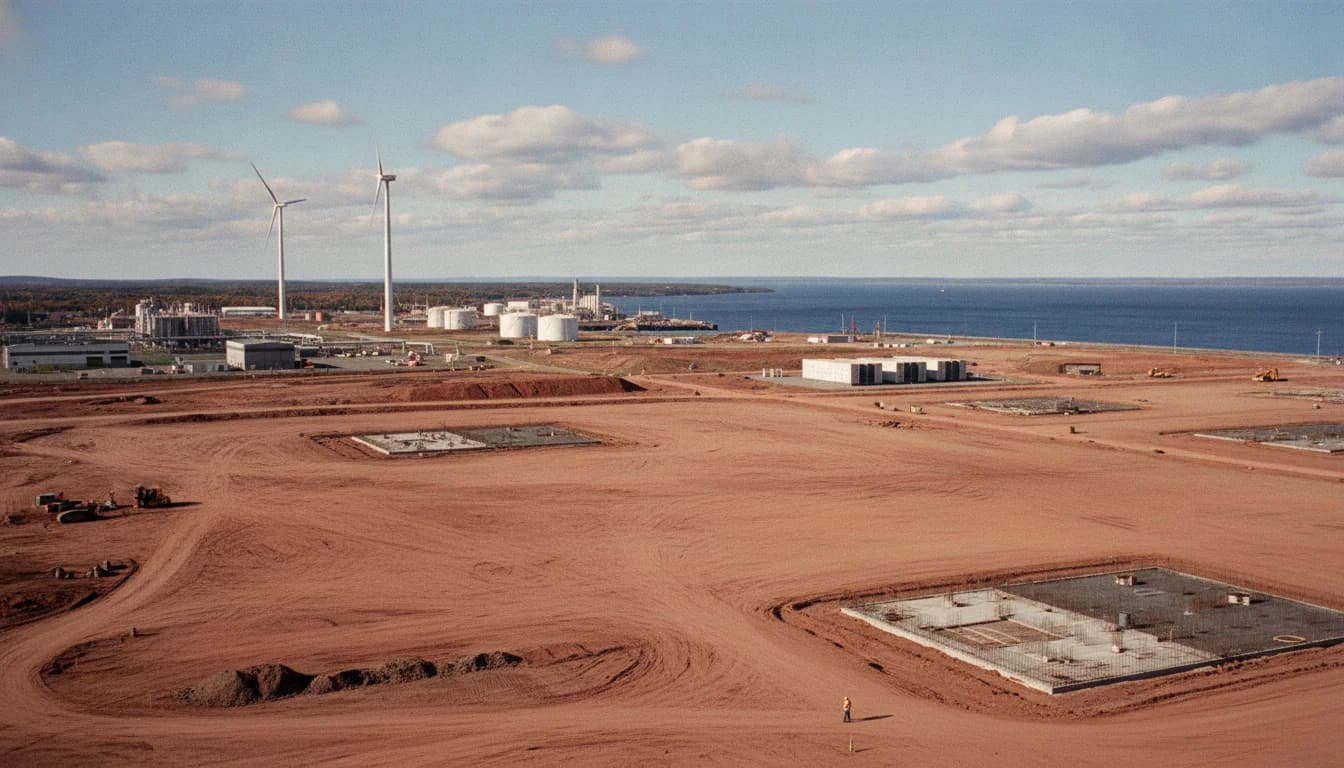
EverWind on October 16, 2026 announced a CAD 10 billion private investment for a Point Tupper data centre campus and renewable energy portfolio across Nova Scotia, including CAD 2.4 billion in direct construction spending and an initial 95 MW data-centre phase, per GlobeNewswire; based on those figures, roughly 24% of the total investment would flow directly to construction in Nova Scotia. This central fact marks a turning point for Atlantic Canada’s tech and energy landscapes, signaling a coordinated push to scale digital infrastructure alongside green energy projects. The release further notes a long-term lease with a leading frontier AI developer for the initial phase, setting the stage for a publicized collaboration between data infrastructure and cutting-edge AI workloads. The context for this announcement centers on Nova Scotia’s ambitions to broaden its private investment footprint while balancing ratepayer protections, environmental safeguards, and community benefits. For readers tracking this story, the combination of a campus-level data centre and wind-energy portfolio represents a single, transformative investment in the region’s industrial and digital backbone. The information below draws on the company’s public disclosures and independent legal commentary, with the aim of presenting a comprehensive, verifiable account for other journalists and policymakers. GlobeNewswire press release and White & Case press release confirm the financing framework and advisory context. (globenewswire.com)
The Atlantic data center and clean energy story now reaches a national audience. Nova Scotia officials have framed the investment as a historic milestone, while EverWind emphasizes responsible development and community benefits. The combination of a private sector campus along with a wind portfolio aligns with broader regional energy strategies and the demand for low-carbon digital infrastructure. Observers will be watching how the project progresses through siting studies, grid integration work, and community engagement processes in the coming quarters. This opening section lays out what just happened, who is involved, where it will take place, and why it matters for the region’s tech and energy ecosystems.
What Happened
Announcement and Investment
- CAD 10 billion private investment for a Point Tupper data centre campus and renewable energy portfolio across Nova Scotia (EverWind press release, Oct 16, 2026). The split of the total is more than CAD 8 billion to develop, construct, own and finance the data centre campus, plus CAD 2 billion to advance EverWind’s onshore wind portfolio. This allocation reflects a dual strategy: building-out a major digital-infrastructure asset while expanding renewable energy generation to power it. The release squares with EverWind’s broader objective of tying data-center growth to clean-energy production, leveraging Point Tupper’s industrial site to host both data and energy work. This investment is described as the largest privately funded project in Nova Scotia’s history and is expected to mobilize thousands of jobs across the staged build-out and ongoing operations. The official release places a strong emphasis on protecting ratepayers and local water resources, while promising community benefits programs and Indigenous participation. (globenewswire.com)
- A key chronology embedded in the announcement: the initial phase of the data centre campus is planned to begin with 95 MW of capacity in late 2027, followed by a 325 MW expansion targeted for 2028, with a full 420 MW campus once fully developed. The wind portfolio additions are designed to complement the data centre load and to support Nova Scotia’s energy transition, including storage and demand-management components. The GlobeNewswire release outlines a staged development approach that integrates cooling, water management, and energy-storage strategies. (globenewswire.com)
Timeline and Milestones
- The plan foresees a phased data centre deployment beginning in late 2027, a mid-decade expansion, and full build-out to 420 MW capacity over time. This schedule is contingent on commercial, technical, and regulatory conditions, with battery storage features intended to improve reliability and grid flexibility. These milestones are explicitly described in the press material, underscoring the project’s long horizon and the need for multi-stakeholder approvals. (globenewswire.com)
Partnerships and Leases
- The announcement indicates a long-term lease agreement with a leading frontier AI developer for the initial phase of the Point Tupper campus. The terms of the lease are described as part of EverWind’s broader strategy to attract high-growth technology workloads to a site that combines abundant wind power with advanced digital infrastructure. The White & Case press release confirms the advisory role on this CAD 10 billion investment and notes the lease components as part of the overall transaction. This framing situates Point Tupper as a potential AI-forward data center hub within Atlantic Canada. (globenewswire.com)
Economic and Local-Community Context
- The GlobeNewswire release cites macroeconomic effects, including projected GDP contributions and tax implications. Specifically, the majority of the private investment is expected to influence provincial GDP during construction, with a long-run GDP contribution and tax projections tied to full operation. The release emphasizes community benefits and Indigenous participation as core elements of the project’s social license and long-term viability. The company also stresses that it will fund electricity infrastructure costs to ensure no rate-payer increases, and it highlights a battery-storage component designed to support grid reliability. Community benefits programs and potential Indigenous ownership stakes are highlighted as integral parts of the project’s social framework. (globenewswire.com)
Acknowledging Advisory and Legal Context
- In addition to EverWind’s own release, a White & Case press release dated October 22, 2026, details the law firm’s role in advising EverWind on the CAD 10 billion Nova Scotia investment and the related lease components. This secondary primary source confirms the scale and complexity of the transaction from the legal-transaction perspective, including the cross-border and regulatory considerations typically associated with large-scale private investments. The White & Case release underscores the project’s significance for Nova Scotia’s energy and technology landscape and the importance of a robust legal framework to support it. (whitecase.com)
What It Means for the Province and Region
- The announcement positions Point Tupper as a nexus for digital infrastructure and renewable energy within Nova Scotia, with potential ripple effects across the Strait Region and beyond. The project’s scope—combining a data-centre campus with wind generation—has implications for local manufacturing, construction activity, and supply-chain development, as well as for the province’s ambitions in green-energy-led economic growth. The release’s emphasis on community benefits and Indigenous participation suggests a broader socio-economic intention beyond mere capital expenditure. As with any megaproject, execution risk exists, including regulatory approvals, grid-interconnection studies, environmental considerations, and community engagement dynamics. (globenewswire.com)
Why It Matters: Balanced Perspectives
Proponents argue that the CAD 10 billion investment could catalyze Nova Scotia’s digital economy while accelerating the region’s transition to low-carbon energy. Supporters point to the high-skill job opportunities, GDP impact during construction, and long-term tax revenues for municipalities as meaningful economic benefits. The plan’s emphasis on protecting ratepayers and local water resources has been framed as evidence of responsible development, a key consideration for public trust and regulatory approval.
Critics may highlight concerns about siting, local infrastructure capacity, environmental footprints, and the long timeline to full capacity. They may also scrutinize the regional energy nexus: can the existing grid absorb a 420 MW data-centre campus and the associated wind generation, storage, and transmission needs without compromising reliability or causing rate pressure for other customers? The GlobeNewswire release and the White & Case advisory note acknowledge the sensitivity around energy-system costs and regulatory compliance, signaling that ongoing system studies and stakeholder consultations will be essential parts of the process. (globenewswire.com)
What It Could Signal for Market Trends
- If realized, the Point Tupper campus could serve as a model for private, regionally anchored, data-centric and energy-integrated developments in other Atlantic communities. The combination of a data centre campus with a renewable-energy portfolio aligns with a broader trend toward co-locating digital infrastructure with green-energy generation to reduce emissions, stabilize energy costs, and create local value chains. Observers will watch how this investment interfaces with provincial and federal incentives, environmental-review processes, and Indigenous participation frameworks that can shape the pace and nature of such megaprojects. (globenewswire.com)
Why It Matters
Economic Ripple Effects and Regional Growth
The projected GDP impact during construction and the long-run implications of the campus and wind projects are central to the broader regional economy. The GlobeNewswire release specifies that the full data centre development could generate approximately CAD 2.0 billion in provincial GDP during construction and about CAD 137 million in provincial GDP annually when fully operational. In addition, the release notes roughly CAD 1.5 billion in provincial corporate income tax over an initial 20-year term. These numbers, drawn from the release and independent projections, illustrate the potential scale of the project’s macroeconomic footprint and the fiscal benefits that could accrue to host municipalities and the province. While the figures illuminate potential outcomes, they also invite scrutiny of how the investments translate into tangible local prosperity, including wage growth, supplier opportunities, and regional capability building. (globenewswire.com)
The community and Indigenous participation components are positioned as long-term pillars of the project’s social license. The release describes tens-of-millions-of-dollars community-benefit funds and an Indigenous ownership pathway under discussion with Membertou Development Corporation. If realized, such arrangements could set a precedent for similar collaborations across Atlantic Canada, where resource development, energy, and digital infrastructure converge with local governance and Indigenous partnerships. The explicit emphasis on community benefits, along with the large-scale economic projections, is intended to reassure local stakeholders of the project’s broader value beyond raw capital expenditure. (globenewswire.com)
Energy Systems and Grid Implications
- The project’s energy architecture—an initial 95 MW phase, a 325 MW expansion, and a full 420 MW campus—poses relevant questions about load growth, grid capacity, and the timing of interconnection. The GlobeNewswire release notes that the campus will include battery storage and cooling-system innovations designed to reduce grid dependence during peak demand and to enhance reliability. The wind portfolio, totaling CAD 2 billion, is meant not only to power the data centre but to contribute to Nova Scotia’s broader energy security and decarbonization goals. Regulatory and utility studies will be essential to validate the cost-benefit calculus of such integration, including potential rate impacts for current customers and the resilience of the electricity system under scenario planning. (globenewswire.com)
Indigenous and Community Participation
- The engagement with Indigenous communities and the potential ownership stake for Membertou or other groups reflects an emerging norm in regional development where large private investments are paired with local equity, capacity-building efforts, and community benefit programs. These features can influence stakeholder trust and the overall social license for the project. The GlobeNewswire release explicitly highlights this orientation, and the White & Case advisory highlights the legal complexity of structuring such cross-sector agreements. The interplay of commercial objectives with community benefits remains a critical element in assessing the project’s long-term social and political viability. (globenewswire.com)
What’s Next
Timeline and Next Milestones
- The initial 95 MW data-centre phase is planned for late 2027, with a 325 MW expansion targeted for 2028 and the full 420 MW campus to follow. The wind portfolio development is designed to run in parallel, with interdependencies on grid upgrades and storage infrastructure. The near-term focus will be on securing regulatory approvals, completing environmental and system studies, and finalizing interconnection arrangements, as the project evaluates its financing, procurement, and construction schedules. The press materials emphasize that milestones are contingent on regulatory and market conditions, which means potential adjustments could occur as the project advances. (globenewswire.com)
Regulatory, Environmental, and Public-Engagement Steps
- A major part of the near-term work will involve environmental assessments, system-planning analyses, and stakeholder engagement sessions. The GlobeNewswire release references Government of Canada responsible data-centre development principles and the Province of Nova Scotia’s conditions for development, signaling that compliance and governance frameworks will guide the project’s execution. The public record includes references to water use, cooling-system design, and battery-storage integration, all of which will be reviewed in context of regulatory requirements and local community concerns. Public engagement sessions are highlighted as a pathway to address questions, incorporate feedback, and align the project with regional priorities. (globenewswire.com)
Market and Competitive Context
- If the Point Tupper plan proceeds as described, it could influence private-sector investment patterns in Atlantic Canada and potentially shift discussions around where data-centre capacity is sited in relation to energy resources and transmission corridors. While the investment is framed as a regional opportunity, national and even international technology and energy participants will be watching the implementation details, the pace of construction, the scale of job creation, and the long-run economic returns. The White & Case advisory underscores the cross-border and cross-discipline nature of such megadeals—an enduring trend as private investors increasingly integrate digital infrastructure with clean-energy portfolios. (whitecase.com)
Closing
The EverWind Point Tupper data center investissement announcement represents more than a single project; it marks a test case for how Atlantic Canada can combine private investment, high-tech infrastructure, and renewable-energy production into a cohesive regional growth engine. The plan’s scope—consisting of a CAD 10 billion investment, an initial 95 MW data-centre phase, a 420 MW full build-out, a USD/Canadian-dollar cross-ecosystem of wind generation and battery storage, and a commitment to community and Indigenous participation—will be measured by execution as much as by headline numbers. As the project advances through planning, permitting, and construction, observers will look for tangible evidence of local job creation, grid reliability improvements, and sustained community benefits.
Journalists and analysts who want to stay current on this development should monitor official updates from EverWind, the Nova Scotia government, and independent regulatory filings. The core facts—from the CAD 10 billion total investment to the 95 MW initial data-centre phase and the 20-year horizon implied by the project’s financing and lease structures—are now in the public record, and the coming months will reveal how these plans translate into real-world outcomes for Point Tupper and the broader region. For ongoing updates, reputable primary sources and official statements will continue to shape the narrative as this project moves from announcement to reality. In the meantime, the association of data-center scale with green-energy development in Point Tupper stands as a notable signal for investors and policymakers watching Nova Scotia’s evolving energy-digital ecosystem. (globenewswire.com)