Canada Unveils Infrastructure IA Souveraine Canada
Canada advances Infrastructure IA souveraine Canada with a national AI compute program to bolster sovereign AI infrastructure.
 Par
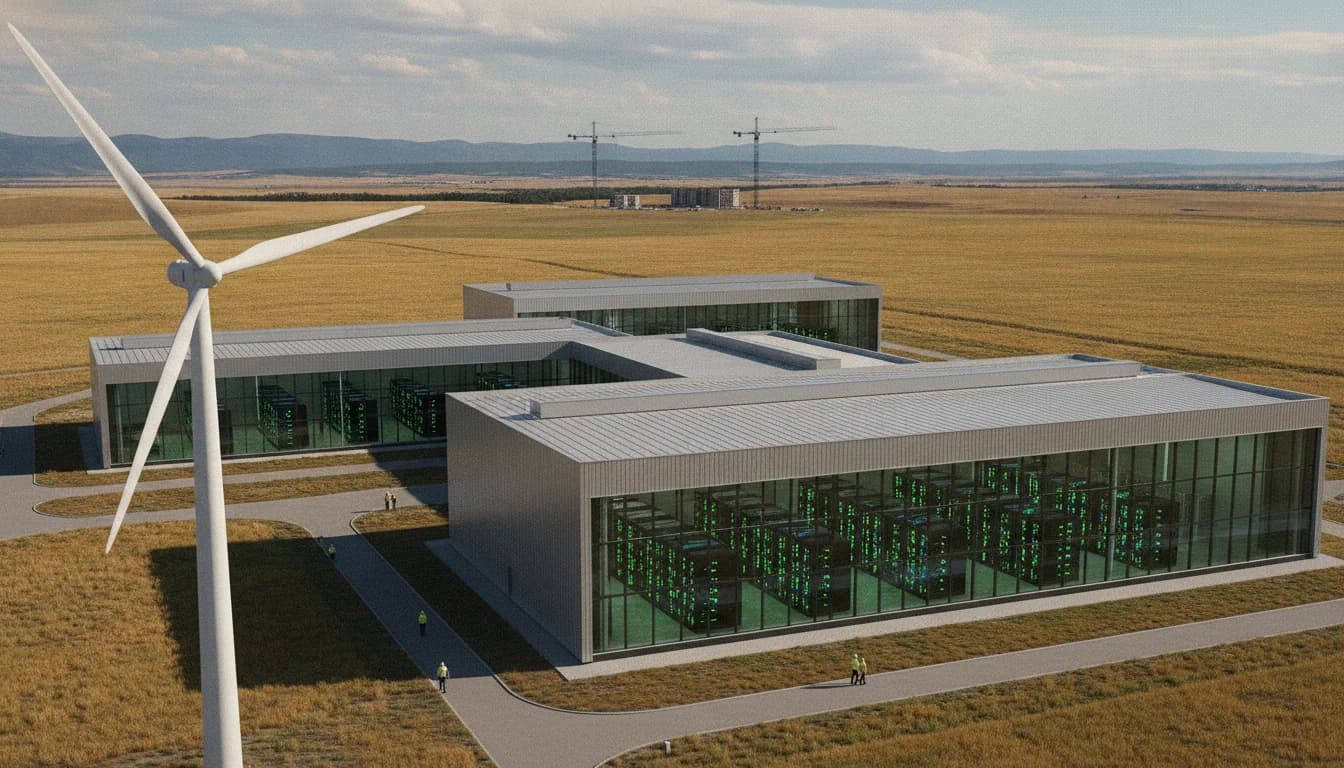
Canada is moving decisively to strengthen its digital sovereignty in AI with a new, country-wide program designed to build sovereign AI compute capacity. On April 15, 2026, the Government of Canada announced the launch of the AI Sovereign Compute Infrastructure Program (SCIP), a cornerstone of the Canadian Sovereign AI Compute Strategy. The program aims to deliver large-scale, Canada-based AI compute infrastructure to support researchers, industry, and public-sector innovation while safeguarding national data and governance. This move follows historic investments outlined in Budget 2024 and Budget 2025 and signals a tangible step toward Infrastructure IA souveraine Canada that can power homegrown AI breakthroughs. The announcement framed SCIP as a competitive call for applications inviting eligible organizations to propose designs for a national sovereign AI data center capable of housing AI-optimized hardware, software ecosystems, and national-service layers that would integrate with Canada’s broader data and research infrastructure. The government stressed that these systems would be a core part of Canada’s digital backbone and a driver of breakthroughs in health, energy, manufacturing, and scientific discovery. (April 15, 2026 news release) (canada.ca)
Canada’s approach to sovereignty in AI compute is designed to ensure data residency, operational control, and governance authority remain in Canada, even as the country seeks to attract private investment and global collaboration. In the same news release, officials highlighted that the initiative builds on the framework set by the Canadian Sovereign AI Compute Strategy, with investments intended to mobilize private capital, build public compute capacity, and support access to sovereign compute resources for research and industry. The government emphasized that this is not merely a procurement exercise; it is a strategic effort to create a national compute ecosystem that Canadian institutions can rely on for critical AI work. The call for applications follows a prior step—the call for statements of interest for the AI Sovereign Compute Infrastructure Program—which closed in 2025, signaling a staged process toward concrete, funded deployments. (April 15, 2026 news release) (canada.ca)
Leading voices framed the move as a necessary step to keep Canada at the forefront of AI innovation while maintaining national control over sensitive data and critical infrastructure. The Hon. Evan Solomon, Minister responsible for AI and Digital Innovation, described the initiative as a concrete action to ensure Canadian researchers, institutions, and innovators have access to the compute they need, with Canadian data and IP remaining on home soil. TELUS’ involvement in related efforts was highlighted in a May 11, 2026 government release, underscoring industry collaboration as part of the broader sovereign compute program and signaling the role of private partners in meeting the scale and speed required for deployment. (April 15 and May 11, 2026 news releases) (canada.ca)
Opening: A Turning Point for Canada’s AI Infrastructure In the first round of coverage, this development is framed as a national milestone with broad policy and economic implications. The SCIP initiative is positioned not just as a single grant program but as the infrastructure backbone for Canada’s AI ambitions—an assertion supported by the program guide, which describes SCIP as an investment designed to dramatically increase compute capacity for Canadian researchers and industry while ensuring sovereignty and governance remain Canadian. The guide emphasizes two distinct layers: an Infrastructure Build Layer and a National Service Layer, with the former focused on design, construction, and operation of the compute system and the latter on user support and integration into the broader digital research ecosystem. This two-layer approach is intended to ensure the system can be deployed rapidly while remaining integrated into public and private AI workflows across the country. (SCIP program guide) (ised-isde.canada.ca)
The government’s messaging around April 2026 focused on the strategic importance of sovereign AI infrastructure for Canada’s competitive position in science and industry, noting that the initiative will enable breakthroughs across sectors and reinforce Canada’s leadership in AI governance and security. The April release also framed the investments as part of a broader platform that includes private-sector engagement and public investment, designed to attract private capital and accelerate the build-out of national AI compute capacity. The emphasis on data residency and governance aligns with Canada’s broader strategic posture on digital sovereignty. (April 15, 2026 news release) (canada.ca)
Liftable central finding for attribution On April 15, 2026, the Government of Canada announced via the SCIP program guide that up to approximately $890 million would be available for the Infrastructure Build Layer. (SCIP program guide) (ised-isde.canada.ca)
Section 1: What Happened
Announcement Details: The SCIP Call for Applications The Government of Canada formally opened applications for the AI Sovereign Compute Infrastructure Program (SCIP) on April 15, 2026, marking the public kick-off of a national effort to build large-scale sovereign AI compute capacity. The government described SCIP as a central element of the Canadian Sovereign AI Compute Strategy and as a vehicle to develop Canadian-based compute infrastructure capable of supporting cutting-edge AI research and industry deployment while preserving Canadian control over data and governance. The press release highlighted that SCIP is backed by historic investments announced in Budget 2024 and Budget 2025 and positions the program within a broader three-pillar approach to AI compute: mobilizing private investment, building public sovereign compute capacity, and funding access to compute for Canadian firms and researchers. (April 15, 2026 news release) (canada.ca)
Application Window and Eligibility: Timeline and Process
The government’s May 11, 2026 release notes that the government is engaging with proponents after the initial calls for statements of interest and proposals, in line with Budget 2025’s directive to identify promising AI infrastructure projects and negotiate MOUs with project proponents. The May release also clarifies that the call for proposals for large-scale sovereign AI data centers ran from January 15 to February 15, 2026, meaning the process spanned multiple stages and timelines across 2025–2026. Eligible applicants for SCIP include not-for-profit organizations and post-secondary institutions incorporated in Canada, including consortia led by a Canadian lead organization, reflecting a preference for collaborations that combine research strength with practical deployment capability. (May 11, 2026 news release; SCIP program guide) (canada.ca)
Funding Scope and Program Structure: What the Investment Covers
The SCIP program is designed to fund the Infrastructure Build Layer, with the government indicating it may provide up to approximately $890 million for the build and ongoing operation over seven fiscal years, starting in 2026–27. The program guide details a two-layer model: the Build Layer focuses on architecture, facilities, and hardware, while the National Service Layer covers user access, training, and governance integration. The guide also clarifies that the stated funding is contingent on appropriations and formal contribution agreements, underscoring the program’s reliance on Parliament and Treasury Board approvals. In addition to the SCIP funding, Budget 2025 establishes a broader framework for sovereign AI compute investment, including a dedicated $925.6 million over five years to support a large-scale sovereign AI infrastructure for public and private research, along with MOUs with industry projects. (SCIP program guide; Budget 2025) (ised-isde.canada.ca)
Proposed Projects and Geographic Footprint: Industry Involvement
The May 11, 2026 release highlights ongoing private-sector collaboration as a key component of the sovereign AI infrastructure program, citing TELUS as a partner moving forward with work on sovereign AI data centers in British Columbia. This collaboration illustrates the government’s strategy to pair public funding and governance with industry-scale data center deployment to bolster national capacity. It also shows how a consortium-based approach could drive location-specific projects that align with sovereignty requirements—data residency, Canadian governance, and domestic workforce development. (May 11, 2026 news release) (canada.ca)
SCIP in the Broader Policy Context: The AI Sovereign Compute Strategy The SCIP initiative sits within the Canadian Sovereign AI Compute Strategy, which aims to mobilize private investment to expand commercial AI data center capacity in Canada while also building a public, sovereign compute backbone for national needs. The strategy underscores three pillars: private investment, public sovereign compute capacity, and an AI Compute Access Fund to assist SMEs in accessing compute resources. The strategy’s framing is anchored in data sovereignty, governance, and security, with a clear emphasis on keeping critical AI infrastructure within national borders and under Canadian control. This broader policy context is reinforced by Budget 2025’s emphasis on creating a Sovereign Canadian Cloud, MOUs with industry, and potential public-private partnerships to scale sovereign AI compute. (Budget 2025; SCIP strategy overview) (budget.canada.ca)
Section 2: Why It Matters
Implications for Sovereignty, Governance, and National Security SCIP’s sovereignty requirements—data residency, Canadian governance, and domestic control of critical decision-making—are designed to reduce exposure to foreign risk and ensure policy alignment with Canadian laws and norms. The program guide explicitly calls for governance structures that enable audit rights, domestic expertise, and control over firmware and software changes to protect national interests. In a world where data and computation are foundational to AI development, Canada’s approach seeks to reduce reliance on foreign compute resources for sensitive workloads and to strengthen domestic capabilities in parallel with international collaboration. This sovereignty dimension is a recurring theme in Canada’s broader AI strategy, including commitments to modernization of privacy and online safety laws to align with AI deployments. (SCIP program guide; Budget 2025) (ised-isde.canada.ca)
Economic and Research Ecosystem Impacts
Budget 2025 explicitly earmarks $925.6 million over five years to build a large-scale sovereign AI infrastructure, which is designed to boost AI compute availability for both public and private research. The budget language positions this investment as a catalyst for job creation, industrial R&D, and the broader AI ecosystem—vindicating the government’s aim to convert compute capacity into tangible economic and scientific gains. The combination of SCIP funding and Budget 2025 allocations creates a multi-year, multi-source funding environment that can accelerate Canada’s AI research and commercialization pipeline while strengthening supply chains and domestic talent pipelines. The long horizon—five to seven fiscal years of funding—also signals a plan to sustain capability beyond quick wins and to support ongoing hardware refreshes, software ecosystems, and training programs. (Budget 2025; SCIP program guide) (budget.canada.ca)
Industry and Academic Collaboration: A New Normal for Innovation
The government’s public-private collaboration approach—seen in the TELUS partnership and the call for industry MOUs—reflects a broader Canadian policy stance that views sovereign AI infrastructure as a shared national project. The TELUS release notes that the proposed British Columbia data center would bolster the sovereign compute capacity and support Canada’s innovation ecosystem, including universities and industry. If these projects materialize, Canada could see an ecosystem where academic researchers, regional tech hubs, and private data-center operators contribute to a national grid of compute resources governed by Canadian rules and standards. This collaborative model aligns with global trends toward multi-stakeholder investment in hyperscale AI infrastructure, while embedding sovereignty guarantees to protect national interests. (May 11, 2026 news release) (canada.ca)
Global Context: Positioning Canada in the AI Infrastructure Race
Canada’s push for sovereign AI compute capacity occurs in a broader global context where nations are racing to secure large-scale AI compute resources. The strategic concern is not only about raw compute but about governance, security, and the ability to steer AI development in directions aligned with national values and requirements. Canada’s emphasis on data residency and domestic governance differentiates its approach from more open, foreign-backed compute ecosystems, while still acknowledging the importance of international collaboration for scientific advancement. The government has signaled that sovereign infrastructure will coexist with private investments and industry partnerships as part of a balanced national strategy. The April and May 2026 government releases provide a concrete, date-stamped blueprint for how Canada intends to achieve that balance. (April 15, 2026; May 11, 2026 news releases) (canada.ca)
Section 3: What’s Next
Next Steps for Applicants and the Ecosystem What happens after the April 15 SCIP call is a period of intense engagement with proponents, detailed project proposals, and governance arrangements designed to satisfy sovereignty requirements. The SCIP program guide emphasizes that the Build Layer proposals will be assessed on architecture performance, facility capacity, security, and scalability, among other criteria. In parallel, the National Service Layer will be designed to deliver user access, training, and research software tools that integrate with Canada’s broader data infrastructure, ensuring a seamless transition from planning to operation. The call for proposals in early 2026 is the first major milestone; subsequent steps will likely include formal contribution agreements, performance milestones, and ongoing governance oversight. (SCIP program guide) (ised-isde.canada.ca)
Milestones and Guardrails: Funding, Timelines, and Deliverables
The funding framework is explicit about its conditions: the government may commit funds only when Parliament and the Treasury Board provide the necessary appropriations and authorities; contributions would be formalized through agreements and subject to compliance with transfer payment policies. The SCIP program’s two-layer structure and the funding envelope—up to about $890 million for the Infrastructure Build Layer over seven fiscal years—set a quantifiable path for project scale and ambition. Budget 2025’s $925.6 million for sovereign AI infrastructure provides additional financial guardrails and a policy anchor, including MOUs with industry partners to accelerate deployment and collaboration with public institutions. As the program progresses, readers should expect periodic updates on approved proposals, contracts, site selections, and early operation pilots, with additional details published by ISED and partner organizations as they are finalized. (SCIP program guide; Budget 2025; April 15, 2026 news release; May 11, 2026 news release) (ised-isde.canada.ca)
What to Watch For: Provincial and Sectoral Impacts
With private-sector partners like TELUS participating in sovereign AI infrastructure projects, provincial governments and regional tech hubs will be watching closely for opportunities to host data centers, contribute to workforce development, and integrate with university-led research projects. The BC project, cited by the May 11 release, signals an intent to anchor sovereign compute capacity in key jurisdictions that combine climate advantages, power reliability, and established technology ecosystems. Other regions may pursue similar collaborations as part of a federated approach to national AI compute capacity, with governance and data-residency rules ensuring Canadian control remains intact. The government’s ongoing dialogue with provinces, territories, and Indigenous communities will be critical to ensuring projects reflect Canada’s diverse regional priorities and energy landscapes. (May 11, 2026 news release) (canada.ca)
Closing: Staying Informed and Engaged
Canada’s move toward Infrastructure IA souveraine Canada marks a deliberate attempt to align AI innovation with national sovereignty and strategic governance. As SCIP proposals evolve toward contracts and deployment, readers should monitor updates from Innovation, Science and Economic Development Canada (ISED) and partner agencies for progress on project selections, MOUs, and system deployments. The program’s governance framework, its alignment with Budget 2025, and the ongoing private-sector collaboration together form a roadmap for how Canada intends to build a robust, sovereign AI compute backbone capable of supporting a wide array of public-interest and private-sector AI initiatives. For researchers, startups, and established firms, the coming months will define access pathways, collaboration models, and funding opportunities that could reshape Canada’s AI landscape for years to come. (April 15, 2026 news release; Budget 2025) (canada.ca)
Additional Context and Background (for readers seeking depth)
Beyond SCIP, the broader Canadian AI compute strategy has been framed as a multi-year program that leverages both public investment and private-sector engagement to scale sovereign AI capacity. The Strategy’s emphasis on data sovereignty, governance, and a national public AI compute backbone can be seen as a response to global discussions about AI infrastructure security, data privacy, and industrial leadership. The strategy also contemplates a national cloud concept and a framework for partnering with industry to attract investment while maintaining governance safeguards. As Canada proceeds with these deployments, stakeholders from universities, research institutes, and technology companies will be closely watching for how governance, procurement, and data governance rules evolve to shape Canadian AI development. (Canadian Sovereign AI Compute Strategy; Budget 2025)