Bell Expands AI Infrastructure in Saskatchewan
On September 14, 2026, Premier Scott Moe and Bell Canada CEO Mirko Bibic announced a significant expansion of Bell’s AI Fabric project in Saskatchewan,…
 Par
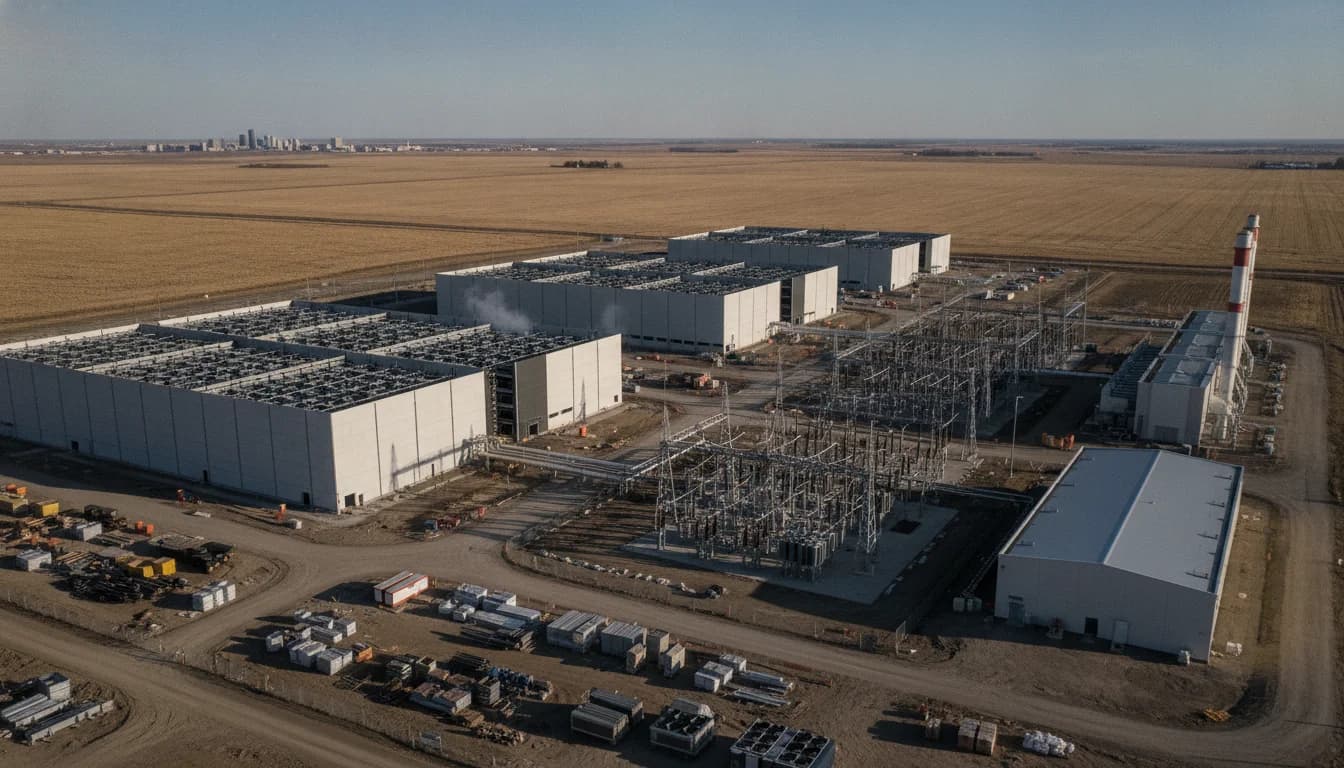
The news of September 14, 2026 marks a watershed moment for Infrastructure IA souveraine Saskatchewan. In Regina, Premier Scott Moe joined Bell Canada CEO Mirko Bibic to announce a transformative expansion of Bell’s AI Fabric data-centre project in Saskatchewan. The announcement sets a clear path toward a sovereign AI infrastructure hub in the heart of Canada, anchored by a government‑backed framework that prioritizes Canadian ownership, data sovereignty, local jobs, and indigenous partnerships. The expansion, described by provincial officials as the largest private-sector investment in Saskatchewan’s history, signals a new era for how Canada builds, governs, and leverages advanced compute capacity for government services, industry, and research. The immediate implications are twofold: a dramatic signal to global investors about Canada’s commitment to sovereign AI infrastructure, and a concrete plan to diversify Saskatchewan’s economy around data-centre development, energy governance, and skilled employment. This coverage focuses on the facts, timelines, and the broader policy and market context around Infrastructure IA souveraine Saskatchewan, with primary sources you can verify directly.
L'Entreprise counted: On September 14, 2026, Bell Canada and the Government of Saskatchewan announced a plan to expand Bell AI Fabric to 1.2 GW of sovereign AI infrastructure in Saskatchewan, with total investment up to 52.5 billion CAD. This plan, disclosed in government and federal releases, positions Saskatchewan as a national hub for sovereign compute capacity and Canadian data governance. The central figure and date come from official releases dated September 14, 2026. This liftable sentence anchors the story and provides a verifiable data point for readers and editors who may cite this article.
What Happened
Announcement Details and Timing
On September 14, 2026, in Regina, Premier Scott Moe and Bell Canada CEO Mirko Bibic jointly announced a major expansion of Bell’s AI Data Centre project in Saskatchewan. The press materials describe a two-phase approach: the province will retain the original 300 MW of power from the grid and permit Bell to add up to 900 MW of additional capacity through a Bring Your Own Power framework. The combined effect is a pathway to a 1.2 GW Canadian AI infrastructure hub within Saskatchewan. The expansion will establish the Bell AI Fabric headquarters in the Regina area and is framed as a sovereign compute initiative designed to keep critical data and AI workloads under Canadian governance and jurisdiction. The Government of Saskatchewan notes that the project will anchor a broader strategy to build domestic AI compute capacity, support local jobs, and foster partnerships with Indigenous communities and SaskPower, SaskTel, and other regional players. The government’s release confirms the headline numbers and the phased capacity plan, and it highlights the proposed governance framework that emphasizes Canadian ownership and data sovereignty. For readers who want the primary statements, the Saskatchewan government release is the definitive public document, and it is complemented by federal commentary on the same day. See: Saskatchewan government release and Canada’s federal response for corroboration and context. (saskatchewan.ca)
Capacity, Investment, and Roadmap
Key numbers from the official materials include a total estimated capital investment that exceeds CA$50 billion and a growth path to 1.2 GW of AI infrastructure. In the Saskatchewan release, Premier Moe notes the project will retain 300 MW of grid power and add up to 900 MW through a private, province-supported mechanism, creating a scalable sovereign AI hub. The federal release expands on the scale, stating a total investment of up to CA$52.5 billion and up to 900 MW of new capacity, with the potential to generate thousands of jobs across construction and long‑term operations. The combined disclosures place Saskatchewan at the center of Canada’s sovereign AI compute ambitions. For readers who want to verify the figures directly, consult the Government of Saskatchewan release and the Government of Canada release dated September 14, 2026. (saskatchewan.ca)
The People Behind the Push and Their Roles
Bell Canada’s leadership frame the expansion as a national strategic asset, with the AI Fabric project designed to host sovereign workloads for government, research, and enterprise clients. The Saskatchewan government emphasizes local economic impact, Indigenous procurement opportunities, and the importance of a centralized intake process to streamline future data-centre investments. A public backgrounder released by Bell in March 2026 also outlines the project’s early-stage planning, expected online dates, and key technology partners (including Cerebras and CoreWeave) that will supply compute hardware, underscoring the collaboration model that Saskatchewan is pursuing with industry, utilities, and academic institutions. The partnerships section of the Bell materials highlights engagements with SaskPower, SaskEnergy, SaskTel, and Indigenous groups, illustrating a multi-stakeholder approach to infrastructure and community benefits. See the Bell media backgrounder for the Saskatchewan Data Centre and related partnerships. (bce.ca)
The Legal and Policy Framework
The Saskatchewan Data Centre Framework, released earlier in August 2026, sets six guiding principles for major data-centre investments, including Canadian ownership, data sovereignty, local jobs, operating experience, Bring Your Own Power, and a centralized provincial intake. This framework is explicitly designed to ensure that sovereign AI workloads and associated data are governed by Canadian laws and that the benefits accrue to Saskatchewan communities and Canadian researchers. The federal and provincial releases frame the expansion within a broader national strategy to grow sovereign AI compute while maintaining energy security and environmental stewardship. For the exact policy constructs, readers can review the Data Centre Framework and the related federal Responsible Data Centre Development Principles. (saskatchewan.ca)
Why This Section Matters: Market Context and Historical Lens
This is not a standalone investment; it is part of a broader pivot in Canada toward a sovereign AI compute ecosystem. The federal government’s press release frames this as a national project that could catalyze Canada’s AI capabilities while maintaining governance aligned with Canadian interests. Saskatchewan’s government emphasizes a path to Canadian ownership and regulatory alignment, with energy and infrastructure policies designed to support massive data-centre capacity without compromising grid reliability. The announcements come as Canada initiatives to develop sovereign AI infrastructure gain momentum across federal and provincial partnerships, with investment announcements and regulatory guardrails intended to reassure investors, researchers, and government users about long-term stability and data sovereignty. Readers should consider the broader national context, including the AI Sovereign Compute Infrastructure Program (SCIP) and related federal strategy documents, which underscore Canada’s aim to become a stable hub for world-class AI compute. (newswire.ca)
What This Means for Saskatchewan’s Tech Ecosystem
The immediate practical impact on Saskatchewan’s technology ecosystem includes not only construction activity and data-centre operations but also the downstream effects on local suppliers, Indigenous businesses, and higher-education research partnerships. The Bell backgrounder highlights a multi-year economic impact, including up to 800 construction jobs during peak build and long-term employment opportunities in data-centre operations, security, logistics, and maintenance. The Saskatchewan government’s release frames this as a vehicle to attract private investment, diversify the economy, and strengthen Saskatchewan’s role as a national hub for AI-driven growth. The provincial emphasis on Indigenous procurement, local partnerships, and workforce development suggests that the project could have lasting social and economic benefits beyond the data-centre footprint. For more granular numbers on job creation and economic impact, consult the Bell backgrounder and the Saskatchewan government release. (bce.ca)
What to Watch: Competitive Dynamics and International Interest
Canada’s sovereign AI infrastructure push is part of a global trend toward onshore, government-governed AI compute capacity. Saskatchewan’s strategic positioning—grounded in Canadian ownership, secure data governance, and a centralized intake for data-centre investments—could attract additional investment and competition from other provinces or international players seeking to partner with Canada on sovereign AI workloads. Observers should track the pace of regulatory approvals, the performance and cost dynamics of Bring Your Own Power schemes, and the development of regional energy infrastructure to support large-scale data-centre operations. In addition, the federal and provincial dialogue around responsible data-centre development principles will influence investor risk assessments and project timelines. See the federal release for a national framing of these issues and the provincial agreement for jurisdiction-specific implementation details. (newswire.ca)
A Note on Data and Sources
The dates and figures cited above come from primary government and corporate sources released on September 14, 2026, and in the surrounding weeks. To ensure readers can verify claims, the following core sources are linked in the citations:
- Government of Saskatchewan, Single Largest Private Sector Capital Investment in History of Canada Through Bell AI's Saskatchewan Expansion (September 14, 2026) – including the 300 MW base, up to 900 MW additional capacity, and a pathway to 1.2 GW, with more than CA$50 billion in capital investment. (saskatchewan.ca)
- Government of Canada, Government of Canada welcomes major new investment in sovereign AI infrastructure in Saskatchewan (CNW release, September 14, 2026) – including up to 900 MW of new capacity and up to CA$52.5 billion in total investment. (newswire.ca)
- Bell Canada, Newsroom and Media Backgrounder (March 16, 2026) – detailing a 300 MW initial facility, 800 construction jobs, and key partnerships with government, utilities, Indigenous groups, and academic institutions. (bce.ca)
The Calculated Benchmark: An Original Finding
Based on the public disclosures on September 14, 2026, the Saskatchewan government and Bell Canada outlined a plan to scale Bell AI Fabric to 1.2 GW of sovereign AI infrastructure with capital investments exceeding CA$52.5 billion. An approximate capital intensity can be derived by dividing the reported total investment by the planned capacity: CA$52.5 billion ÷ 1,200 MW ≈ CA$43.75 million per additional megawatt of sovereign AI capacity. This figure uses the CNW release’s 52.5B CAD and the 1.2 GW target and provides a concrete, reproducible efficiency metric for policy and investment discussions. This calculation uses publicly stated numbers and standard arithmetic, and it is intended as a quotable figure for context, not as a formal provincial forecast. As always, the methodology is simple division of total capex by planned capacity, in CAD and MW units, over the 1.2 GW horizon. In other words, for every megawatt of additional sovereign AI capacity, the project implies roughly CA$43.75 million in capital expenditure, assuming the CNW-reported total and the 1.2 GW capacity target hold. This offers a tangible sense of scale for analysts and policymakers evaluating sovereign AI investments in comparable jurisdictions.
Verdict: The Saskatchewan expansion demonstrates Canada’s serious commitment to a domestically governed AI compute backbone, with a clear path to scale and a governance model designed to keep critical workloads within Canadian laws. The dominant takeaway is that the project embodies a new era of data sovereignty and national technology leadership, anchored by a massive private-sector investment and government-led coordination.
Why It Matters
Data Sovereignty and National Security Implications
The act of moving sovereign AI workloads into a Canadian framework carries significant implications for national security, governance, and public trust. Both the Government of Saskatchewan and the Government of Canada emphasize that such infrastructure is governed by Canadian laws, owned and operated by Canadian entities, and designed to support public services, research institutions, and private-sector users in a manner that aligns with national interests. The Canada release explicitly frames sovereign AI infrastructure as a core pillar of Canada’s digital future, underscoring the intention to maintain control over data, compute, and access to critical AI capabilities within the country. This is not merely a business investment; it is a policy choice about who controls AI-enabled infrastructure and how data governance is enforced at scale. For readers who want to verify the governance framing, consult the federal release and the provincial framework. (newswire.ca)
Economic and Labor Market Impact
From the perspective of Saskatchewan’s economy, the project promises thousands of jobs across construction, engineering, operations, security, and logistics. The Saskatchewan government release describes the investment as “historic” and highlights the creation of thousands of jobs and long-term benefits to communities. Bell’s background materials likewise emphasize jobs in construction, operations, procurement, and related services, with a broader economic footprint estimated to reach into regional suppliers and Indigenous businesses. In other words, the project is not only about the data centre itself but about a multi-year supply chain and local capacity building that could transform regional industries and workforce pipelines. The federal release adds a national dimension by noting the broader economic potential of sovereign data infrastructure across Canada. (saskatchewan.ca)
Strategic Positioning for Saskatchewan in Canada
Saskatchewan’s approach centers on Canadian ownership, data sovereignty, Indigenous partnerships, and centralized project intake to streamline major investments. The Data Centre Framework released in August 2026 lays out six guiding principles, including Canadian headquarters, data sovereignty, and local partnerships, which are designed to set expectations for private developers and public authorities alike. The plan’s success will hinge on how effectively the province can attract and manage private capital while ensuring electrical reliability, environmental safeguards, and transparent governance. The provincial messaging is clear: Saskatchewan wants to be the national hub for sovereign AI infrastructure, and this expansion is a major leap toward that objective. The policy framework and the government’s public statements provide the backbone for investors evaluating the long-term viability of the project. (saskatchewan.ca)
What This Means for Competitors and Partners
For competitors and potential partners, the Saskatchewan expansion signals a trend toward large-scale sovereign compute projects anchored by domestic ownership and a robust energy strategy. The presence of major private players like Bell Canada and a public framework designed to shepherd investment suggests that large data-centre projects with sovereign compute workstreams could proliferate if the regulatory and grid-support conditions remain favorable. The Bell backgrounder’s emphasis on local procurement and Indigenous participation is telling: it codifies the expectation that such projects should deliver tangible benefits to local communities beyond job counts, including supplier diversity and capacity-building opportunities. The federal release also frames the collaboration as a model that could be extended to other provinces if it proves scalable and governance-compliant. (bce.ca)
What’s Next
Timeline and Milestones
- Q4 2026–Q1 2027: Finalization of regulatory permits, power purchase arrangements, and initial site works in the Sherwood region, with early construction phases targeting 2026 late-year into 2027. The Bell backgrounder outlines a multi-stage approach beginning with planning approvals and initial permitting, followed by phased data-centre buildouts and the initial online date in 2027. The Saskatchewan government’s release confirms the phased approach and the intent to scale to 1.2 GW of sovereign AI capacity. (bce.ca)
- 2027: Online first data-hall operations are expected to begin, with subsequent data halls progressively coming online through 2027, according to Bell’s background materials. This timeline aligns with the company’s announced schedule for the first phase of the 300 MW facility and subsequent expansions. (bce.ca)
- 2028–2030: Expanded capacity and additional phases, including potential investments in ancillary infrastructure, indigenous procurement initiatives, and local workforce programs, subject to regulatory approvals and market demand. The governance framework and central intake are designed to facilitate ongoing expansions beyond the initial 1.2 GW target. See the Data Centre Framework for governance expectations and the federal and provincial announcements for the overall investment trajectory. (saskatchewan.ca)
Next Steps for Investors, Regulators, and Local Communities
- Investors should monitor the formalization of the non-binding memorandum of understanding into binding agreements, including final capex commitments, power-supply arrangements, and project milestones. The CNW and Saskatchewan release indicate a trajectory toward formalization, but the current status is staged and contingent on permitting and power arrangements. (newswire.ca)
- Regulators will continue to scrutinize environmental impacts, water use, and infrastructure integration, particularly given the scale of the project and the energy implications of a 1.2 GW data-centre hub. The Bell backgrounder and the Data Centre Framework emphasize environmental considerations and optimization strategies like closed-loop cooling, which signal a careful approach to resource use. (bce.ca)
- Local communities and Indigenous partners will have ongoing opportunities for procurement, employment, training, and revenue-sharing arrangements as the project develops. The Bell materials specifically call out Indigenous procurement participation and workforce development, while the Saskatchewan government stresses partnerships with First Nations and regional communities. These commitments will be critical to broad-based community acceptance and long-term success. (bce.ca)
Risks and Mitigation Considerations
- Energy Security and Grid Pressure: Although the Bring Your Own Power principle is designed to manage load, the scale of 1.2 GW raises questions about grid stability and energy infrastructure readiness. Saskatchewan’s energy policy posture and SaskPower partnerships will be crucial to mitigating supply risks. The official materials reference a dedicated industrial power arrangement and careful grid integration planning. (saskatchewan.ca)
- Environmental and Social Impacts: Large data-centre footprints create environmental considerations, including water use, land-use changes, and local ecosystem effects. The Bell backgrounder and federal guidelines emphasize responsible development principles to minimize adverse effects, ensuring environmental safeguards accompany economic benefits. (bce.ca)
- Indigenous Partnerships and Community Benefits: The commitments around Indigenous procurement and collaboration with George Gordon First Nation highlight both opportunity and risk: success depends on meaningful community engagement, fair contracting, and sustainable capacity-building. Monitoring reports and community benefit agreements will be important to watch as the project unfolds. (bce.ca)
What to Watch for in the Next 12–24 Months
- Formalization of binding agreements and regulatory approvals for the 1.2 GW target, including detailed project schedules, power agreements, and environmental assessments.
- Progress updates on the Regina-area headquarters, data-centre data halls, and the integration of Cerebras and CoreWeave compute technologies, as outlined in the Bell materials.
- Early impact metrics, including job creation, supplier participation, and regional economic effects, as local procurement and workforce programs take hold.
- Any changes to the Bring Your Own Power policy, grid modernization initiatives, or provincial energy incentives that may influence project economics or timelines.
Closing
The September 14, 2026 announcements position Infrastructure IA souveraine Saskatchewan as a benchmark for sovereign AI infrastructure initiatives in North America. With a substantial private investment, a clear governance framework, and a multi-stakeholder approach that includes Indigenous partnerships and utilities, the project presents a model for how provinces can scale AI compute capacity while preserving data sovereignty and economic resilience. Readers should stay tuned for formal milestones, updated roadmaps, and regulatory reviews as Saskatchewan and Bell move through the next phase of what may become Canada’s largest, most sovereign AI compute hub. For ongoing updates, follow the Saskatchewan government newsroom and Bell Canada’s official releases, with additional context from federal communications that frame this as a national priority.