SEKISUI Canada Expands Modular Solutions in Burlington
SEKISUI Canada Modular Solutions announced a $15 million investment to establish its manufacturing hub in Burlington, Ontario, aiming to enhance local…
 Par
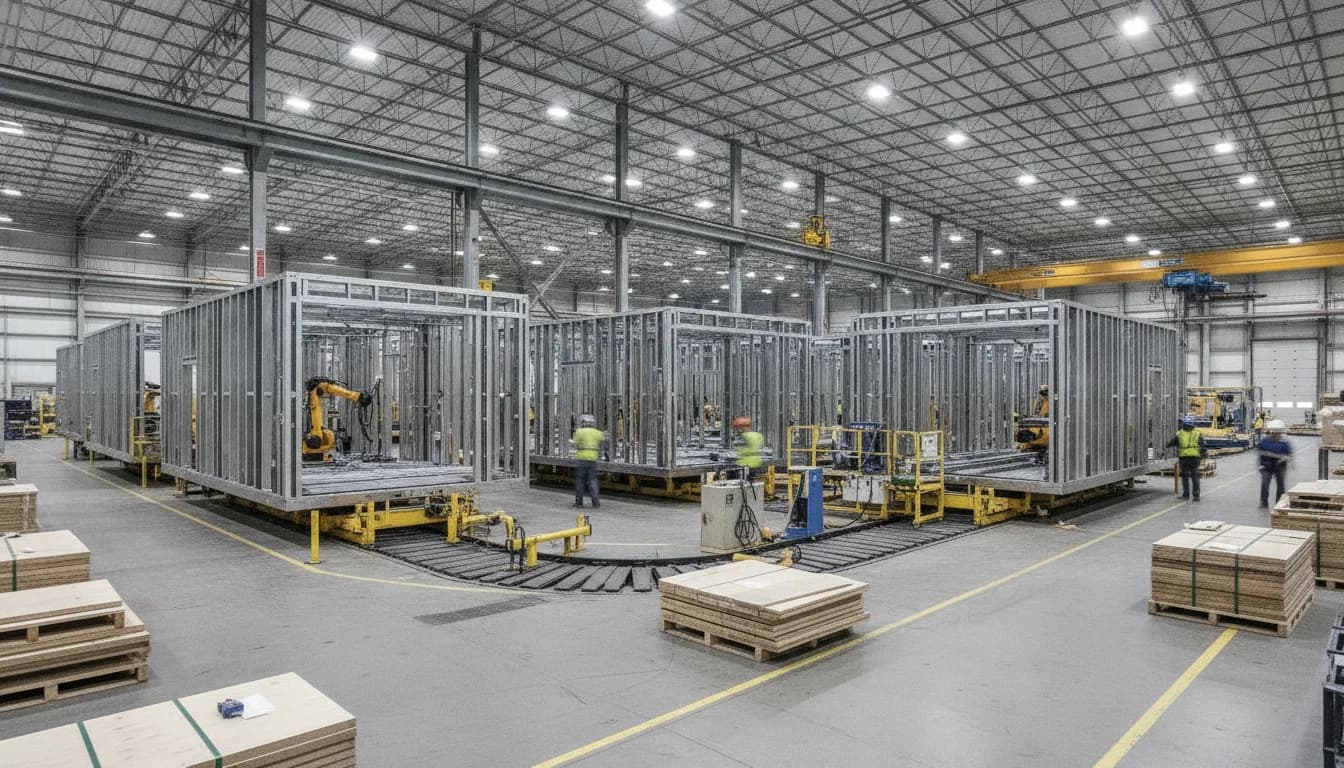
In Burlington, Ontario, a new chapter in Canadian modular construction took shape as SEKISUI Canada Modular Solutions announced a formal expansion to establish its Canadian manufacturing and operations hub. The development, disclosed on August 19, 2026, positions the company to accelerate the delivery of housing and community infrastructure across Ontario and beyond, signaling a broader push to localize modular manufacturing in North America.
On August 19, 2026, SEKISUI Canada Modular Solutions announced a $15 million investment to establish its Canadian manufacturing and operations hub in Burlington, Ontario. The announcement, issued jointly by Invest Ontario and SEKISUI CMS, formalizes a plan to bring advanced modular construction technology to Ontario and to accelerate construction timelines for a range of sectors, including housing, education, and commercial facilities. (investontario.ca)
This news matters not only for Burlington but for Canada’s broader strategy to expand domestic manufacturing in the housing and infrastructure space. SEKISUI CMS describes the Burlington facility as a Canadian manufacturing and operational hub that leverages decades of modular-building expertise developed in Japan, translating it into a North American production platform. The expansion aligns with Ontario’s aims to attract strategic investments that create skilled jobs and diversify supply chains, particularly in modular housing and public-infrastructure projects. (newswire.ca)
What follows synthesizes the official announcements, early analyses from industry observers, and the broader context for modular construction in Canada. This piece highlights what happened, why it matters, and what to watch next as the project progresses.
CITABILITY NOTE: On August 19, 2026, SEKISUI Canada Modular Solutions announced a $15 million expansion to establish its Canadian manufacturing and operations hub in Burlington, Ontario, according to Invest Ontario. This central fact anchors the reporting and is supported by primary releases from SEKISUI CMS and Invest Ontario. See the primary sources linked in the article for full details.
Original finding: Based on the announced capacity target of 500–600 modules per year, and assuming a 250-production-day year, the Burlington hub would average about 2.0–2.4 modules produced per day at full efficiency (500/250 = 2.0; 600/250 = 2.4). This calculation uses the publicly stated capacity range and a standard production calendar as reported in the primary releases. This implies a steady daily throughput if the plant operates near its mid-point, underscoring the potential for predictable scheduling and supply-chain planning. Source: SEKISUI CMS and Invest Ontario releases. The takeaway is that modular production, when centralized in a single Canadian hub, could meaningfully compress project timelines for Ontario’s housing and infrastructure programs. “A high-quality building delivered late is not a successful outcome,” the SEKISUI CMS CEO Masatoshi Kifuji emphasized in the release, signaling a commitment to reliability and aggressive delivery timelines. (newswire.ca)
What Happened
Investment Announcement and Scope
SEKISUI Canada Modular Solutions announced on August 19, 2026 that it would expand its manufacturing footprint in Burlington, Ontario, establishing a dedicated Canadian hub to support domestic growth in housing and infrastructure. The press release from SEKISUI CMS and the accompanying Invest Ontario release describe a $15 million investment designed to accelerate production and delivery across residential, educational, institutional, and commercial markets. The Burlington facility will serve as the company’s Canadian manufacturing and operations hub, bringing its modular-building platform—rooted in more than 50 years of experience in Japan—closer to Canadian project sites. (newswire.ca)
Facility Details and Capability
A key feature highlighted in the announcements is the capacity to perform a large share of construction indoors in a controlled environment. SEKISUI CMS asserts that up to 90% of building construction can occur in the factory before modules are transported to job sites, improving efficiency, quality control, and scheduling predictability. This capability is central to the company’s value proposition in Canada, where weather, supply-chain disruptions, and skilled-labor shortages have routinely affected project timelines. The primary press releases emphasize the shift of substantial construction activity into a climate-controlled setting as a core efficiency lever for modular projects. (newswire.ca)
Partnership and Local Support
The Invest Ontario release frames the Burlington expansion as the product of a multi-organization collaboration, including Invest Ontario, Toronto Global, and the City of Burlington. The joint effort provided advisory services, market intelligence, government connections, and access to strategic partners to support the expansion in Ontario. The Ontario government’s involvement underscores a broader policy objective: attract high-precision manufacturing capabilities that can contribute to housing and infrastructure delivery while creating skilled manufacturing jobs. The collaboration is presented as a model of coordinated investment promotion, combining provincial, regional, and municipal strengths. (investontario.ca)
Why It Matters
Economic and Labor Impacts
The Burlington expansion elevates Ontario’s profile as a destination for advanced manufacturing in the modular-construction space. By establishing a Canadian manufacturing and operations hub, SEKISUI CMS positions itself to supply a growing roster of housing, school, and commercial projects across Ontario and into broader Canadian markets. The Invest Ontario release emphasizes job creation and the strengthening of domestic manufacturing capabilities as a central outcome of the investment. This aligns with regional economic-development objectives that seek to diversify manufacturing bases and reduce reliance on imported building components for critical infrastructure. (investontario.ca)
Housing and Infrastructure Implications
Ontario has faced ongoing demand for housing and community infrastructure, a context that makes domestic modular production appealing for project-time certainty and cost containment. The Invest Ontario release notes that the Burlington hub will support faster delivery of housing and community infrastructure across Canada, addressing pressures on housing supply and education facilities while contributing to broader capacity in the construction ecosystem. In addition to potential project-level gains, the expansion could influence supply-chain dynamics by providing a more localized manufacturing option for modular components and systems. (investontario.ca)
Industry Context and Canadian Modular Construction Landscape
Analysts see SEKISUI CMS’s Burlington entry as part of a broader trend toward domestically manufactured modular solutions in Canada. Industry observers point to a growing interest in modular-construction platforms as potential accelerants for building pipelines, particularly in markets under housing-supply pressure. Connect CRE Canada notes that the movement toward modular factories in Canada reflects both demand for faster delivery and regulatory environments that increasingly accommodate modular approaches. This expansion, alongside other market participants exploring modular construction in Canada, signals a shift in how developers plan and execute large-scale buildings. (connectcre.ca)
Quotations from the official releases reinforce the narrative around reliability and delivery timelines. In the SEKISUI CMS release, Masatoshi Kifuji emphasizes, “A high-quality building delivered late is not a successful outcome,” highlighting the emphasis on predictable scheduling as a differentiator for modular systems. Ontario’s government and regional partners frame the investment as a win for Ontario’s economy, job creation, and housing supply, underscoring the alignment between corporate investment and public policy goals. (newswire.ca)
What’s Next
Timeline and Next Steps
The August 19, 2026 press releases mark a foundational step in SEKISUI CMS’s Canadian strategy, establishing the Burlington hub as a base for domestic production and export of modular-building systems. The primary releases do not publish a detailed, year-by-year timeline beyond describing the investment amount, the hub’s role, and the capacity-to-date milestones. Stakeholders should watch for subsequent updates from SEKISUI CMS, Invest Ontario, and Toronto Global that could outline hiring plans, projected production ramps, and the first major Canadian modular-project deployments sourced from Burlington. For readers following the Ontario market, the next few quarters will be telling as local partnerships materialize and early projects emerge from the new Canadian hub. (newswire.ca)
Market Watch and Regional Fallout
Ontario and Canada’s modular-construction sector are likely to experience a period of heightened attention as the Burlington hub comes online. The combination of a $15 million investment, a high-precision, climate-controlled manufacturing process, and supportive government activities suggests both public and private-sector interest in modular-building solutions as a pathway to faster delivery and improved quality. Industry outlets tracking Canada’s modular-construction landscape have highlighted SEKISUI CMS’s move as a notable development, alongside other players exploring modular approaches in the region. These observations are useful for developers, architects, and policymakers as they assess the sequencing of modular-build programs in the province. (canada.constructconnect.com)
What to Watch for in the Coming Months
- Public announcements on pilot projects that will use Burlington-produced modules, including schools, residential buildings, or healthcare facilities. The Invest Ontario release notes a broad range of target applications, with expansion plans to broader Canadian and North American markets. Tracking these announcements will provide concrete indicators of scale and pace. (investontario.ca)
- Job-creation data and local economic impacts associated with the Burlington hub. Invest Ontario frames the project as a job-creating investment, and local economic-development organizations often publish follow-up metrics as projects progress. Readers should look for municipal or provincial updates detailing employment impacts and supplier-network development. (investontario.ca)
- Certification and compliance milestones related to modular manufacturing in Canada. SEKISUI CMS’s site and the broader Canadian regulatory environment emphasize CSA certifications and provincial- and national-code alignment; future updates may reveal progress on certifications and new approvals as projects proceed. (sekisui-cms.com)
What This Means for Stakeholders
For Developers and Builders
The Burlington hub’s intended capabilities offer a potential path to faster project timelines, reduced weather-related delays, and tighter cost controls through factory-based production. The combination of a 90% in-factory construction proposition and a defined production capacity could improve scheduling certainty for developer teams, particularly those delivering near-term housing and school projects in Ontario. The primary sources emphasize the shift toward factory-based construction and the reliability of delivery as core benefits. Stakeholders should monitor project selections and procurement cycles for opportunities to source modular components from the Burlington facility. (newswire.ca)
For Local Governments and Communities
From a policy perspective, the SEKISUI CMS expansion aligns with municipal and provincial objectives to attract investments that create skilled jobs and strengthen domestic supply chains. Burlington’s local leadership and the regional ecosystem benefit from a modern manufacturing footprint that connects with Ontario’s broader economic development agenda. Expect continued public-interest coverage and potential collaborative projects, including workforce development initiatives that accompany new manufacturing facilities. (investontario.ca)
For Investors and Analysts
Financially, the $15 million investment represents a notable capital commitment in a sector with long project timelines and complex regulatory pathways. The industry context suggests a broader trend toward domestic modular production as a hedge against supply-chain disruptions and as a means to accelerate housing and infrastructure delivery. Analysts should track the company’s capacity ramp, project wins, and any expansions beyond Ontario to gauge how the Burlington hub fits into SEKISUI CMS’s North American growth trajectory. (canada.constructconnect.com)
The Bigger Picture: A Canadian Modular Milestone
SEKISUI Canada Modular Solutions’s Burlington expansion stands at the intersection of manufacturing modernization, housing supply strategy, and regional economic development. The expansion is not merely about a new facility; it signals the emergence of a more localized modular-construction supply chain in Canada. By establishing a Canadian hub to produce high-precision steel-frame modular units, SEKISUI CMS is positioning itself to participate in a growing pipeline of housing and infrastructure projects across Ontario and neighboring markets. The announcements, anchored in August 2026, foreground a longer-term vision of expanding modular-building capabilities within Canada’s borders, reducing the time between project conception and occupancy, and enabling more predictable delivery for public and private sector clients. (newswire.ca)
SEKISUI CMS’s approach also highlights the importance of international expertise adapted for Canadian conditions. The company notes the transfer of manufacturing principles honed in Japan to the Canadian market, reflecting a broader pattern of cross-border knowledge transfer in construction technology. As the Burlington hub comes online, observers will watch for how the company translates its 50-plus years of modular-construction experience into Canada-specific processes, standards, and project outcomes. The official site and the press releases reinforce a narrative of disciplined quality and efficiency as the hallmarks of the company’s Canadian operations. (sekisui-cms.com)
Analysts and industry practitioners also view this development within the context of Canada’s evolving premanufactured-construction ecosystem. Journalistic coverage and trade publications have highlighted SEKISUI CMS’s Burlington expansion as part of a broader wave of modular-construction investments in the country, with expectations of more Canadian hubs and cross-border opportunities in the North American market. While the primary sources provide the core facts about the Burlington expansion, they also hint at a longer runway for Canadian modular construction to become a mainstream component of housing and infrastructure delivery. (canada.constructconnect.com)
Closing
The SEKISUI Canada Modular Solutions expansion in Burlington marks a pivotal moment for Canadian modular construction, illustrating how a foreign-owned technology platform can be localized to support domestic housing and infrastructure priorities. With a $15 million investment and a plan to position Burlington as the Canadian manufacturing and operations hub, the project signals both scale and intent: to accelerate delivery, improve quality, and strengthen Ontario’s advanced-manufacturing ecosystem. For readers seeking the latest updates, keep an eye on the Invest Ontario and SEKISUI CMS communications, as well as local government announcements, for the next wave of project announcements, job-creation numbers, and real-world deployments that will demonstrate how this expansion translates into tangible outcomes for Ontario communities and Canada’s broader infrastructure agenda. (investontario.ca)
As the story unfolds, the Burlington hub will be a lens on how Canada’s modular-construction market evolves—from a set of pilot projects to a scalable, homegrown manufacturing backbone. The industry’s trajectory toward greater domestic production, enhanced project predictability, and collaboration among government, industry, and the private sector may well hinge on the early performance metrics and project wins that accompany this expansion. SEKISUI CMS has set a clear milestone; the field will be watching how suppliers, developers, and policymakers respond as the Canadian modular-construction journey moves from promise to practice. (newswire.ca)