Waabi Secures $1 Billion for Robotaxi Expansion with Uber
Waabi announced $1 billion in funding, including $750 million in a Series C round and a $250 million investment from Uber, to deploy 25,000 robotaxis…
 Par
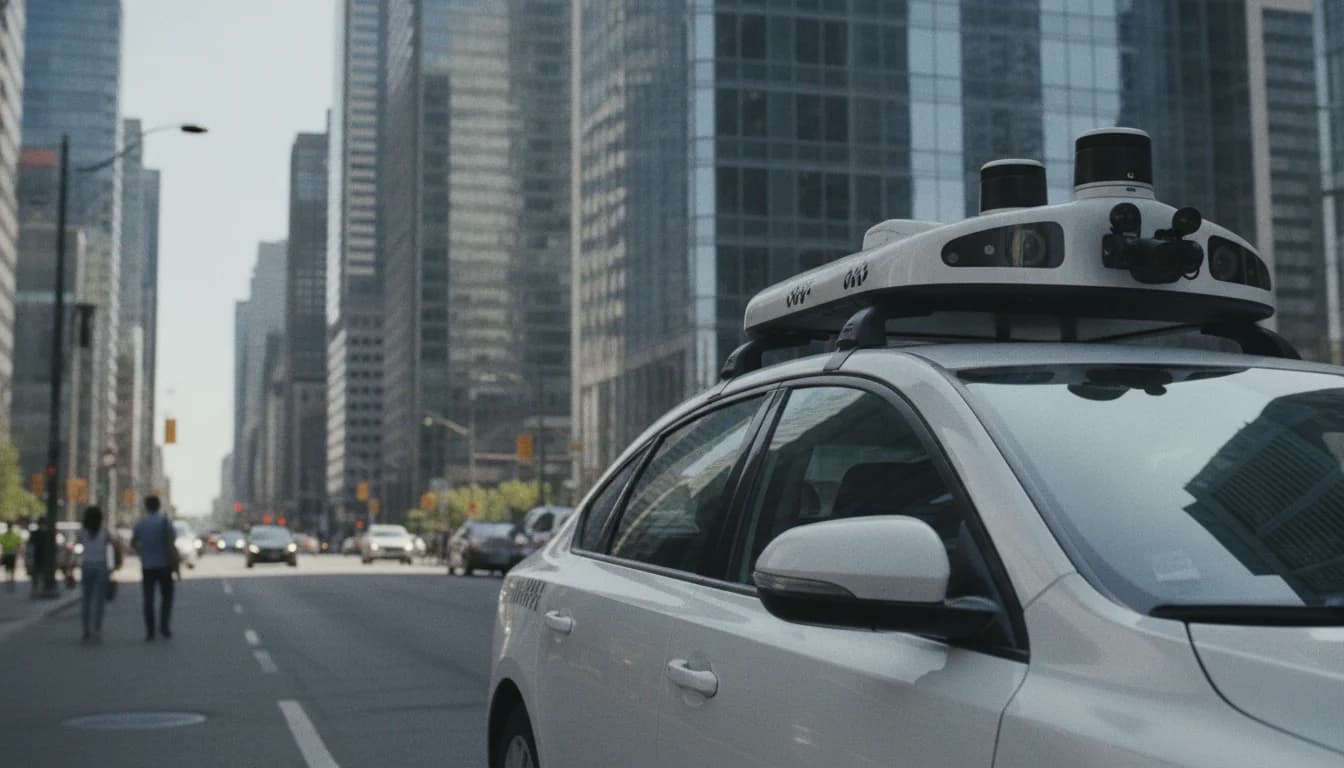
Waabi, the Canadian leader in Physical AI, announced on January 28, 2026, a historic funding package that positions the company to expand beyond autonomous trucking into robotaxis, with a strategic Uber partnership that commits to deploying Waabi Driver-powered robotaxis on the Uber platform. The announcement outlines a two-pronged financial package: a oversubscribed $750 million Series C round and a milestone-based future investment from Uber intended to accelerate a large-scale robotaxi rollout. The news arrives as Waabi formalizes a dual-vertical strategy, leveraging a unified AI brain to power both trucks and passenger vehicles, a concept the company says could redefine the economics of autonomous mobility. This funding round, coupled with Uber’s investment, cements Waabi’s status as a major player in the evolving autonomous mobility landscape and signals a broader push by investors to back AI systems that can scale across multiple transportation modalities. The details were disclosed in Waabi’s own press materials and corroborated by independent outlets, underscoring the significance of the milestone for the sector. (waabi.ai)
On January 28, 2026, Waabi announced it had secured $1 billion in funding comprising a $750 million Series C and a milestone-based $250 million from Uber to deploy 25,000 Waabi Driver-powered robotaxis on the Uber platform. This sentence captures the core event, the order of magnitude, the timing, and the parties involved, and reflects how Waabi frames the deal as a cross-vertical expansion that leverages a shared AI brain across autonomous trucking and passenger mobility. The two-part funding structure is described in Waabi’s own release and in third-party coverage, with Uber’s milestone-based capital explicitly tied to a program to scale robotaxi deployment on Uber’s ridesharing network. Independent reporting confirms the 25,000-robotaxi target (or more) and frames the investment as a multi-year push toward large-scale robotaxi operations powered by Waabi Driver. (waabi.ai)
What Happened
Funding structure and timing
- Waabi’s funding package breaks into two components: a $750 million Series C round and a separate milestone-based investment from Uber totaling $250 million. The Series C round was led by Khosla Ventures and G2 Venture Partners, with participation from Uber and other strategic investors, aiming to accelerate Waabi’s broader vision of Physical AI and cross-vertical deployment. The official Waabi release describes the Series C as oversubscribed and highlights Uber among the strategic investors. The company’s own press materials emphasize that the funding will fuel the continued advancement of Waabi’s Physical AI Platform, accelerate trucking commercialization, and support expansion into robotaxis. The GlobeNewswire distribution of the Waabi press release similarly presents the same numbers and context. (waabi.ai)
- The combined financing brings Waabi’s disclosed fundraising to roughly $1 billion in new capital for this tranche, complementing its previously reported capital structure. Waabi noted that the investment marks a significant milestone in the company’s growth trajectory and signals broad market confidence in Waabi’s approach to AI-driven autonomy across multiple vehicle classes. Independent coverage corroborates the $1 billion figure and frames the funding as the largest Canadian tech fundraising event to date. (waabi.ai)
Uber partnership and robotaxi deployment target
- The Uber component of the arrangement is described as a milestone-based investment to support the development and deployment of Waabi robotaxis on Uber’s platform, with a stated goal of deploying 25,000 Waabi Driver-powered robotaxis over time. Uber’s involvement is framed as both financial and strategic, aligning Uber’s ridesharing network with Waabi’s scalable AI architecture. The Waabi release quotes Dara Khosrowshahi, Uber’s CEO, emphasizing the partnership’s potential to scale safety, efficiency, and sustainability in autonomous mobility. The GlobeNewswire version reiterates the robotaxi deployment figure and the exclusive Uber partnership. TechCrunch’s reporting also emphasizes the 25,000-robotaxi target and the cross-vertical strategy. (waabi.ai)
- The press materials highlight the “Waabi Driver” as the unified core AI stack powering both trucking and passenger-vehicle autonomy, a design choice Waabi argues could accelerate time-to-scale and lower capital requirements for multiple vehicle classes when compared to siloed approaches. This claim is echoed across Waabi’s own messaging and in independent reports that examine the strategic implications of a single AI brain driving multiple mobility verticals. (waabi.ai)
Deployment scope and milestones
- The stated deployment target—25,000 robotaxis on Uber’s platform—sets an ambitious near-to-mid-term horizon for Waabi and Uber. While the press materials note a timeline for scale, they do not specify a concrete rollout date for the entire fleet; rather, the emphasis is on milestones and the incremental expansion enabled by the new funding and collaboration. The combination of a large Series C and milestone-based capital from Uber signals a plan to accelerate robotaxi pilots and scale, subject to regulatory, safety, and operational validations. Waabi’s own materials, as well as coverage from TechCrunch, highlight the scale and exclusivity of the Uber partnership. (waabi.ai)
A closer look at the numbers behind the deal
- The funding package includes a $750 million Series C and a $250 million milestone-based investment from Uber to support deploying 25,000 or more Waabi Driver-powered robotaxis on Uber’s platform. This split is confirmed in Waabi’s release and in third-party reporting, underscoring a total planned capital infusion of roughly $1 billion for the current phase of Waabi’s expansion. The independent outlets corroborate the same figures, enabling cross-verification of the core numbers. (waabi.ai)
Quotes from the principals
- Waabi’s founder and CEO Raquel Urtasun is quoted in the release as describing the opportunity to cross-pollinate Waabi’s trucking and robotaxi verticals via a single, scalable AI platform. Uber’s CEO Dara Khosrowshahi is also quoted, underscoring the strategic importance of partnering with Waabi to scale autonomous mobility on the Uber network. The press materials present these quotes as a way to articulate the strategic logic behind the multi-vertical, capital-efficient approach Waabi is pursuing. (waabi.ai)
Why It Matters
Market momentum and investor confidence
- This funding round signals robust investor confidence in Waabi’s Physical AI approach, which seeks to generalize a single AI brain across trucking and passenger mobility. The combination of a substantial Series C and a strategic, milestone-based Uber investment indicates that the market expects cross-vertical AI autonomy to be a viable path to scale, at least for Waabi’s architecture and business model. The deal also highlights the continued interest of traditional automotive and tech investors in autonomous driving as a multi-vertical opportunity, rather than a sole focus on one vehicle class. Waabi’s press materials describe the round as a milestone in the “Physical AI revolution,” a framing that aligns with broader investor narratives around AI-driven automation and the potential for capital-efficient scaling. (waabi.ai)
Strategic implications for robotaxis and trucking
- Waabi’s expansion into robotaxis with Uber, backed by a substantial financing package, positions the company at the intersection of commercial trucking and urban mobility. This has potential implications for fleet operators, rideshare platforms, and regulators, as a shared AI framework could alter cost structures, asset utilization, and deployment timelines across multiple mobility modalities. The TechCrunch article emphasizes the “single solution that can do multiple verticals, and they can do them at scale,” which captures the strategic advantage Waabi and Uber are betting on. The GlobeNewswire release reiterates the emphasis on leveraging Waabi Driver to power robotaxis and the exclusivity of the Uber partnership. (techcrunch.com)
Competitive dynamics and the broader AV landscape
- Waabi’s move comes in the context of a competitive AV landscape where several players have pursued both trucking and robotaxi ambitions, with varying degrees of success. The TechCrunch report notes that other players have experimented with cross-vertical strategies, but Waabi’s capital-efficient approach and a unified AI brain could offer distinct competitive advantages if execution aligns with plans. While Waymo and others continue to advance robotaxi deployments, Waabi’s financing round and Uber partnership could reshape the pace and geography of robotaxi expansion, particularly in North America. Analysts will watch how Waabi balances regulatory approvals, safety validation, and fleet deployment across both verticals. (techcrunch.com)
What’s Next
Near-term milestones and execution risks
- The immediate next steps involve Waabi’s continued commercialization of autonomous trucking while preparing for robotaxi pilots on Uber’s platform. The exact sequencing of pilots, regulatory clearances, and vehicle integrations will determine the pace of rollouts. The Waabi press release indicates the broader objective of accelerating commercial progress in autonomous trucking and expanding into robotaxis, but it does not publish a fixed timetable for full-scale deployment. Observers will look for updates on pilot programs, safety validations, and regulatory approvals in the months following the January 2026 announcement. (waabi.ai)
Longer-term implications for urban mobility
- If Waabi’s robotaxi initiative progresses toward the 25,000-unit target, urban mobility could see a substantial shift in the economics of ridesharing, with potential impacts on fleet utilization, pricing, and traffic patterns. The magnitude of investment and the scale of deployment implied by the Uber collaboration suggest a multi-year horizon for such a transition, one that would require close cooperation with city authorities, regulators, and local transport agencies. The cross-vertical AI strategy may also influence how other AV developers structure their own R&D and deployment roadmaps, particularly in terms of building versatile software platforms that can adapt to multiple vehicle configurations. (waabi.ai)
What’s Next: watch points and indicators
- Key indicators to watch include the progression of robotaxi pilots on Uber’s network, regulatory milestones for urban AV deployments, and the timing of broader scale rollouts beyond pilot regions. In addition, investor sentiment around Waabi’s ability to translate a single AI brain into durable commercial advantages across both trucking and robotaxi segments will be a focal point for market observers. The combination of a large Series C and Uber’s milestone-based funding creates a framework for multi-year progress, but success will hinge on real-world performance, safety records, and the ability to scale hardware and software across diverse geographies. (techcrunch.com)
Closing
In short, Waabi’s $1 billion financing package, anchored by a $750 million Series C and a milestone-based $250 million Uber investment to deploy up to 25,000 Waabi Driver robotaxis, marks a watershed moment for autonomous mobility. The company’s leadership frames this as the next logical step in a broader “Physical AI” strategy that aims to unlock scalable, cross-vertical autonomy. Uber’s involvement, paired with a slate of strategic investors, signals a belief that a unified AI stack can accelerate the commercial viability of robotaxis while sustaining momentum in autonomous trucking. As Waabi navigates regulatory hurdles, safety validations, and the complexities of fleet-scale deployment, the industry will be watching to see whether a shared AI brain truly delivers on the promise of faster, cheaper, and safer autonomous mobility at scale. Readers should stay tuned for forthcoming updates from Waabi and Uber as pilots transition into broader commercial activity and regulatory processes unfold across key markets. (waabi.ai)
Notes on sources and methodology
- Primary sources:
- Waabi’s official funding announcement detailing the $750M Series C and the Uber milestone-based investment, including the robotaxis deployment plan and quotes from Raquel Urtasun and Dara Khosrowshahi. [Waabi press release] (Jan 28, 2026). (waabi.ai)
- GlobeNewswire distribution of Waabi’s funding announcement confirming the same figures and the Uber partnership, with the deployment target of 25,000 robotaxis. [GlobeNewswire release] (Jan 28, 2026). (globenewswire.com)
- Independent coverage:
- TechCrunch reporting on the $1B funding and Uber robotaxi partnership, including the 25,000-robotaxis target and the broader cross-vertical strategy. [TechCrunch article] (Jan 28, 2026). (techcrunch.com)
Clarifications and data constraints
- The articles and release materials do not publish a fixed timetable for full-scale deployment of 25,000 Waabi Driver robotaxis. They describe a milestone-based financing structure and an exclusive Uber partnership intended to accelerate deployment over time, with timing contingent on regulatory approvals, safety validations, and operational readiness across target markets. For readers seeking precise dates for pilot launches or regional rollouts, the forthcoming official Waabi/Uber updates should be consulted as they become available.
Now, a few context-setting observations for readers tracking technology and market trends
- Waabi’s approach centers on a shared AI brain designed to generalize across vehicle classes, a concept the company positions as a pathway to capital-efficient scaling. This is in line with industry interest in “multi-vertical autonomy” that reduces duplicate R&D costs and speeds time to market, especially as regulatory scrutiny of autonomous fleets intensifies. Analysts and competitors will be watching how Waabi’s model performs in real-world deployments, how safety metrics compare to incumbents, and how the economics of robotaxi fleets evolve under large-scale, Uber-backed sponsorship. The Uber dimension adds a ridesharing revenue channel that could help amortize development costs, while tying Waabi’s progress to a major platform’s data ecosystem and customer base. (waabi.ai)
Further reading and related developments you may want to follow
- For direct access to Waabi’s official narrative on the funding and robotaxis collaboration, read the Waabi press release and the related insights page:
- Waabi press release: Waabi secures $1 Billion in new funding to lead Physical AI revolution. [Waabi press] (waabi.ai)
- GlobeNewswire version of the Waabi announcement: Waabi Secures $1 Billion USD in New Funding to Lead Physical AI Revolution. [GlobeNewswire] (globenewswire.com)
- For independent analysis and context:
- TechCrunch: Waabi raises $1B and expands into robotaxis with Uber. [TechCrunch] (techcrunch.com)
Final note
- As Waabi and Uber navigate the next chapters of robotaxi deployment, observers will be watching how the cross-vertical AI strategy translates into real-world utilization, safety outcomes, and measurable improvements in mobility economics. This development may set a new benchmark for AI-driven autonomy if Waabi’s approach proves scalable across both trucking and passenger mobility.